
You are currently browsing the category archive for the ‘Politics’ category.
Poland’s ascent to a $1 trillion economy in September 2025 marks a remarkable transformation. Emerging from the wreckage of Soviet control, Poland has become one of Europe’s fastest-growing economies over the past three decades. With GDP growth projected at 3.2 percent for 2025, unemployment near 3 percent (harmonized), and inflation moderating to 2.8 percent in August, it demonstrates resilience and steady progress.
Canada, with a nominal GDP of roughly $2.39 trillion, is richer in absolute terms but faces weaker dynamics: growth forecasts of just 1.2 percent, unemployment climbing to 7.1 percent in August, and persistent concerns over productivity and rising public debt. The contrast raises an important question: which elements of Poland’s success can Canada responsibly adapt to its own very different circumstances?
1. Manufacturing Capacity and Industrial Resilience
Poland’s economy has benefited from retaining a strong industrial base, especially in automotive, machinery, and technology supply chains closely integrated with Germany. This foundation has provided steady export growth and employment, while limiting excessive reliance on fragile overseas supply chains.
Canada, by contrast, has seen its manufacturing share of GDP shrink over decades as industries relocated or hollowed out. While Canada cannot replicate Poland’s role as a mid-cost hub inside the EU, it could adapt the principle: incentivize the repatriation or expansion of high-value sectors (e.g., EV manufacturing, critical minerals processing, aerospace). Strategic tax credits, infrastructure investment, and streamlined permitting could restore resilience and provide middle-class employment.
Lesson for Canada: industrial renewal need not mean autarky, but building domestic capacity in key sectors reduces vulnerability to shocks — as Poland’s stability during recent European crises shows.
2. Immigration Policy and Integration Capacity
Poland has pursued a relatively selective immigration system, prioritizing labor market fit and manageable inflows. While Poland remains relatively homogeneous (Eurostat estimates about 98% ethnic Polish in 2022), its policy has focused on ensuring newcomers integrate into economic and cultural life. The result has been high employment among migrants and limited social disruption compared with some Western European peers.
Canada, by contrast, accepts large inflows — even after scaling back targets to 395,000 permanent residents in 2025 — and faces housing pressures and uneven integration outcomes. Canada’s homicide rate (2.27 per 100,000 in 2022) is higher than Poland’s (0.68), though crime is shaped by many factors beyond immigration. Still, rapid population growth without infrastructure, housing, and language capacity has heightened social strains.
Lesson for Canada: immigration policy should balance humanitarian goals with absorptive capacity. Emphasizing labor alignment, regional settlement, and language proficiency — as Poland has done — would help ensure inflows strengthen productivity while minimizing stress on housing and services.
3. Cultural Continuity and Heritage as Assets
Poland has paired modernization with deliberate protection of its cultural identity. The restoration of Kraków and Warsaw not only preserves heritage but fuels a thriving tourism sector. National traditions, rooted in Catholicism for many Poles, have also informed family policy (e.g., child benefits) and provided a sense of cohesion during rapid economic change.
Canada’s pluralism differs fundamentally, and it cannot — and should not — mimic Poland’s religious or cultural model. Yet Canada can still learn from the broader principle: treating heritage and shared narratives as economic and social assets rather than obstacles. Investments in Indigenous landmarks, Francophone culture, and historic architecture could enrich tourism, foster pride, and strengthen cohesion. Likewise, family-supportive policies (parental leave, child benefits, flexible work arrangements) are essential as Canada faces declining fertility and an aging workforce.
Lesson for Canada: cultural preservation and demographic support are not nostalgic luxuries — they can reinforce economic stability and social cohesion.
4. Fiscal Prudence and Monetary Autonomy
Poland’s choice to retain the zloty rather than adopt the euro preserved monetary flexibility. Combined with relatively conservative fiscal policies (public debt at about 49% of GDP in 2024, well below EU ceilings), this has allowed Poland to respond to crises with agility while maintaining competitiveness.
Canada already benefits from its own currency, but fiscal expansion has pushed federal debt above 65% of GDP. While Canada’s wealth affords greater borrowing room, long-term sustainability requires discipline. Poland’s experience suggests that debt caps, counter-cyclical saving, and careful monetary coordination can preserve resilience without stifling growth.
Lesson for Canada: fiscal credibility is itself an economic asset. Setting clearer debt-to-GDP targets and enforcing discipline would strengthen Canada’s ability to weather global volatility.
Conclusion
Poland’s trajectory is not without challenges. It faces demographic decline, reliance on EU subsidies, and governance controversies that Canada would not wish to replicate. But its achievements underscore a vital truth: prosperity need not mean sacrificing resilience, identity, or cohesion.
For Canada, the actionable lessons are clear:
-
rebuild key industries,
-
align immigration with integration capacity,
-
invest in heritage and families,
-
and re-anchor fiscal policy in prudence.
Adapted to Canadian realities, these reforms could help lift growth closer to 3 percent, reduce unemployment, and restore a sense of national momentum.

References
-
International Monetary Fund (IMF). World Economic Outlook Database, October 2025.
-
Statistics Canada. Labour Force Survey, August 2025.
-
Eurostat. Population Structure and Migration Statistics, 2022–2025.
-
OECD. Economic Outlook: Poland and Canada, 2025.
-
World Bank. World Development Indicators, 2024–2025.
-
UN Office on Drugs and Crime (UNODC). Global Homicide Statistics, 2022.
-
National Bank of Poland. Annual Report, 2024.
-
Government of Canada. Immigration Levels Plan 2025–2027.
When political violence erupts, it often looks random — a lone extremist, a protest that gets out of hand, or a clash between two angry groups. But much of what we’re seeing today, in both the United States and Canada, is not random at all. It is part of a deliberate strategy that activists call dialectical warfare — and it is tearing at the heart of our democratic societies.
The assassination of Charlie Kirk and the furious conservative backlash that followed are not isolated events. They are part of a larger spiral of violence and reaction, one that radicals hope will end with the collapse of our current system. To understand how, we need to unpack an old idea: the dialectic.
What is the Dialectic?
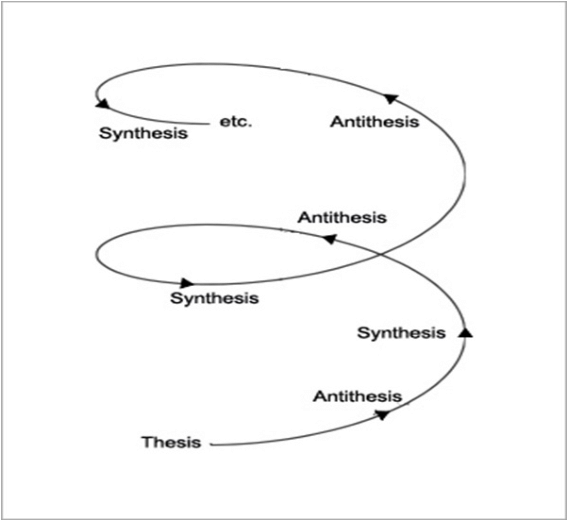
The word “dialectic” comes from philosophy, specifically the German thinker Georg Wilhelm Friedrich Hegel in the early 1800s. At its simplest, the dialectic is a way of describing how history moves forward through conflict.
- Thesis: the current system or status quo.
- Antithesis: the force that challenges it.
- Synthesis: a new system that emerges after the clash.
For Hegel, this was a way of understanding history as a story of progress. Marx later took this idea and made it the foundation of his revolutionary theory. For him, history was about class struggle: workers against capitalists. Capitalism, he argued, would eventually collapse under its contradictions and give way to communism.
The key point is this: conflict isn’t a bug in the system — it’s the engine of history.
From Philosophy to Political Activism
Fast forward to today. Many left-wing activists, consciously or not, operate with a dialectical mindset. They believe that society advances through conflict and breakdown, not peaceful debate.
That means chaos, division, and even violence can be seen as useful. If enough conflict is stirred up, the system will be forced to reveal its flaws, overreact, and eventually collapse — clearing the way for something new.
This isn’t conspiracy theory. Activist manuals, writings from radical groups, and historical revolutionary movements all share this logic. The goal is not stability. The goal is destabilization.
Dialectical Warfare Today
Dialectical warfare is what happens when activists deliberately create or amplify conflict to destabilize society. Here’s how it works in practice:
- Provocation: Protests or acts of violence designed to draw a harsh reaction.
- Overreaction: Authorities or opponents respond too aggressively, confirming the activists’ narrative.
- Crisis: The clash erodes faith in institutions and convinces people the system doesn’t work.
- Escalation: Each cycle of conflict moves society further up the spiral toward collapse.
It’s not about winning the argument. It’s about breaking the system so that something “better” (usually some form of socialist utopia) can be built on the ruins.
The Charlie Kirk Case
The recent assassination of Charlie Kirk shows this dynamic clearly. For the radical Left, the act of violence itself was a shock designed to destabilize. But what mattered more was the reaction.
Conservatives in power, outraged and furious, began employing the same tools that had once been used against them: censorship, cancel culture, and efforts to silence left-wing voices. In their anger, they began shredding the same democratic norms — free speech, due process, respect for law — that they had once fought to defend.
From the perspective of dialectical warfare, this is a victory for the radicals. The point was never just to kill one man. The point was to provoke an overreaction that would weaken the credibility of conservative leaders, make democratic institutions look fragile, and drive polarization even deeper.
Why This is Dangerous
Every time conservatives react by copying the authoritarian tactics of the Left, they confirm the radicals’ worldview. They prove that democracy is a sham, that free speech is a lie, and that the system is doomed.
This is exactly what the activist Left wants. They welcome conservative overreach, because it accelerates the collapse of the old order. The tragedy is that in fighting back, the right risks becoming what it hates: reactionary, authoritarian, and destructive of the very freedoms it claims to defend.
Lessons from History
We have seen this before. In the 20th century, totalitarian movements from Communism in Russia to fascism in Germany thrived on dialectical conflict. They used street violence, political assassinations, and manufactured crises to polarize society. Each overreaction by their opponents brought them closer to power.
The idea is seductive: “This system is broken. Only radical action can save us.” But the results are always catastrophic. Millions died under regimes that promised utopia and delivered tyranny.
A Simple Analogy
Think of democracy like a family car. It’s not perfect — sometimes it breaks down, sometimes it needs repairs. Activists practicing dialectical warfare are not trying to fix the car. They are trying to crash it on purpose, believing that after the wreck, they’ll be able to build a perfect new vehicle.
But history shows that after the crash, what you usually get is not a better car — it’s a dictatorship.
The Dialectical Spiral at Work
To make this crystal clear, here’s how activists see the spiral — and what really happens:
| Stage | Activist Left’s View | What Actually Happens |
|---|---|---|
| Provocation | Stir conflict (riots, violence, incendiary rhetoric) to expose “systemic oppression.” | Communities destabilize; trust erodes. |
| Reaction | Force conservatives into authoritarian overreach. | Free speech and rule of law weaken; institutions lose credibility. |
| Crisis | Show that democracy and capitalism can’t solve the conflict. | Cynicism deepens; polarization hardens. |
| Escalation | Push society up the spiral toward “revolution and utopia.” | Cycle repeats, leading not to utopia but greater instability. |
Why We Must Resist
The activists’ dream of a communist utopia is a fantasy that has failed every time it’s been tried. But their strategy of dialectical warfare is very real — and very effective at breaking societies apart.
The assassination of Charlie Kirk and the conservative overreaction it triggered are a warning. If we allow ourselves to be baited into authoritarian responses, we are not saving democracy — we are digging its grave.
The only way forward is to resist the spiral: to defend free speech, uphold the rule of law, and refuse to play into the radicals’ hands. Otherwise, we will all be dragged into the chaos they long for, and the freedoms that make Western society unique will vanish in the wreckage.
References
- Hegel, G.W.F. The Phenomenology of Spirit (1807).
- Marx, K. & Engels, F. The Communist Manifesto (1848).
- Arendt, H. On Violence (1970).
- Popper, K. The Open Society and Its Enemies (1945).
- Contemporary coverage: Reuters, Associated Press, Fox News (Sept. 2025) – reporting on the assassination of Charlie Kirk and ensuing political fallout.
Emanuel Brünisholz, a Swiss repairman, has made headlines for refusing to pay a fine imposed for a social-media comment stating what he says are biological truths: that there are only two sexes as determined by skeletal evidence. Because he wouldn’t pay the fine, he opted instead to serve 10 days in jail. He was convicted under Switzerland’s anti-discrimination laws (Art. 261bis), which have been expanded to include “sexual identities” beyond race, religion, etc. His statement was judged to belittle the LGBTQI community and violate human dignity, though Brünisholz insists he was speaking objective biological fact. (Reduxx)
This case is deeply troubling, because it illustrates a slippery slope: when a judge or prosecutor can criminalize speech that claims a biological fact, simply because some group interprets it as hateful. That is not far off from what proposed Canadian legislation threatens. The Combatting Hate Act, introduced in September 2025, would make it a criminal offence to “wilfully promote hatred” against identifiable groups (including on grounds of gender identity) by any public display or speech. It also aims to streamline prosecutions for “hate propaganda,” remove some procedural checks, and broaden the definition of hate. Critics warn that this will give activist minority claims outsized power over what counts as acceptable speech. (Government of Canada)
If Brünisholz’s case was an outlier, then Canada’s proposals make clear this is a trajectory, not a one-off. Under the proposed laws, someone could theoretically be prosecuted (and even imprisoned) for speaking truths about biological sex if a court determines that such statements violate the new definitions of hatred or hate speech. That means what is scientifically or biologically reality could become illegal speech, depending on who is offended and how strong the activist pressure is. In a Western democracy that claims to defend freedom of expression, this is simply unacceptable.
We must not accept that the mere possibility of offending a protected group is enough for criminal sanction. We must resist laws that hand over the power to judges or prosecutors (or activist complainants) to decide what biological truths are “hate.” Because once speech can be criminalized based on activist interpretation, the foundations of open, free inquiry, reason, and reality are at risk.
Key Comparisons: Swiss Case vs. Proposed Canadian Laws
| Feature | Swiss Case (Brünisholz) | Proposed Canadian Laws (Combatting Hate Act / related bills) |
|---|---|---|
| Nature of statement | Emphasis on binary sex; “only man and woman” skeleton argument | Biological sex, gender identity claims could be targeted under new definitions of hate |
| Punishment | Fine convertible to 10 days jail if unpaid | Proposed penalties include imprisonment, removal of procedural protections |
| Law basis | Anti-discrimination / hate speech law expanded to “sexual identities” in Switzerland | Criminal Code, Criminal Code’s hate propaganda provisions, amendments to CHRA, etc. |
| Risk of censorship | High — statement considered “belittling” a protected class despite appeal to biological evidence | Also high — definitions are broad; courts could side with activist interpretations over scientific or factual speech |
| Freedom of speech concern | Biologically rooted fact may be criminalized if deemed insulting or hateful | Same concern: scientific / truth claims could be suppressed if they conflict with activist definitions of what counts as acceptable speech |
Why This Matters
- Biological Truths Are Not “Opinions” Alone: Things like male vs. female biological sex are backed by sciences like genetics, anatomy, forensic anthropology. If those become “hate speech” when expressed, then reality is subject to legal veto by ideological enforcement.
- The Power to Define “Hate” is the Power to Silence: Under Canadian law, if definitions of hatred or hatred-motivated speech expand (especially by removing required consent, or giving prosecutors more discretion), then more speech becomes liable—not because it causes harm, but because someone claims it does.
- Free Speech is Not Optional: Western democracy is built in part on being able to speak even unpopular or uncomfortable truths. If truth becomes legally risky, we’re no longer free—even if the penalties aren’t always applied.
- Precedent Matters: Once speech is criminalized for some, even “harmless” speech tomorrow could become the target. Laws tend to expand in scope over time. The Brünisholz case shows how “harmless to some, hateful to others” becomes a legal equation.
What to Watch & What to Do
- Monitor what the final definitions are in Canadian bills: how they define hatred, “wilfully promoting hatred,” “identifiable groups,” and what defenses are permitted (e.g., truth, scientific basis).
- Watch penalties: whether fines only, or possibility of imprisonment; whether Criminal Code or human rights tribunal; how strong the burden of proof is.
- Pay attention to how administrative procedures work: whether prosecutors need prior approvals, whether individuals or groups can privately instigate charges/complaints, whether there’s ability to appeal.
- Support and defend free speech, especially for dissenting or scientific views. Speak out when persons are penalized for expressing what others call “politically incorrect truths.”

References
- “Swiss Man Opts For Jail Time Instead Of Fine After Being Charged Over ‘Transphobic’ Social Media Post”, Reduxx, Sept 26, 2025 — Brünisholz case. (Reduxx)
- “Combatting Hate Act: Proposed Legislation to Protect Communities Against Hate”, Government of Canada, Sept 19, 2025 — summary of proposed amendments, hate definitions, penalties. (Government of Canada)
- “Canada Introduces Legislation to Combat Hate Crimes, Intimidation, and Obstruction”, Department of Justice Canada news release, Sept 19, 2025 — details on new offences including intimidation, obstruction, containing identity grounds. (Government of Canada)
When a government spends beyond its means, citizens eventually pay the price. This reality looms over Prime Minister Marc Carney’s fiscal approach, which has drawn mounting criticism for being both irresponsible and inflationary. With federal spending ballooning under his leadership, Canada faces mounting deficits that risk fueling long-term inflation and undermining economic stability.
At its core, Carney’s fiscal strategy rests on aggressive public expenditure with the stated aim of stimulating growth and addressing social inequities. While such intentions may sound noble, the result is the same problem that has plagued countless governments before: spending outstrips revenue, and deficits grow. Canada is already burdened with significant debt from past administrations, and Carney’s unwillingness to rein in spending threatens to push the nation further into the red. This raises serious concerns about the sustainability of his policies.
The inflationary risks cannot be overstated. When governments flood the economy with borrowed money, demand rises artificially, often faster than supply can keep up. The outcome is predictable: rising prices that erode the purchasing power of ordinary Canadians. Carney’s background as a central banker makes his freewheeling fiscal approach especially puzzling, given that he fully understands how unchecked deficits translate into inflationary pressures. By ignoring these basic economic principles, he risks not only undermining Canadian competitiveness but also hollowing out the middle class he claims to champion.
The consequences of such policies ripple outward. Inflation means higher food and housing costs, disproportionately hurting working families. Higher deficits translate into heavier debt servicing, which steals resources from essential services like healthcare and infrastructure. In short, Carney’s fiscal vision looks less like a plan for prosperity and more like a reckless gamble with the nation’s future.
Table: Why Carney’s Fiscal Policies Risk Inflation
| Policy/Action | Short-Term Effect | Long-Term Risk |
|---|---|---|
| Aggressive public spending | Temporary economic stimulus | Rising deficits and debt burden |
| Borrowing to finance programs | Increased demand | Inflationary pressure and weakened currency |
| Ignoring fiscal restraint | Boosts political popularity | Erodes economic competitiveness |
| Large deficits | Expanded government footprint | Reduced fiscal flexibility in future crises |
| Reliance on debt-financed growth | Superficial prosperity | Declining middle-class purchasing power |

References
- Canada’s Budget Deficit First Four Months 2025/26 — Between April-July 2025 the federal deficit rose to C$7.79 billion, as spending grew faster (3.0%) than revenues (1.6%). (Reuters)
- Deficit Estimate for Entire Fiscal Year — Economists project Canada’s 2025-26 deficit could hit C$70 billion, more than the previous year’s (approx. C$48 billion). (TT News)
- Government Spending Rise — 2025-26 federal main estimates show total spending of C$486.9 billion, an 8.4% increase from the previous year. (iPolitics)
- Projected Future Deficits — Carney’s platform projects yearly deficits of ~C$62 billion in 2025-26, dropping gradually in following years but still significant. (Taxpayer)
- Deficit Pressure from Trade War & Tariffs — U.S. tariffs and counter-tariffs affecting revenues and costs are cited as one factor expected to increase deficits well above initial forecasts. (The Hub)
- Official Signalling of Higher Deficit — Ottawa has publicly acknowledged that the upcoming budget will feature a “substantial” deficit, larger than last year’s, and has warned that all departments must participate in spending restraint efforts. (Global News)
Every September 30th across Canada, Orange Shirt Day (now National Day for Truth and Reconciliation) is observed with solemnity. Citizens wear orange, school announcements, flags, ceremonies, all to remember Canada’s residential school system. It’s portrayed as a day to heal, teach and reconcile. But when you scratch beneath the surface, something troubling appears: decades of government dependence and ritual symbolism have not ended the suffering of Indigenous peoples; instead, they may have become a vector for grift, misdirection, and a self-hating narrative that benefits activists more than the communities they claim to help.
The origin story is widely told: Phyllis Jack Webstad, a six-year-old Indigenous girl, arrives at the St. Joseph Mission Residential School wearing a new orange shirt her grandmother bought, only to have it stripped from her, never to be returned. That orange shirt became a symbol: a signifier of loss, assimilation, the shaming of identity. The symbol is powerful. However, many of the policy promises, social programs, treaties, financial transfers, and activist campaigns tied to this narrative have failed to produce meaningful outcomes. Indigenous communities still suffer high rates of poverty, addiction, substandard housing, educational deficits, health disparities. Charities, NGOs, and governments use the orange shirt repeatedly — for visibility, for fund-raising, but without accountability or measurable improvement. The result? A recurring narrative of victimhood and dependence that seems endless.
Worse, this narrative is used to silence dissent. If you question the efficacy of current reconciliation policies, or ask why measurable metrics remain so poor, you are accused of “denial,” “insensitivity,” or “racism.” If you point to failures of governance, internal corruption, or poor leadership within Indigenous administrations, you are told you are denying colonial oppression’s continuing harm. The universal assumption is that the only problem is insufficient funding or lack of heartfelt apology — never that the policies themselves, or their administration, may be part of the problem. This is pernicious because it stifles honest discussion, innovation, and real solutions. Orange Shirt Day is no longer just a remembrance day; it’s become a sacred narrative that many are afraid to critique — and in a liberal democracy that prides itself on free speech, that should set off alarm bells.
Suggested Improvements / Alternatives
- Shift the emphasis from symbolism to outcomes: Measures of educational attainment, health improvements, housing quality in Indigenous communities compared over 10, 20, 30 years.
- Hold those in authority accountable: Indigenous governments, federal & provincial governments, NGOs — what have they done concretely?
- Allow critique: Encourage the voices of Indigenous people who say reconciliation policy has failed, rather than centering only activists’ rhetoric.
- Reduce dependency: Focus on policy reform that encourages independence, local governance, entrepreneurship, merit-based support, not perpetual victimhood.

References
- Orange Shirt Day, The Canadian Encyclopedia. Details on the origin with Phyllis Webstad, residential schools system, “Every Child Matters.”
- Al Jazeera: “What is Orange Shirt Day and how is it commemorated in Canada?” — background, statistics, origin story, ceremony and observance practices. (Al Jazeera)
- Centennial College Library Guides: institutional summary of Orange Shirt Day history & schooling context. (Centennial College Library Guides)
- Peace Arch News: Orange Shirt Society founder’s concern about Orange Shirt Day being co-opted, misremembered, or replaced in official messaging. (peacearchnews.com)
- Montreal CityNews: issues with merch, designers, t-shirts, people profiting off the symbol. (CityNews Montreal)
The UK government under Prime Minister Keir Starmer has introduced the so-called BritCard proposal: a mandatory digital identity (ID) scheme set to roll out by 2029. According to Reuters and other major outlets, the idea is that workers will need this digital ID for right-to-work checks, and over time it may be extended to access public services like tax records, childcare, welfare, etc. (reuters.com) Critics argue it creates centralized databases, raises risks of surveillance, invites overreach, and may pave the way for a social credit framework. (theguardian.com)
A social credit system, like the one China is implementing, is where citizens are monitored, graded or blacklisted for various behaviors (both major and minor), and then rewarded or punished accordingly. In China, examples include: blocking millions of people from buying airplane or train tickets due to “discredited behaviour” (which might include unpaid fines or minor public misbehavior); preventing access to education or luxury purchases; placing people or companies on public blacklists affecting their livelihoods; and using facial recognition and wide surveillance to monitor compliance. (theguardian.com) Such a system curtails freedoms: freedom of movement, career opportunities, public participation, and even speech if one criticizes the state or fails to conform to expected norms.
The UK’s BritCard digital ID proposals, alongside other legislative trends, are troubling signs of creeping authoritarianism—where government tools offer the capacity for control as much as for convenience. Canada shows similar risks: its proposed Combatting Hate Act includes expanding definitions of hate speech, creating new offences for obstruction, intimidation, and streamlining hate-speech and propaganda prosecutions. (canada.ca) While aiming to protect vulnerable communities, such expanded powers risk chilling free speech, targeting dissent, and giving the state too much discretion over what is or isn’t allowable expression. As free societies, the West must resist anything resembling social credit systems dressed up as digital ID or online-hate regulation.

The Panopticon come to life.
What Social Credit Means for Freedom
Here’s what is at stake if systems like China’s are ever adopted in the West:
- Freedom of Movement: Bans on travel by air, train, or road for those with low “scores.”
- Freedom of Speech: Criticism of the government or “unharmonious” views can lower your score.
- Economic Opportunity: Blacklisting can prevent people from starting businesses, holding jobs, or receiving loans.
- Privacy & Autonomy: Facial recognition, mass surveillance, and data collection track daily life in detail.
- Access to Education & Services: Children of “blacklisted” parents have been denied access to private schools.
- Social Participation: Public shaming lists and score rankings reduce citizens to state-monitored reputations.
- Rule of Law: Arbitrary and opaque standards allow punishment without due process.
References
- Reuters – Britain to introduce mandatory digital ID cards
- FT – Digital ID: what is the UK planning, and why now?
- The Guardian – Digital ID plan for UK risks creating an ‘enormous hacking target’
- The Guardian – China bans 23m ‘discredited’ citizens from buying travel tickets
- CNBC – China to stop people traveling who have bad ‘social credit’
- Sohu – Examples of Chinese blacklists and restrictions
- Government of Canada – Combatting Hate Act – proposed legislation
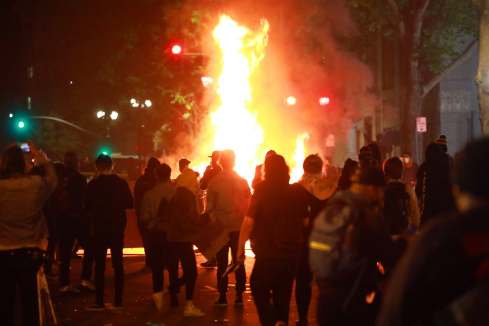
In a significant move, U.S. President Donald Trump announced on September 17, 2025, his intention to designate Antifa as a “major terrorist organization.” This decision follows the recent assassination of conservative activist Charlie Kirk, allegedly by an individual with left-wing affiliations. While Antifa is a decentralized movement without a formal hierarchy, Trump described it as a “sick, dangerous, radical left disaster” and called for investigations into its funding sources (The Guardian).
Following the U.S. announcement, Hungarian Prime Minister Viktor Orbán declared that Hungary would designate Antifa as a terrorist organization, citing a 2023 incident in Budapest where Antifa activists allegedly assaulted attendees of a far-right event. Orbán criticized the European Union for not taking similar action and urged EU officials to align with the U.S. stance (AP News).
These designations have sparked debates about the balance between national security and civil liberties. Critics argue that labeling a loosely affiliated movement as a terrorist organization could infringe upon free speech and assembly rights. Supporters contend that such measures are necessary to address the violent actions of certain factions within the movement. As discussions continue, the implications of these designations on domestic and international policies remain to be seen.
References
- Reuters: Trump designates anti-fascist Antifa movement as a terrorist organization
- AP News: Hungary, following Trump, will designate antifa a terrorist organization, Orbán says
- The Guardian: Trump says he plans to designate antifa as ‘major terrorist organization’
- Al Jazeera: Hungary urges EU to classify antifa as a ‘terrorist’ group











 bleatmop
 Mystro


 Dead Wild Roses
Your opinions…