
You are currently browsing the category archive for the ‘Politics’ category.
In the mid-2010s, prominent voices on Canada’s progressive left, including those aligned with Prime Minister Justin Trudeau’s vision, leaned heavily into the idea of Canada as a “post-national state.” Trudeau himself famously told *The New York Times* in 2015 that “there is no core identity, no mainstream in Canada,” framing the country as a mosaic of identities unbound by traditional nationalism. This rhetoric dovetailed with a broader movement to reckon with Canada’s colonial past, exemplified by the Truth and Reconciliation Commission’s 2015 report, which labeled the residential school system a “cultural genocide.” Activists and academics pushed to dismantle symbols of national pride, arguing they propped up a settler-colonial legacy. Flags flew at half-mast for 161 days in 2021—over five months—following the alleged “discovery” of unmarked graves at former residential school sites, a gesture that underscored a narrative of shame rather than unity. Patriotism, in this view, was suspect, a relic of a Canada that needed deconstructing.
Fast forward to 2025, and the same progressive cohort now clutches the maple leaf with newfound zeal, spurred by fears of American annexation—whether economic, cultural, or political. The phrase “elbows up, just say no” has surfaced in leftist circles online, a gritty call to resist U.S. influence amid trade disputes and border security debates. This nationalist hyperbole marks a stark pivot from the earlier disdain for Canada-as-nation. Where once the Canadian identity was a punching bag—think of the 2020 toppling of Sir John A. Macdonald’s statue in Montreal by activists decrying his role in Indigenous oppression—now it’s a shield against the Stars and Stripes. The irony is palpable: a movement that spent years driving the notion of “Canadian-ness” into the ground suddenly hoists it aloft when sovereignty feels threatened.
So where was this patriotism when Canada’s symbols and history were being systematically dismantled? The progressive left’s about-face reveals a selective nationalism, dormant when reckoning with internal flaws but roused when an external foil like the United States looms large. The 2021 half-mast marathon, meant to signal humility, left little room for pride in the nation’s resilience or achievements. Yet today, as trade tensions flare—U.S. tariffs on Canadian lumber hit 17.99% in 2024, per the U.S. Department of Commerce—the same voices rally to “protect our way of life.” It’s a jarring contrast: a Canada once deemed unworthy of celebration is now a hill to die on, exposing the fluidity of ideology when convenience calls. The lesson? National identity, it seems, is only as disposable as the threat du jour allows.

Policing in Canada has historically been grounded in the principle of equality under the law, where all individuals, regardless of identity, are subject to the same legal standards and enforcement practices. However, recent shifts in policy, training, and public discourse suggest that Canadian policing is increasingly adopting a model that applies different standards based on identity categories such as race, ethnicity, gender, and socioeconomic status. This evolution is driven by a combination of social justice movements, government directives, and institutional reforms aimed at addressing systemic inequalities. While intended to rectify historical disparities, this approach raises questions about consistency and impartiality in law enforcement.
One clear indicator of this shift is the implementation of race-based data collection by police services across Canada. Initiated in response to allegations of racial profiling, agencies like the Toronto Police Service and the Ontario Provincial Police began collecting and analyzing data on the race of individuals stopped, questioned, or arrested, starting with pilot projects around 2019 and expanding since then. The stated goal is to identify and address “disproportionate” enforcement patterns, particularly against Black, Indigenous, and other racialized groups. While this data has confirmed higher rates of police interaction for certain communities—such as a 2020 Toronto report showing Black individuals were 2.2 times more likely to be involved in use-of-force incidents—it has also led to tailored policing strategies that adjust scrutiny or leniency based on racial identity rather than uniform application of the law.
Training and policy changes further illustrate this trend toward differential standards. Following high-profile incidents like the 2020 death of Regis Korchinski-Paquet and subsequent Black Lives Matter protests, Canadian police forces have overhauled training to emphasize “de-escalation” and “cultural competency,” often with specific focus on interactions with Indigenous and racialized populations. For instance, the RCMP introduced mandatory “bias-free policing” modules by 2022, which instruct officers to consider historical trauma and systemic factors when engaging with certain groups. While these measures aim to reduce harm, they implicitly encourage officers to alter their approach—sometimes reducing enforcement rigor—based on an individual’s perceived identity, diverging from a strictly neutral standard.
Legal and governmental frameworks also support this shift. In 2023, Bill C-92, an Act respecting First Nations, Inuit, and Métis children, youth, and families, effectively granted Indigenous communities greater autonomy over child welfare, including policing-related interventions, creating a parallel system distinct from mainstream enforcement. Similarly, hate crime laws and sentencing guidelines increasingly factor in identity-based considerations, with offenders targeting “vulnerable” groups facing harsher penalties, while enforcement in marginalized communities is often softened to avoid perceptions of over-policing. This dual-track approach—tougher on some, lighter on others—reflects a deliberate move away from universal standards toward identity-specific policing practices.
Finally, public and institutional pressure continues to reinforce this trajectory. Advocacy groups, such as the Canadian Association of Black Lawyers and Indigenous rights organizations, have successfully lobbied for policies that treat identity as a mitigating factor in policing. Reports like the 2021 Missing and Murdered Indigenous Women and Girls Inquiry explicitly called for reduced police intervention in Indigenous communities, alongside increased accountability for officers dealing with these populations. Meanwhile, urban police forces face scrutiny for “over-policing” racialized neighborhoods, prompting initiatives like Toronto’s 2024 “Community Crisis Support Service,” which diverts mental health calls involving racialized individuals away from police entirely. These developments signal a broader trend: policing in Canada is increasingly calibrated to identity, balancing equity goals against the traditional ethos of equal enforcement. Whether this enhances justice or undermines fairness remains a point of contention.

The media in Canada often frames voting Conservative as a dangerous shift toward regressive policies, economic stagnation, and social division. This narrative frequently highlights fears of cuts to social programs, environmental neglect, and a rollback of progressive values, as seen in coverage of leaders like Pierre Poilievre or past figures like Stephen Harper. However, this portrayal overlooks key facts: Conservative governments have historically presided over economic growth—Harper’s tenure saw Canada weather the 2008 global financial crisis better than most G7 nations, with a GDP growth rate averaging 1.8% annually from 2006 to 2015, compared to the OECD average of 1.2%. Moreover, claims of slashed social programs are exaggerated; Harper’s government increased healthcare transfers to provinces by 6% annually, reaching $40.4 billion by 2015. The narrative also ignores that Conservative platforms often adapt to public sentiment—Poilievre, for instance, has emphasized affordability and housing, issues resonating with younger voters typically dismissed as outside the party’s base.
Beyond disputing the media’s alarmism, there’s a strong case for why switching governments every decade or so benefits Canada’s democracy. A prolonged grip by any single party—Liberal or otherwise—breeds complacency, entitlement, and policy stagnation. The Liberals, under Justin Trudeau since 2015, have faced criticism for unfulfilled promises (e.g., electoral reform) and scandals like SNC-Lavalin, suggesting a fatigue that sets in without fresh competition. Historical shifts bear this out: Brian Mulroney’s Progressive Conservatives (1984–1993) broke a 20-year Liberal dominance, introducing the GST and NAFTA—policies initially vilified but later credited for economic stability. Similarly, Harper’s 2006 win ended 13 years of Liberal rule, forcing a recalibration of priorities like accountability (via the Federal Accountability Act). Regular turnover keeps governments responsive, preventing the calcification of power and ensuring policies reflect evolving public needs rather than entrenched agendas.
The media’s tendency to paint Conservative victories as a threat also dodges the reality that Canada’s system thrives on balance, not perpetual one-party rule. Voter turnout data supports this: elections with clear alternation potential—like 2006, when turnout hit 64.7% after years of Liberal governance—show higher engagement than landslides like 2015 (68.5%), where momentum favored Trudeau’s Liberals but later waned. A Conservative government, far from being a monolith of destruction, often acts as a corrective force, challenging orthodoxies (e.g., Harper’s focus on deficit reduction post-recession versus Liberal spending). Changing government every decade isn’t just healthy—it’s a safeguard against complacency, corruption, and the echo chamber of uninterrupted power, ensuring Canada remains dynamic rather than dogmatic.

A Canadian Department of Government Efficiency (DOGE) could offer significant positives by tackling the perennial issue of bureaucratic bloat. With a mandate to optimize processes, cut waste, and boost accountability, DOGE could save taxpayers billions—think of trimming redundant programs or digitizing outdated paper-based systems. Inspired perhaps by Elon Musk’s and Vivek Ramaswamy’s vision for a U.S. version, it might bring a results-driven ethos to Ottawa, using data analytics and AI to identify inefficiencies, like overlapping agency roles or sluggish service delivery. For a country with a sprawling public sector, this could mean faster disaster relief, shorter healthcare wait times, and a leaner government that actually delivers what citizens need without the usual red tape.
However, the negatives could stack up quickly if DOGE isn’t carefully designed. Critics might fear it becomes a Trojan horse for slashing essential services under the guise of “efficiency”—imagine cuts to social programs or environmental oversight that hit vulnerable Canadians hardest. There’s also the risk of over-centralization: a ministry obsessed with streamlining could steamroll local nuances, like the unique needs of rural provinces versus urban centers, creating one-size-fits-none solutions. And let’s not ignore the irony—if DOGE itself gets bogged down in political infighting or mismanagement, it could end up as another layer of bureaucracy, costing more than it saves while fueling public cynicism about government competence.
The success of a Canadian DOGE would hinge on its ability to balance ambition with pragmatism. Done right, it could be a game-changer, modernizing governance and restoring trust in a system often seen as sluggish and out of touch. Picture a DOGE that collaborates with provinces, respects regional diversity, and prioritizes citizen outcomes over blind cost-cutting—like speeding up infrastructure approvals without gutting safety standards. But if it devolves into a ideological buzzsaw or a toothless paper tiger, it’d just be another acronym in the alphabet soup of government failures. Canada would need clear metrics, transparent oversight, and a willingness to adapt to make DOGE more than a catchy name—it’d have to prove efficiency isn’t just a buzzword, but a promise kept.

In Maoist China, the regime employed a rigid system of identity categories to divide and control the population, most notably through the “red” and “black” classifications. The “red” category included those deemed loyal to the Communist Party—workers, peasants, and revolutionary soldiers—while the “black” category encompassed perceived enemies of the state, such as landlords, capitalists, and intellectuals. These labels were not mere descriptors but tools of social engineering, designed to pit groups against one another, justify purges, and dismantle traditional societal bonds. By fostering resentment and mistrust, Mao’s identity politics eroded community cohesion, replacing it with a fractured hierarchy where allegiance to the state superseded all else, ultimately destabilizing Chinese society for decades.
Fast forward to the present, and the “woke” identity categories of today—centered around race, gender, sexuality, and privilege—bear a striking resemblance to Mao’s framework, though cloaked in progressive rhetoric. Instead of “red” and “black,” we have “oppressor” and “oppressed,” with whiteness, maleness, or heterosexuality marking one as inherently guilty, while marginalized identities confer moral superiority. Like their Maoist predecessors, these categories are weaponized to sow division, encouraging individuals to see themselves and others primarily through the lens of grievance or shame. The result is a society obsessed with policing language, canceling dissenters, and dismantling shared cultural norms under the guise of justice, mirroring the Cultural Revolution’s assault on tradition and unity.
The broader point is that identity politics, whether Maoist or woke, are not about liberation but destruction. By reducing individuals to immutable traits or ideological loyalty, they fracture the social fabric, turning neighbors into adversaries and dialogue into denunciation. This corrosion serves those in power—be it a totalitarian regime or a cultural elite—by weakening collective resistance and redirecting energy toward internal conflict. Both systems reveal a timeless truth: when identity becomes the battleground, society itself becomes the casualty, leaving behind a hollowed-out shell ripe for manipulation and control.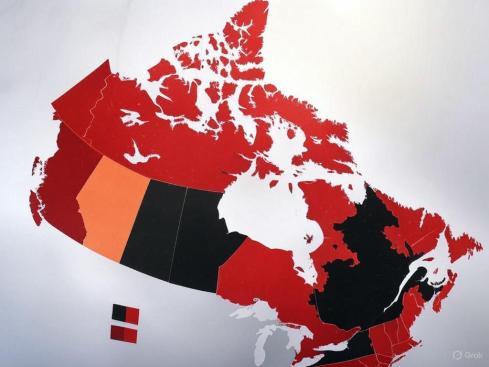
The Liberal Party of Canada’s (LPC) strategy of proroguing Parliament, seemingly to bide time for external political currents like Trump Derangement Syndrome to shift public sentiment, is a calculated maneuver that reeks of opportunism. By suspending legislative proceedings, the Liberals create a convenient pause, allowing them to sidestep immediate accountability while waiting for a wave of anti-Trump sentiment to bolster their image as a preferable alternative to the Conservative Party of Canada (CPC). This approach hinges on the hope that Canadians, distracted by U.S. political chaos, will overlook the LPC’s own inconsistencies and rally behind them as a bulwark against perceived extremism. It’s a crafty exploitation of timing, leveraging international headlines to mask domestic shortcomings, but it betrays a cynical reliance on external factors rather than a principled stand.
The LPC’s subsequent pivot to adopt key planks of the CPC platform—eliminating GST on new homes, scrapping the carbon tax, and revoking the capital gains tax—further exposes their strategy as a shameless theft dressed up as pragmatism. These policies, long championed by the Conservatives under Pierre Poilievre, were once derided by the Liberals as impractical or regressive, yet now they’re conveniently repackaged as bold, voter-friendly moves under Mark Carney’s leadership. This isn’t adaptation; it’s a bald-faced grab at populist appeal, executed with a sleight of hand that assumes Canadians won’t notice the hypocrisy. The Liberals’ willingness to jettison their own ideological moorings—once centered on progressive taxation and climate action—demonstrates a craftiness that prioritizes electoral success over coherence, revealing a party more devoted to power than to any governing philosophy.
This unctuous display underscores the LPC’s unflinching and unethical commitment to clinging to power at any cost, even if it means sacrificing integrity. Proroguing Parliament to dodge scrutiny, waiting for Trump-related hysteria to tilt the field, and then pilfering their rival’s playbook isn’t just strategic—it’s a slimy betrayal of public trust. It paints the Liberals as a party willing to bend any principle, adopt any stance, and manipulate any situation to avoid losing their grip on Ottawa. While the tactic may prove effective in the short term, especially with polls showing a Liberal surge as of March 22, 2025, it leaves a lingering stench of desperation and dishonesty, suggesting that for the LPC, the ends will always justify the means, no matter how greasy the path.

The Tesla backlash of March 2025 and the Bud Light controversy of 2023 both ignited swift, ideologically charged consumer reactions amplified by social media. Bud Light’s woes began with a Dylan Mulvaney ad, sparking a conservative boycott that cratered sales by up to 26%, while Tesla’s stem from Elon Musk’s Trump ties, alienating liberals and moderates as its stock plummeted over 40%. Both cases show how fast brand loyalty can erode when politics collide with commerce.
Yet, the responses differ sharply in tone and tactics. Bud Light faced a peaceful, effective boycott—think Kid Rock’s viral gunplay—focused on wallets, not violence, with sales dipping hard but stabilizing later. Tesla’s backlash has veered into chaos, with arson and vandalism targeting cars and dealerships, reflecting a rawer fury possibly fueled by Musk’s outsized persona and Tesla’s physical presence as a punching bag. The right shunned Bud Light; the left now torches Tesla.
Bud Light retreated, tweaking its image to appease critics, while Musk doubles down, flaunting Teslas at the White House amid Trump’s support. The beer brand took a hit but survived as a commodity; Tesla’s premium status and Musk’s defiance make its crisis more existential, blending economic rejection with a destructive edge. These sagas reveal how political tribalism can punish brands—one with a cold shoulder, the other with Molotovs.











 bleatmop
 Mystro
 The Arbourist


 Dead Wild Roses
Your opinions…