
You are currently browsing the tag archive for the ‘Gender Ideology’ tag.
Some children are genuinely vulnerable, atypical, or distressed, and they deserve careful support.
That should be easy to say. It should also be the beginning of the conversation, not the end of it.
The problem starts when a narrow duty of care is expanded into a broad teaching mandate. Support for a small number of children becomes a reason to saturate schools, children’s media, and online spaces with contested identity frameworks. What begins as accommodation becomes doctrine. What begins as care becomes a general lens for everyone.
That is the central move.
It is usually framed in soft language: inclusion, visibility, affirmation, making room. Sometimes that language is fair. But it can also hide a scope change. A real minority need is used to justify population-level exposure. The existence of some children who need unusual support does not, by itself, justify turning child-facing institutions into delivery systems for anti-normative identity scripts many children are not developmentally ready to evaluate.
Put simply: support is not the same thing as saturation.
A useful heuristic is the inoculation model. The implicit argument often sounds like this: expose everyone early and often to the framework so harm is prevented later. But that assumes the framework is age-appropriate, conceptually clear, and socially harmless when applied at scale. Those assumptions are usually asserted, not argued.
You can see the pattern in school frameworks like SOGI 123. SOGI 123 describes itself as an initiative to help educators make schools safer and more inclusive for students of all sexual orientations and gender identities, with tools spanning policy, school culture, and teaching resources. In British Columbia, SOGI 123 has been broadly integrated through educator networks and district participation structures. In Alberta, similar SOGI 123 resources and supports exist and are used, but public acceptance and implementation have been more contested and uneven. (Your local framing here is fine; if you want, we can add a specific Alberta anchor in the next pass.)
The point is not that every teacher using these materials has radical intentions. Most likely do not. The point is structural. A framework introduced in the name of protecting a minority of vulnerable students can become a general lens for shaping the environment of all students. That is exactly where support turns into saturation.
None of this requires pretending there are no benefits. Anti-bullying frameworks and school supports can reduce harassment and improve school climate for vulnerable students, and in some cases for other students as well. Recent SOGI 123 evaluation reporting in B.C. has explicitly claimed reductions in some forms of bullying and sexual-orientation discrimination, including effects observed for heterosexual students in studied schools. But that is a different question from whether a framework is well-bounded, developmentally fitted, and appropriate as a general lens for all children. A program can produce some good outcomes and still be overextended in scope.
This is also where ordinary parents often feel morally cornered. They are told the framework is simply about kindness and safety. Then they discover it also carries contested claims about identity, norms, and development. When they raise questions about age, fit, or timing, the objection is treated as hostility rather than prudence.
That rhetorical move matters. It is how debate gets shut down.
Some activist frameworks are not just asking for tolerance or non-harassment. They are more ambitious. They treat ordinary social norms as presumptively suspect—or as things to be actively challenged—rather than mostly inherited and refined. Adults can debate that in adult spaces. The problem is when those frameworks are translated into child guidance and presented as common sense before children are developmentally ready to sort through the concepts.
You do not need a graduate seminar to see the issue. Children imitate. Children seek belonging. Children absorb prestige cues. Children are shaped by what trusted adults celebrate. That is not bigotry. That is basic reality.
This is why developmental fit matters. Children do not process abstract identity questions the way adults do. Identity formation is gradual. Social context matters. Timing matters. Adult authority matters. Age appropriateness is not a slogan; it shifts across developmental stages, and what may be discussable at 16 is not automatically suitable at 6. When institutions present contested frameworks in a celebratory register first and a cautionary register later (or never), adults should worry.
The usual public binary is false. The choice is not between cruelty and total affirmation. It is not between neglect and ideological immersion. A sane society can do both things at once: provide targeted support for the children who truly need it, while refusing to reorganize the symbolic environment of all children around contested anti-normative frameworks.
That is not repression. It is proportion.
And proportion is exactly what gets lost when every concern is moralized and every request for limits is treated as harm.
We should be able to say, plainly, that some children need exceptional care without turning exceptional cases into the template for everyone else. We should be able to protect the vulnerable few without swamping the many. We should be able to teach kindness without requiring ideological inoculation.
If we cannot make those distinctions, then we are not practicing compassion. We are practicing scope creep with moral language.

Support for vulnerable students is necessary. But targeted care is not the same as saturating schools with contested identity frameworks for all children.
References
- SOGI 123 / SOGI Education. “SOGI 123 | Making Schools Safer and More Inclusive for All Students.”
https://www.sogieducation.org/ (SOGI 123) - SOGI Education. “What Is SOGI 123?”
https://www.sogieducation.org/question/what-is-sogi-123/
(official explainer page) - SOGI Education. “British Columbia.”
https://www.sogieducation.org/our-work/where-we-support/british-columbia/
(B.C. implementation / network context) - ARC Foundation. “UBC Evaluation of SOGI 123 (October 2024).”
https://www.arcfoundation.ca/ubc-evaluation-sogi-123-october-2024
(evaluation / outcomes framing from SOGI-supportive side) - Alberta Teachers’ Association. “What is SOGI 123?”
https://teachers.ab.ca/news/what-sogi-123 (teachers.ab.ca) - Keenan, H., and Lil Miss Hot Mess. “Drag Pedagogy: The Playful Practice of Queer Imagination in Early Childhood.” Curriculum Inquiry 51, no. 5 (2021): 578–594.
https://doi.org/10.1080/03626784.2020.1864621 - Gender Report (opinion/critical perspective). “We need to take ideological gender rhetoric out of education.” (Jan. 28, 2021).
https://genderreport.ca/sogi-gender-curriculum-queer-theory/ (CANADIAN GENDER REPORT) - Global News. “Duelling protests held in Edmonton over sexual orientation and gender identity policies in schools” (Sept. 20, 2024).
https://globalnews.ca/news/10766483/edmonton-gender-identity-sexual-orientation-alberta-schools/ (Global News)
This essay is not an argument against transgender adults living freely and being treated decently. It is an argument about a specific set of claims—metaphysical, political, and clinical—that tends to generate persistent institutional conflict because it lacks a shared stopping rule. By “stopping rule,” I mean a principled boundary that both sides can recognize as legitimate: a line where accommodation ends and coercion begins, or where uncertainty requires caution. When subjective identity claims are treated as authoritative and dissent is treated as harm, disputes recur across domains—speech norms, public policy, and pediatric medicine—because there is no common adjudicator capable of resolving the underlying disagreement.
1) Thesis and scope: what is being argued, and what is not
The claim here is procedural. Whatever one’s moral intuitions, systems built to enforce contested metaphysics predictably produce friction that neither side can permanently “win.” A pluralist society can enforce civility and prohibit harassment. It cannot, without escalating conflict, require citizens and institutions to treat an internally felt identity as the final authority over publicly legible categories—especially when those categories structure law, safety, and fairness.
2) Metaphysical claim: identity as authoritative reality
The metaphysical claim, stated minimally, is: when sex and self-declared gender conflict, identity is treated as the authoritative reality for how others must speak and for how institutions must categorize. In a liberal society, people routinely request courtesy; the tension begins when courtesy becomes a duty enforced by institutional sanctions, because that converts disagreements about contested concepts into compliance problems.
The mechanism is structural rather than psychological. If a proposition is treated as morally obligatory yet largely unverifiable, enforcement shifts from evidence to norms, and from norms to penalties. This does not require attributing motives; it is a predictable consequence of asking public systems to operationalize contested metaphysics. The cost is an expansion of “speech governance,” where ordinary interpersonal mistakes or dissenting beliefs are treated as policy violations rather than social disputes. The verdict: making subjective identity authoritative at the level of public rulemaking tends to destabilize shared norms, because the principle contains no internal boundary that can settle recurring disputes.
3) Political claim: institutions forced to referee contested categories
The political claim extends the metaphysical one: public institutions must treat identity as authoritative in classification and access. The “no stopping rule” problem becomes concrete when policy must decide eligibility, categories, and competing rights. Sport is not the whole controversy, but it is a clear case study because sex-segregated categories exist to preserve fairness under stable biological differences.
World Athletics’ 2023 regulations excluding transgender women who have experienced male puberty from elite female competition were an explicit attempt to draw a boundary grounded in performance-relevant biology rather than identity.(worldathletics.org) This example does not “prove” the broader thesis; it illustrates the governing dilemma: once identity is treated as determinative, any sex-based boundary becomes contestable on the same logic, and institutions are pulled into continuous adjudication. The cost is not only policy churn but legitimacy loss, as significant segments of the public come to see institutions as enforcing contested beliefs rather than administering neutral rules. The verdict: when institutions are made to referee contested metaphysical claims, policy disputes harden into identity conflicts and become difficult to resolve through ordinary pluralist compromise.
4) Clinical claim: minors, uncertainty, and the need for evidentiary brakes
The clinical claim is narrower and higher-stakes: affirmation-first protocols are often presented as the evidence-based default for minors, despite ongoing disputes about evidence quality, long-term outcomes, and appropriate thresholds for irreversible interventions.
The mechanism is again about stopping rules. In pediatrics, where patients may have limited capacity to grasp lifelong tradeoffs and where interventions can be difficult to reverse, uncertainty normally triggers caution: structured assessment, conservative pathways, and high evidentiary standards. In England, the Cass Review’s recommendations prompted major service redesign, and NHS England’s implementation document outlines steps already taken and planned in response to those recommendations.(england.nhs.uk) The UK government also announced that emergency restrictions on the private sale and supply of puberty blockers would be made indefinite following advice from the Commission on Human Medicines, citing safety concerns; the DHSC explainer situates this within a broader shift toward research frameworks.(gov.uk)
The point is not that UK policy settles the science. The point is procedural: a major public health system treated evidentiary uncertainty as a reason to tighten pathways and emphasize research structures. The cost of overstating certainty is predictable—trust erosion among families, clinicians, and the public when policy appears to run ahead of evidence. The verdict: for minors, uncertainty should operate as a brake; when it does not, clinical decision-making becomes vulnerable to political and ideological pressure.
5) Steelman, with a credibility caveat: what proponents argue, and why WPATH cannot be treated as neutral authority
A fair steelman starts with the humane premise: some young people experience profound distress; social rejection correlates with worse mental health; supportive environments may reduce suffering; and for adults, liberal societies generally presume wide autonomy over body and presentation. Observational research has reported short-term associations between receiving puberty blockers or hormones and lower reported depression or suicidality among transgender and nonbinary youth, while still facing the usual limitations of nonrandomized designs (selection effects, confounding, short follow-up).(jamanetwork.com)
Advocates often cite WPATH’s Standards of Care (SOC8) as a professional consensus reference point. A publishable essay, however, has to include a procedural caveat: SOC8 is now contested as an uncontested authority, particularly for minors, due to public disputes about guideline-development process and evidentiary representation. The “WPATH Files” publication by Environmental Progress alleges internal discussions inconsistent with the public posture of evidentiary confidence.(environmentalprogress.org) Separately, an HHS report alleged that during SOC8 development, WPATH suppressed certain systematic reviews considered potentially undermining to preferred protocols.(opa.hhs.gov) WPATH and USPATH responded by disputing key characterizations and criticizing the HHS report, framing it as misrepresenting evidence, and noting constraints around ongoing litigation and related processes.(wpath.org)
The responsible conclusion is limited but important: SOC8 may still be used to describe the best-case articulation of the pro-affirmation position, but it cannot function as a neutral “settled science” stamp—especially in a pediatric domain where evidentiary confidence must be demonstrable rather than asserted. The verdict: steelman the humane intent and the reported short-term associations; do not outsource epistemic certainty to a guideline whose development and representation are under active public dispute.
6) Synthesis: stopping rules as the governance solution
The practical question is governance, not moral panic: can a pluralistic society accommodate people without compelling metaphysical assent, and can pediatric medicine proceed without overstating certainty? The answer is unglamorous: stopping rules.
In institutions, stopping rules mean enforcing civil treatment and anti-harassment norms while refusing to treat metaphysical agreement as a condition of participation in public life. In medicine, stopping rules mean evidence thresholds, transparent review, and heightened caution for minors where long-term outcomes remain contested. If stopping rules are refused, conflict tends to migrate: from clinics to courts, from policy to punishment, from persuasion to compulsion. The cost is durable polarization and degraded trust in institutions. The verdict: if the goal is social peace and clinical integrity, the burden is on advocates and opponents alike to articulate boundaries that are evidence-responsive, rights-consistent, and enforceable without demanding ideological conformity.

Glossary
Affirmation-first: A clinical approach that treats a person’s stated gender identity as true and prioritizes support for it; critics argue it may reduce exploratory assessment, especially for minors.
Cass Review: Independent review commissioned by NHS England into child and adolescent gender services; its recommendations prompted service redesign and tighter evidence standards.(england.nhs.uk)
Observational study: Research that observes outcomes without random assignment; can show association but generally cannot prove causation.(pubmed.ncbi.nlm.nih.gov)
Puberty blockers (GnRHa): Medications that suppress pubertal development; debated in youth gender medicine due to evidence-quality and risk/benefit uncertainty.(gov.uk)
SOC8: WPATH Standards of Care, version 8 (2022), widely cited in gender medicine; currently disputed as neutral authority in some public controversies.(environmentalprogress.org)
Stopping rule: A principled boundary that can settle recurring disputes (e.g., evidence thresholds for minors; category rules in sport).
WPATH Files: A publication of alleged internal WPATH materials by Environmental Progress; relevant here because it is part of an ongoing credibility dispute about guideline development.(environmentalprogress.org)
References
- NHS England, Implementing the Cass Review recommendations (PDF). https://www.england.nhs.uk/wp-content/uploads/2024/08/PRN01451-implementing-the-cass-review-recommendations.pdf
- NHS England, Children and young people’s gender services: implementing the Cass Review recommendations (long read). https://www.england.nhs.uk/long-read/children-and-young-peoples-gender-services-implementing-the-cass-review-recommendations/
- UK Department of Health and Social Care, “Ban on puberty blockers to be made indefinite on experts’ advice” (11 Dec 2024). https://www.gov.uk/government/news/ban-on-puberty-blockers-to-be-made-indefinite-on-experts-advice
- DHSC Media Blog, “Puberty blockers: what you need to know.” https://healthmedia.blog.gov.uk/2024/12/11/puberty-blockers-what-you-need-to-know/
- World Athletics press release (Mar 2023) on female eligibility. https://worldathletics.org/news/press-releases/council-meeting-march-2023-russia-belarus-female-eligibility
- World Athletics eligibility regulations PDF. https://worldathletics.org/download/download?filename=c50f2178-3759-4d1c-8fbc-370f6aef4370.pdf&urlslug=C3.5A%20%E2%80%93%20Eligibility%20Regulations%20Transgender%20Athletes%20%E2%80%93%20effective%2031%20March%202023
- Tordoff et al., JAMA Network Open (2022). https://jamanetwork.com/journals/jamanetworkopen/fullarticle/2789423
- Environmental Progress, “The WPATH Files.” https://environmentalprogress.org/big-news/wpath-files
- HHS, Treatment for Pediatric Gender Dysphoria (Nov 2025). https://opa.hhs.gov/sites/default/files/2025-11/gender-dysphoria-report.pdf
- WPATH/USPATH response (May 2025). https://wpath.org/wp-content/uploads/2025/05/WPATH-USPATH-Response-to-HHS-Report-02May2025-3.pdf
https://x.com/wokal_distance/status/1943452227634630725
On July 10, Wokal Distance shared a powerful thread on X about the moral and intellectual fallout of gender ideology. Here’s the full text, reformatted for clarity:
I don’t think the left realizes the degree to which giving puberty blockers and sex-change procedures to kids who wanted to change genders was a test of moral and intellectual integrity. That test utterly destroyed the moral and intellectual credibility of everyone who failed it.
Those who went along with gender ideology didn’t just end up on the wrong side of public opinion. They demonstrated for the whole world that they had no intellectual integrity, moral fortitude, or ability to stand up for the truth or think for themselves.
They showed they have no intellectual or moral anchors of any kind. They’ll pretend to believe anything and go along with any ideology to preserve their social standing and the esteem of their colleagues.
The result? The institutions, industries, and individuals who embraced gender ideology proved they were intellectually and morally hollow. In the process, they destroyed their credibility and legitimacy as experts in the eyes of the public.
This isn’t just a PR crisis. It’s not about the focus of institutions or how people present themselves. The real issue is whether our elite class has the professional capability and moral fiber to competently do their jobs.
Gender ideology was a test of moral compass, intellectual integrity, and professional competence. If you have even one of those three qualities, you reject gender ideology. The only way to go along with it is to lack all three completely.
Those who supported gender ideology showed no moral compass, no intellectual integrity, no ability to think for themselves, and no professional competence in understanding critical issues. They’ve proven themselves utterly illegitimate as elites or experts.
They’ve shown they’re constitutionally incapable of doing the jobs they were assigned. For that reason, they’ve lost all social legitimacy and trustworthiness.
Progressives think this is a messaging problem or a PR crisis—it’s not. This is about the fundamental legitimacy of the entire institutional apparatus from which the left draws its professionals, staffers, employees, ideas, policies, and overall direction.
The left can’t fix this by shifting focus or direction. They must admit they failed the gender ideology test, explain why and how they failed, and put people in charge who would pass that test. Until they do, they’ll continue to be seen as illegitimate.
And they have no idea why, because they refuse to take the ‘L’ and figure out how their entire movement and all their institutions got hijacked by the most extreme wing of the most niche leftist movement in American politics.

Amy Hamm, a registered nurse with 13 years of experience, was recently fired by Vancouver Coastal Health following a ruling by the British Columbia College of Nurses and Midwives (BCCNM) that deemed her guilty of “professional misconduct.” Her termination stemmed from her public advocacy for sex-based rights, including her co-sponsorship of a 2020 billboard stating “I love JK Rowling” and her statements asserting that biological sex distinctions matter, particularly in contexts like women’s private spaces. This decision has sparked widespread debate, with critics arguing that her firing represents a severe overreach by her professional organization, punishing her for exercising free speech rather than any failure in her nursing duties.
The BCCNM’s investigation, which spanned over four years, focused on Hamm’s off-duty comments made in articles and a podcast where she identified as a nurse. The disciplinary panel labeled her statements about transgender issues as “discriminatory and derogatory,” claiming they undermined trust in the nursing profession. However, Hamm and her supporters contend that her views—rooted in the belief that biological sex is immutable—were not only unrelated to her professional conduct but also reflect a scientifically grounded perspective. The panel’s ruling, followed by her immediate dismissal without severance, raises questions about whether the BCCNM prioritized ideological conformity over fairness and evidence.
Hamm’s mistreatment highlights a broader issue of professional organizations stifling dissent under the guise of maintaining public trust. Her case suggests that nurses and other regulated professionals in Canada may face severe repercussions for expressing personal opinions, even outside their workplace, if those views clash with prevailing social narratives. The Justice Centre for Constitutional Freedoms, which supported Hamm legally, decried the ruling as a blow to free expression, arguing that it sets a chilling precedent for others in similar positions. This punitive approach effectively silences debate on contentious issues, forcing professionals to self-censor or risk their livelihoods.
 The decision to fire Hamm also appears disproportionate when considering her exemplary record as a nurse. No evidence was presented that her views impacted her patient care or professional performance; instead, the BCCNM focused solely on the perceived social implications of her statements. This disconnect between her job performance and the punishment meted out underscores a troubling trend: professional bodies acting as arbiters of personal belief rather than guardians of competence. Hamm’s termination without severance after 13 years of service further amplifies the perception of vindictiveness, suggesting an intent to make an example of her rather than address any tangible harm.
In the aftermath, Hamm has vowed to continue speaking out, supported by figures like JK Rowling and a growing chorus of advocates for free speech and women’s rights. Her case exposes the fragility of individual rights within Canada’s regulatory frameworks and the potential for professional organizations to wield unchecked power against those who challenge orthodoxy. As Hamm faces a possible appeal, her ordeal serves as a stark warning: the mistreatment she endured—being fired for her convictions—may foreshadow a future where intellectual freedom is sacrificed for institutional control, leaving professionals vulnerable to ideological purges.
Mark Carney’s daughter Sasha, frequently spun by the media as a cherubic “kid” in pigtails, is actually a 24-year-old Yale grad churning out freelance pieces in Brooklyn. Forget the teddy bear; she’s been writing about her non-binary identity and Tavistock Clinic visits since her teens. But why bother with accuracy when you can slap a “kid” label on her? It’s a cute, cuddly way to dodge her real story and keep Carney looking like the wise, protective dad—while hinting he’s all in on the gender ideology train that says identities can be as fluid as his old Bank of England policies.
This isn’t just lazy journalism; it’s a calculated twofer. Infantilizing Sasha strips her of agency—bye-bye, complex debates about her non-binary life or Yale-honed views—and doubles as a dog whistle that Carney’s a card-carrying believer in gender ideology. Why else let the “kid” narrative slide unless he’s nodding along to the idea that biology’s just a suggestion? It’s a slick move: keep her a helpless prop, sidestep the messy adult reality, and signal his progressive cred without him ever saying a word. Meanwhile, the media gets to skip the nuance and bank on us not noticing.
The deceit’s purpose is as clear as Carney’s Goldman Sachs resume: control the story, polish his image. A “kid” Sasha keeps the spotlight on him as the steady patriarch, not some guy whose grown daughter’s out there challenging norms he’s implicitly endorsed. It’s a bonus that this manipulation paints him as a gender ideology ally—perfect for the woke crowd—while the media rakes in clicks from the saccharine family vibe. They’re not clueless; they’re just betting we’ll swallow the sugarcoated lie over the sharper truth of a 24-year-old living their own life.

The recent ruling against Amy Hamm by the British Columbia College of Nurses and Midwives (BCCNM) is nothing short of a travesty, a glaring assault on free speech and common sense that should leave any reasonable person fuming. Hamm, a nurse and vocal advocate for women’s sex-based rights, was found guilty of “professional misconduct” in March 2025 for stating biological facts and expressing opinions critical of gender identity ideology. Specifically, the disciplinary panel zeroed in on a handful of her online statements—made while identifying as a nurse—deeming them “discriminatory and derogatory” toward transgender individuals. This isn’t just a punishment for Hamm; it’s a warning shot to every professional in Canada: step out of line with the prevailing ideology, and your career could be next. How dare a regulatory body, meant to ensure competence in healthcare, stretch its tentacles into policing personal beliefs expressed off-duty?
What’s particularly infuriating is the absurdity of the tribunal’s reasoning—or lack thereof. One so-called expert reportedly argued that being a woman is a “social identity category rather than a biological reality,” a statement so detached from science it’s laughable if it weren’t so dangerous. Hamm’s crime? Asserting that biological sex is real and matters, especially when it comes to women’s spaces and rights—a position grounded in observable fact, not hate. Yet, the panel chose to side with ideological fantasy over evidence, slapping Hamm with a guilty verdict for daring to speak her mind. This isn’t about protecting anyone; it’s about control, about silencing dissent under the guise of professionalism. The fact that her extensive Twitter posts, where she didn’t explicitly tie her nurse status, were spared only highlights the flimsy, cherry-picked nature of this witch hunt.
The implications of this ruling are chilling, and that’s putting it mildly. If a nurse can be professionally crucified for advocating for women’s rights and biological truth, what hope is there for free discourse in Canada? The BCCNM’s decision doesn’t just harm Hamm—it erodes the freedom of every regulated professional, from doctors to teachers, who now must tiptoe around controversial issues or risk their livelihoods. This is the kind of dystopian overreach that should spark outrage, not apathy. Hamm’s fight isn’t over—she’s hinted at appeals, potentially up to the Supreme Court—and thank goodness, because someone needs to stand up to this madness. We should all be rooting for her, not because we agree with every word she says, but because the principle at stake is too precious to let slip away without a fight.

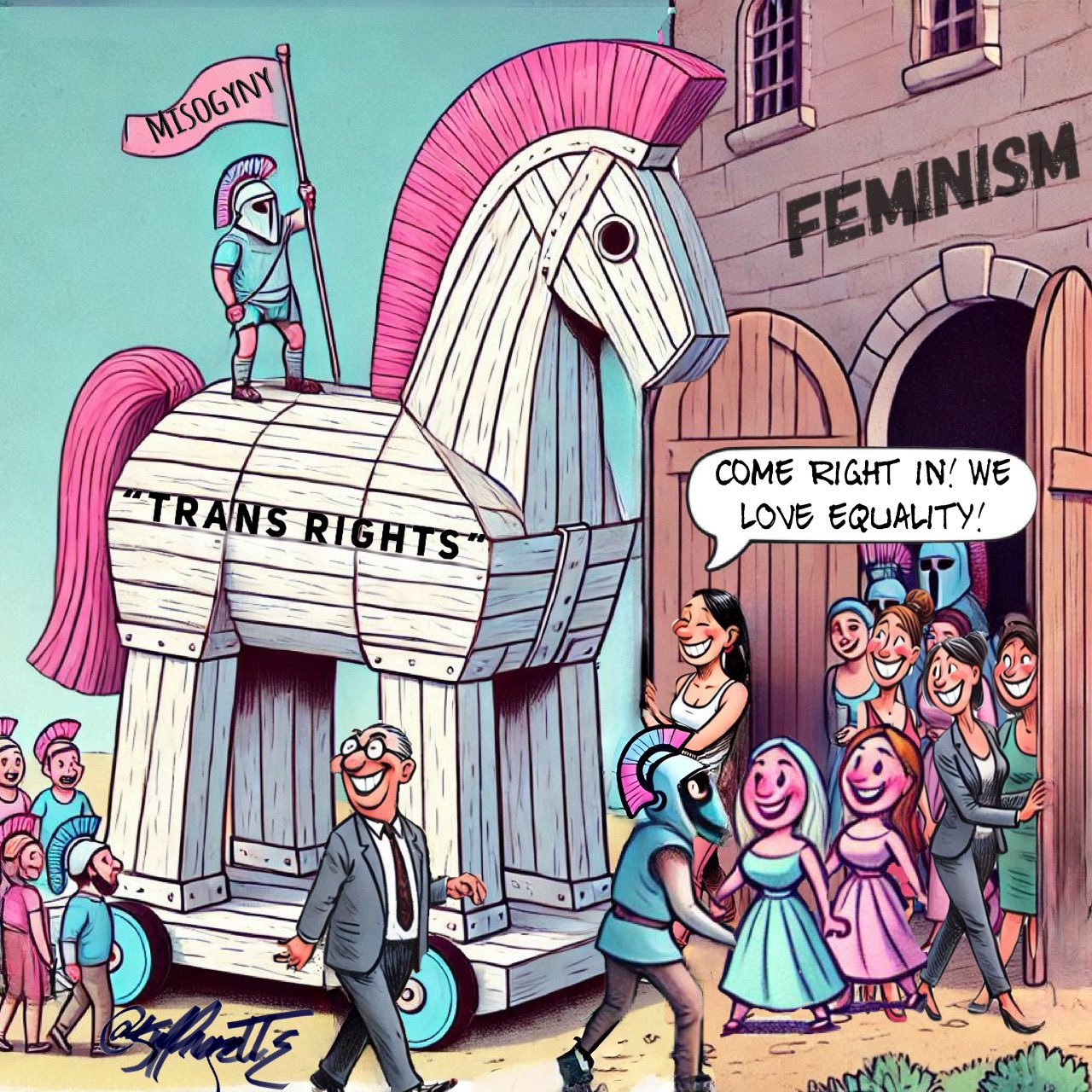
Hegel’s assertion in modern times:











 bleatmop
 Mystro
 The Arbourist


 Dead Wild Roses
Your opinions…