
You are currently browsing the tag archive for the ‘Scapegoating’ tag.
Political movements rarely collapse under the weight of disappointment alone. More often they reinterpret it. The promised future fails to arrive and the social stain lingers. The purified horizon recedes. Yet instead of asking whether the ideal was underdescribed, whether tradeoffs were real, or whether some tensions are permanent, the movement reaches for a simpler, more morally useful answer. Someone must be responsible. Someone must be standing in the way.
That move is not incidental. It is one of the recurring temptations built into negative idealism. A politics that defines the good chiefly as the removal of stain will struggle to explain why the stain persists. It can admit limits, revise its assumptions, and accept that some conflicts are permanent. Or it can personalize failure. It can insist that justice was within reach and that redemption was delayed only because obstructing people refused to yield. The first response chastens politics. The second radicalizes it.
Scapegoats appear when disappointment is moralized and limits are no longer acceptable. That is the core mechanism. An ideal remains unrealized. Frustration mounts. The possibility of tragedy, tradeoff, or flawed assumptions is set aside. Failure is pinned on agents. ‘Obstructors’ are named. Politics begins to shift from persuasion toward purification. The opponent is no longer merely someone who disagrees. The opponent now explains why the world has not yet been redeemed.
The pattern recurs for powerful reasons. To admit permanent tensions is to surrender the fantasy of total resolution. To admit real tradeoffs is to abandon moral simplicity. To admit that one’s own vision may be incomplete is harder still, because movements do not merely carry ideals. They build identities around them. Limits humble. Enemies vindicate. Blame preserves innocence. The fault lies not in the ambition itself, but in the people who would not let justice arrive.
Scapegoats are politically useful because they do more than absorb frustration. They organize power. They compress complexity into a story with clear villains and motives. They unify believers by giving them a common target. Diffuse resistance hardens into visible obstruction. Disagreement ceases to look like ordinary pluralism. It begins to look like sabotage. Critics are not merely wrong. They are carrying forward the very stain the movement exists to erase.
This logic also carries a psychological advantage. Human beings prefer agency to accident, sabotage to friction, guilt to limitation. A stubborn social problem becomes easier to bear when it can be attached to a face, a faction, or a contaminating group. Moral frustration seeks an author. The scapegoat supplies one. Enemy-making is therefore not only political. It is cognitively comforting.
“Scapegoats appear when disappointment is moralized and limits are no longer acceptable.”
The pattern has surfaced across very different traditions. Revolutionary movements have blamed classes, wreckers, or traitors. Racial utopias have pointed to impurity and contamination. Religious purges have singled out heretics and corrupters. Newer forms of moralized identity politics often begin with abstract systems, then gradually attach those systems to suspect categories of persons whose resistance, speech, habits, or mere presence becomes evidence that the harm endures. The doctrines change. The designated enemies change. The underlying move remains the same: disappointment is personalized so the ideal can remain morally intact.
Once that move is made, the atmosphere shifts. Persuasion gives way to exposure, isolation, discipline, and, if necessary, removal of those said to make redemption impossible. The language of diagnosis becomes the language of contamination. The social problem is no longer located chiefly in institutions or arrangements. It is carried by enemies. Disagreement itself now appears as complicity.
In ordinary politics, argument tests judgments under conditions of pluralism. In a politics of purification, argument becomes secondary. The real task is sorting: who is aligned with the redeemed future, and who is not? Who is mistaken, and who is stained? Who can be re-educated, and who must be excluded? Pluralism starts to look like weakness. Procedural restraint starts to look like moral cowardice.
“The enemy, then, does not merely explain failure. The enemy gives the movement its mission.”
The enemy, then, does not merely explain failure. The enemy gives the movement its mission. It supplies urgency, focus, solidarity, and justification for harder measures. Disappointment is redirected into action. Instead of questioning whether the ideal itself was flawed or impossible to complete, the movement can declare that justice remains delayed because the guilty remain active. The search for a better order becomes inseparable from the search for those who prevent it.
Scapegoating is therefore not a side effect of negative idealism. It is one of its built-in temptations. A movement that cannot define completion, accept limits, or survive disappointment without moral injury will search for a human cause for what reality refuses to yield. Before force comes justification. Before punishment comes moral sorting. The search for the guilty is how purification prepares itself for power.
This is where the next danger begins.
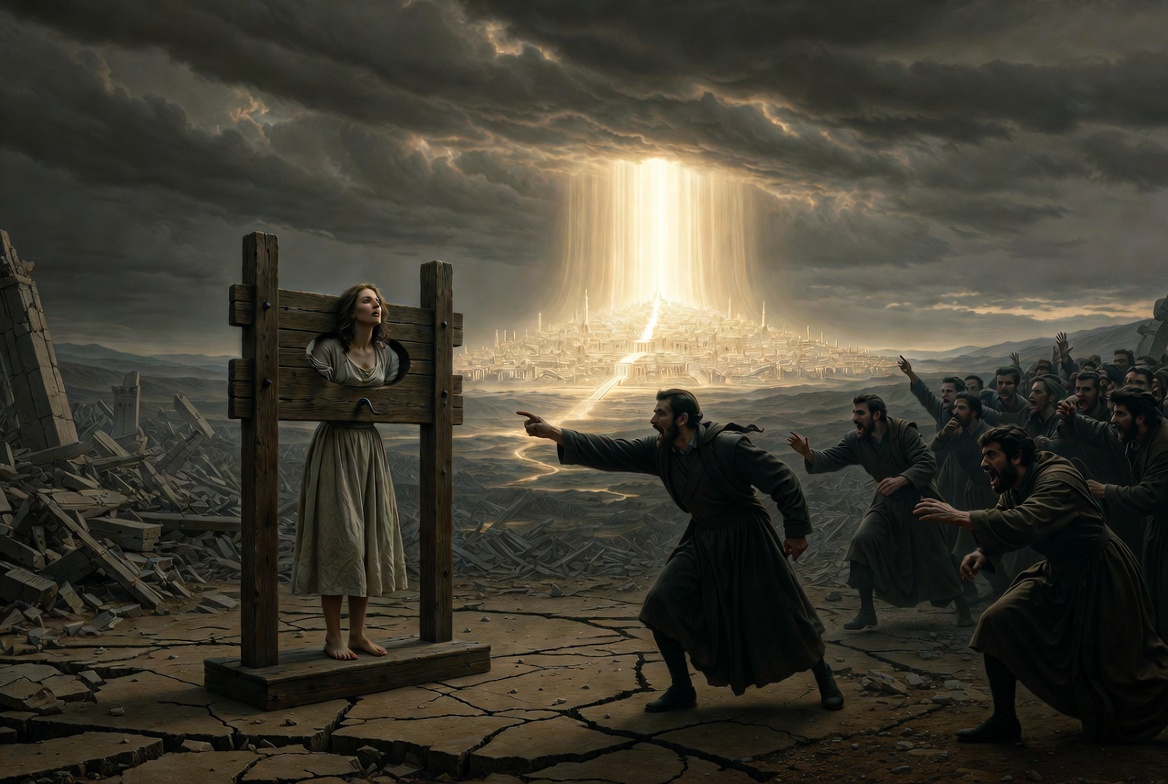
When limits cannot be named, someone must be blamed.
Most political reform begins from a defect that can be named and a remedy that can be argued over. A law is unjust. A policy fails. An institution overreaches. The aim is improvement, not redemption. The point is to correct a problem within the permanent constraints of social life.
A different kind of politics begins elsewhere. It is driven less by a concrete vision of what a good society can actually sustain than by an intense certainty about what must be abolished: domination, exclusion, stigma, hierarchy, impurity. The ideal appears first not as a positive order with defined institutions, costs, limits, and tradeoffs, but as a purified horizon from which every visible moral stain has been removed.
That structure matters. A politics organized around what must disappear often possesses enormous critical energy but weak constructive discipline. It can identify contamination faster than it can describe settlement. It can mobilize outrage faster than it can specify completion. Because its standard is defined chiefly by negation, it struggles to say when the work is done. The result is a politics of permanent dissatisfaction: a style of moral and political life in which every remaining imperfection is read not as evidence of human limits, conflicting goods, or institutional friction, but as proof that the world is still guilty.
I will call this negative idealism. By that I mean a way of thinking in which the desired social order is known mainly by its absences rather than by its positive form. No oppression. No exclusion. No domination. No harm. No taint. Those aspirations can contain real moral insight. But as political endpoints they are unstable unless they are joined to harder questions. What institutions will carry this vision? What tradeoffs does it permit? What tensions are permanent? What counts as enough? When those questions go unanswered, negation begins to do more than criticize the present. It becomes a self-renewing engine of dissatisfaction.
The attraction is not mysterious. Negation is easier than construction. It is emotionally cleaner to denounce a stain than to design a settlement. Critique flatters the conscience. Construction burdens it. One allows people to inhabit moral clarity. The other forces them to reckon with scarcity, conflict, enforcement, and cost. It is easier to unite people around what they reject than around the terms on which they are prepared to live together.
“The structure is often recognizable: a purified horizon is announced, reality fails to comply, the gap is moralized, and the search for the guilty begins.”
That asymmetry gives this style of politics much of its force. It does not need to answer many hard questions in order to condemn domination, exclusion, or stigma. It can gather energy long before it can govern. It can speak in the language of moral emergency without yet saying what institutions would embody its ideal, what competing goods would have to be balanced, or what losses would remain even after reform. In that sense, it is potent precisely because it defers the moment when aspiration must submit to architecture.
Politics becomes serious at exactly that moment. It becomes serious when a moral vision is forced to move from diagnosis to design. What laws would reflect its principles? What institutional powers would be needed to enforce them? What rights would be protected when goods conflict? What exclusions would still remain, and on what grounds? What counts as enough? These are not secondary questions. They are the point at which aspiration is tested by the world it proposes to inhabit.
Here the negatively defined ideal often begins to wobble. The problem is not that it identifies nothing real. Many such projects do identify real injustices, real cruelties, and real failures of social order. The problem is that the ideal itself remains underdescribed. A society can reduce particular evils. It can mitigate harms. It can discipline abuses. But it cannot become a place with no stigma, no hierarchy, no domination, no friction, no exclusion, and no conflict unless words have ceased to mean what they usually mean. Human beings are finite. Goods compete. Institutions are blunt. Boundaries protect some things by restricting others. Social life is not clean.
Once that reality is faced, the burden of politics changes. The question is no longer how to abolish every trace of moral injury, but how to order a society under conditions where some tensions are permanent and some tradeoffs are unavoidable. That is the work negative idealism resists. It prefers purification to settlement. It treats compromise as contamination. It treats incompleteness not as a condition of human life, but as evidence that the moral task has been betrayed.
That is why dissatisfaction becomes self-renewing. An ideal that cannot be positively specified also cannot be clearly achieved. There is always another residue to expose, another hidden structure to name, another dissenter to classify as complicit, another demand that must now be treated as morally urgent because prior concessions have already established the principle. Partial victories do not calm the impulse. They often intensify it. Each gain becomes evidence that the horizon can be pressed farther still, and each remaining imperfection becomes proof that justice has been delayed by someone’s refusal, cowardice, or bad faith.
What this pattern often lacks is a serious category of tragedy. Not every persistent social imperfection survives because wicked people protect it. Some survive because resources are finite, institutions are crude, and goods that matter can come into conflict without any clean resolution. Freedom and equality can pull against each other. Inclusion and standards can pull against each other. Compassion and truth can pull against each other. Order has costs, but disorder has costs too. A politics that cannot admit such tensions will misread the world it is trying to govern.
The refusal to acknowledge limits distorts judgment. What should have been recognized as friction, tradeoff, or permanence is recoded as obstruction. What should have been understood as an unintended cost is treated as evidence of hidden malice. What should have been accepted as the unfinished character of social life is interpreted instead as proof that the work has been sabotaged. A movement that cannot say, “this good is real, but incomplete,” will be tempted to say, “this good has been denied because guilty people still stand in the way.”
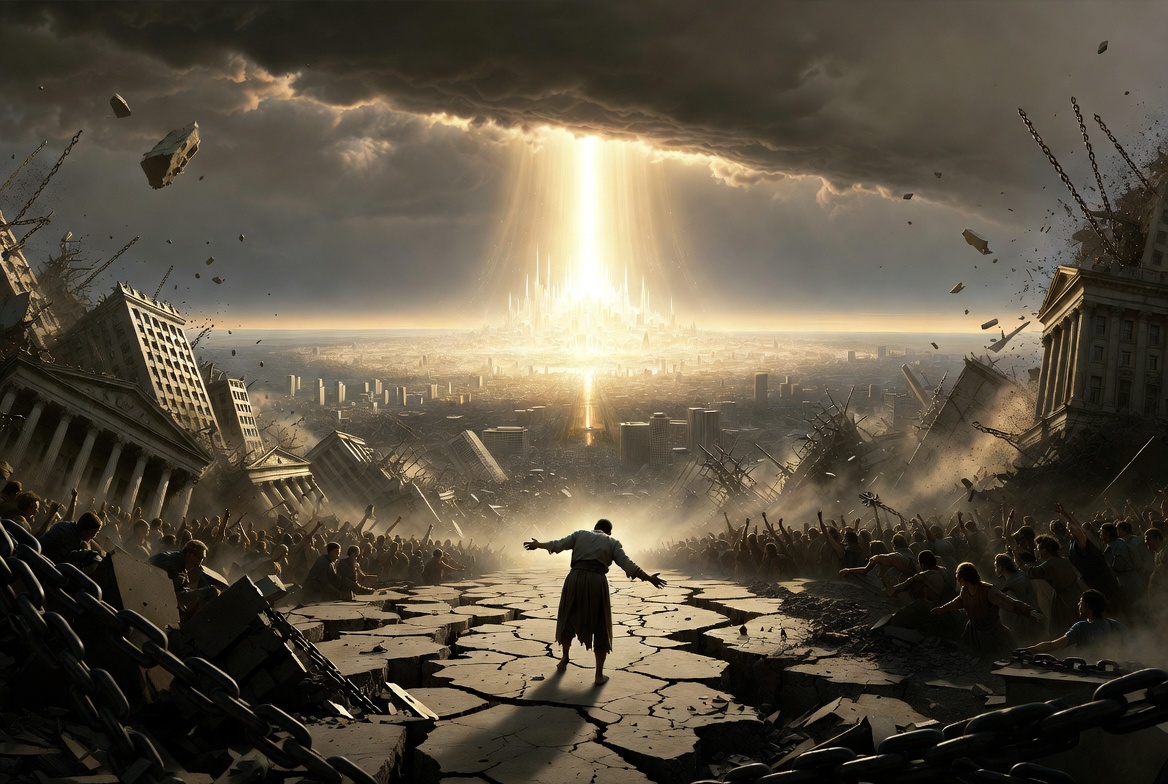
This does not belong to one ideology alone. Variations of the pattern have appeared in revolutionary class politics, racial purification movements, and newer forms of moralized identity activism. The content differs. The vocabulary differs. The designated enemies differ. But the structure is often recognizable: a purified horizon is announced, reality fails to comply, the gap is moralized, and the search for the guilty begins.
That is the deeper political danger in negative idealism. It does not merely produce endless critique. It creates pressure to personalize failure. If the ideal is pure, and the ideal remains unrealized, then the fault must lie not in the ambition itself, nor in the constraints of reality, but in the people said to be resisting redemption. At that point dissatisfaction ceases to be diagnostic and becomes accusatory. The inability to perfect the world is no longer treated as a human condition. It is treated as evidence that enemies remain.
“A politics that knows the good chiefly as the removal of taint will have difficulty describing completion, accepting limits, or recognizing partial success.”
Ordinary politics depends on a harder and more chastened wisdom. It depends on the recognition that some injustices can be reduced without being abolished, that some conflicts must be managed rather than solved, and that settlement is often the proper goal where purification is impossible. A society that loses that wisdom becomes vulnerable to movements that know how to denounce every stain but do not know how to live with human limits. Such movements can speak with immense conviction. What they struggle to do is stop.
None of this means moral criticism is misplaced, or that reform should be timid, or that injustice is merely the name we give to unavoidable discomfort. It means something narrower and harder. A politics that knows the good chiefly as the removal of taint will have difficulty describing completion, accepting limits, or recognizing partial success. It will remain permanently dissatisfied because the horizon it serves is permanently receding. And once that condition sets in, the search for a better order can all too easily become a search for the guilty.
This is where the next question begins. If a movement cannot explain the gap between its ideal and reality through limits, tradeoffs, or tragedy, how will it explain that gap instead? Usually by finding someone to blame.
Glossary
Negative idealism: A way of thinking in which the desired social order is known mainly by what it seeks to abolish rather than by a clear positive account of what it can sustain.
Purified horizon: An imagined social condition from which moral stain has been removed, even though its institutions, limits, and tradeoffs remain vague.
Permanent dissatisfaction: The condition that arises when a movement cannot clearly define completion and so treats every remaining imperfection as proof that the work is unfinished.
Tragedy: The fact that some social tensions persist not because of sabotage or malice, but because goods conflict, resources are finite, and human beings are limited.
Settlement: A workable political order that manages conflict and tradeoffs without pretending to abolish them entirely.
Over the next week, I will be publishing a five-part essay series on a pattern that has become increasingly visible across contemporary politics.
The pattern is not confined to any one ideology. It appears in different forms, with different moral vocabularies, and at different levels of intensity. But the structure is often recognizable.
A movement begins with a grievance, often a real one. It defines the good chiefly by what must be abolished. The ideal remains vague, but the stain is vividly named. Reality resists. Limits persist. Tradeoffs do not disappear.
At that point, a choice presents itself. The movement can revise its ambitions in light of the world as it is, or it can moralize the gap between promise and outcome. When it chooses the second path, disappointment hardens into blame. Blame hardens into sorting. Sorting prepares the way for coercion.
That is the mechanism this series examines.
The aim is not to collapse different movements into one another, nor to deny that many of the grievances in question are real. The aim is to describe a recurring political logic that can emerge across very different doctrines once ideals are treated as immune to revision.
The essays proceed in sequence:
- Essay 1: The structure of negative idealism
- Essay 2: The turn to scapegoating
- Essay 3: Gender ideology and the breakdown of boundaries
- Essay 4: Family resemblances across radical movements
- Essay 5: Settlement against redemption
Each essay builds on the last. They are meant to be read together.
The argument is not that politics should abandon ideals. It is that ideals must be able to survive contact with limits, tradeoffs, and an unfinished world. When they cannot, the pressure to explain failure shifts outward, and the search for the guilty begins.
This series is an attempt at diagnosis. It is also, in its final movement, an argument for a different posture: one that prefers settlement to redemption, and construction to purification.












 bleatmop
 Mystro
 The Arbourist


 Dead Wild Roses
Your opinions…