
You are currently browsing the category archive for the ‘Alberta’ category.
One of the most corrosive habits in current political discourse is the way plain factual claims get assigned a partisan label. Not arguments. Not policies. Facts. Or, more precisely, statements that point back to material reality, institutional limits, or ordinary human constraints. In theory, facts are supposed to discipline ideology. In practice, they are often treated as ideological aggression when they obstruct a preferred moral script.
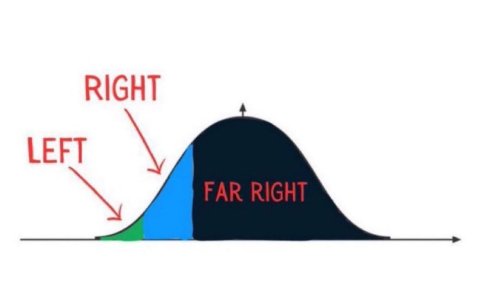
That is what people are reaching for when they say facts are now treated as right-wing. The phrase is blunt, but it points to something real. In a growing number of disputes, especially around sex, gender, speech, and institutional policy, a person can say something materially true and be treated not as a participant in debate but as a moral suspect. The point is not answered on its merits. It is recoded as a signal of contamination. The speaker is no longer heard as describing reality. He is heard as choosing a tribe.
That shift matters because it changes the structure of argument. Once a factual claim is socially coded as “right-wing,” the burden quietly moves. The question is no longer whether the claim is true. The question becomes why you said it, what kind of person says such things, and who might feel endangered by hearing it. Motive replaces mechanism. Stigma replaces rebuttal. The claim is not refuted so much as quarantined.
You can see this clearly in disputes over sex and pronouns. For many people, saying that sex is real, binary in the ordinary human sense, and not altered by self-declaration is not an act of hostility. It is a claim about reality and a claim about language. “He” and “she” historically track male and female persons. Refusing to detach those words from sex is not, on its face, a partisan performance. It is an attempt to keep public language tethered to the material world rather than to inward identity claims.
“The disagreement is not mainly about politeness. It is about which reality gets public authority.”
That is exactly why the issue generates so much heat. The disagreement is not mainly about politeness. It is about which reality gets public authority. Does language track bodies, or does it track self-declared identity? Does a school treat sex as a stable feature of the world, or does it treat identity assertion as the governing fact? Those are not small etiquette disputes inflated by the internet. They are conflicts about ontology, law, and institutional power.
Canada now offers several live examples. Alberta’s Education Amendment Act requires parental notification when a student requests a gender identity-related preferred name or pronouns, and parental consent for students under 16 before staff may use them. The province says these changes are part of supporting families and setting clear school rules, with the remaining education amendments anticipated to take effect on September 1, 2025. Then, in late 2025, Alberta escalated further. Bill 9 invoked the notwithstanding clause to shield not only this school policy but other contested sex-and-gender measures from being struck down by the courts. That bundling matters. It shows this is no longer being treated as a narrow administrative disagreement, but as a foundational conflict over parental authority, child development, and the public meaning of sex.
Quebec presents the same fracture from the opposite direction, and it is ongoing now. Current reporting says a Montreal teacher is challenging the provincial policy that allows students 14 and older to change the name and pronouns used at school without parental consent. The teacher alleges she was required to use male pronouns at school while using female pronouns with the student’s parents. A preliminary hearing on anonymity and confidentiality was held on March 6, 2026, with the broader merits challenge still to come. Strip away the activist packaging and the conflict becomes plain: can institutional professionals be required to maintain two vocabularies of reality depending on the audience, and if they object, are they making an ethical argument or committing a moral offense?
The Barry Neufeld case in British Columbia shows the institutional end point of this logic. On February 18, 2026, the B.C. Human Rights Tribunal issued its decision and ordered substantial damages after finding that multiple publications were discriminatory, while some crossed the threshold into hate speech. That does not prove that every factual objection to gender ideology is punishable. It does show how readily dissent can be processed through systems that move from moral condemnation to formal classification. Once that line is crossed, everyone watching understands the lesson. The risk is no longer simply that you will be called wrong. The risk is that you will be treated as a public contaminant.
This is why the familiar “both sides are just choosing different facts” formula goes soft in exactly the wrong place. The conflict is not symmetrical. One side is generally making claims about bodies, language, legal authority, and institutional procedure. The other is often demanding that those things yield to identity-based recognition norms. Dignity is real and relevant. But dignity does not erase biological category, dissolve observable sex, or transmute factual disagreement into literal violence.
So when people say facts are treated as right-wing, the point is not that truth literally belongs to one side of the spectrum. The point is that in a culture saturated with moral performance, inconvenient facts are often recoded as partisan because it is easier to stigmatize them than to answer them. A factual claim that disrupts the script is no longer processed as description. It is processed as dissent. And dissent, under current conditions, is increasingly treated as a character defect.
Facts do not have a party. But when facts obstruct an ideological narrative, that narrative will often brand them right-wing and move straight to motive-policing. That is not a sign that the facts have changed. It is a sign that too much of public discourse has become allergic to reality when reality refuses to flatter the creed.
References
Government of Alberta. “Supporting Alberta students and families.”
https://www.alberta.ca/supporting-alberta-students-and-families
Government of Alberta. “Protecting youth, supporting parents, and safeguarding female sport.”
https://www.alberta.ca/protecting-youth-supporting-parents-and-safeguarding-female-sport
Global News. “Montreal teacher challenges policy for trans students to hide identity from parents.” March 6, 2026.
https://globalnews.ca/news/11719392/montreal-teacher-trans-students-challenge/
British Columbia Human Rights Tribunal. Chilliwack Teachers’ Association v. Neufeld (No. 10), 2026 BCHRT 49. February 18, 2026.
https://www.bctf.ca/docs/default-source/for-news-and-stories/49_chilliwack_teachers-_association_v_neufeld_no_10_2026_bchrt_49.pdf?sfvrsn=2d847803_1
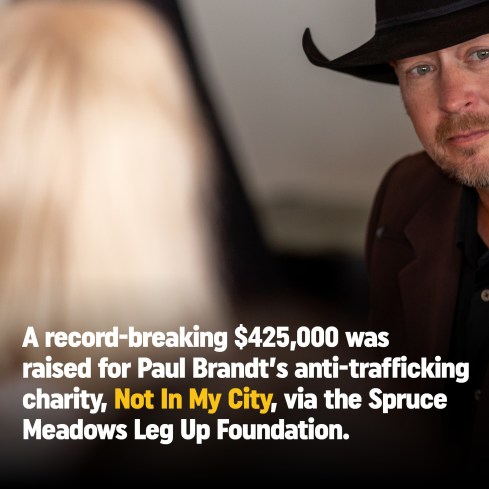
Paul Brandt is not a fringe troll with a microphone. He’s a mainstream Canadian artist with a public record of philanthropy, and he’s closely associated with “Not In My City,” a project focused on combating sexual exploitation and trafficking. So when he was slated to appear as a keynote speaker at Alberta’s North Central Teachers’ Convention and then disappeared from the final program, the obvious question is not “what did he tweet?” It’s simpler:
Who made that decision, and why won’t they say so plainly?
The reporting to date suggests Brandt was initially scheduled, then “not included in the final schedule,” with no substantive explanation offered beyond that. That’s not a scheduling explanation. That’s a refusal to explain.
And refusals matter, because when institutions won’t tell the truth in normal language, people assume the worst—and sometimes they’re right.
The Mechanism: Institutional Silence Creates Political Meaning
If you remove a speaker at the last minute and provide no reason, you create a vacuum. That vacuum fills with the most plausible theory available.
In this case, the most widely circulated theory is that Brandt’s public comments touching Alberta independence politics annoyed someone. Is that proven? No. It remains inference. But it is an inference made easier by the ATA ecosystem’s habits: highly political instincts, high message discipline, low transparency.
If the truth is mundane—contract issue, travel issue, logistical conflict—then say it. If the truth is “we didn’t want this topic,” then say that, too. Adults can handle disagreements. What they can’t handle is managerial fog deployed as reputational control.
Precision: Who Is “The ATA” Here?
One important correction: teachers’ conventions are not simply “the ATA” as a monolith. Convention programming is organized by convention associations and boards; the ATA is part of the structure, but local governance and planning matter.
That distinction doesn’t let anyone off the hook. It just tells us where accountability should point: the convention organizers and the ATA officials involved need to identify the decision-maker.
Not “we didn’t include him.”
Not “the schedule changed.”
Not “it was complicated.”
Name the person or committee. Publish the rationale. Own it.
The Drag Bingo Contrast (What We Can Prove, and What We Can’t)
Let’s also clean up another point, because credibility matters more than vibes.
There is evidence that at least one ATA local (Calgary Public Teachers, ATA Local 38) has promoted drag bingo events for teachers—adult social programming and fundraising, including a “Drag Bingo 2.0” event advertised for February 28, 2026 at Hudsons Canada’s Pub. Other posts and recaps indicate this has been a recurring event.
What that does not prove is “drag queen programming for children in classrooms.” If you want to make that claim, you need separate documentation. This piece doesn’t need it.
The point is narrower and stronger:
ATA-affiliated organizations are willing to put their name to drag entertainment for adults, as part of educator culture—and yet they won’t clearly explain why a speaker connected to anti-exploitation advocacy was removed from a major professional gathering.
That mismatch doesn’t prove bad intent. It proves something else: selective transparency. When the programming is ideologically safe, the institution is loud. When the programming might trigger internal conflict, the institution becomes a ghost.
The Real Issue Isn’t Paul Brandt. It’s Institutional Governance.
If you are a teacher paying dues, you should be furious—not necessarily because Brandt is the perfect keynote, but because your professional association is behaving like a risk-management shop instead of a member-serving institution.
Here are the questions that require answers:
- Who made the call to remove him from the program?
- What criterion was used—professional relevance, conduct, political sensitivity, “safety,” reputation risk?
- When was the decision made?
- Was Brandt given a reason, and is that reason publishable?
- Will the organizers commit to a transparency standard going forward?
If those questions can’t be answered, the institution has a bigger problem than one cancelled keynote. It has a legitimacy problem.
Because once you normalize silent removals, you don’t just manage controversy. You teach your own members that power flows upward, speech gets filtered, and you’re expected to smile.
Verdict
You can disagree about Alberta independence. You can dislike country music. You can even decide a trafficking-focused keynote doesn’t fit your convention theme. Fine. That’s politics.
But if you can’t say it openly—if your default mode is bland non-answers and managerial evasion—then you’re not leading educators. You’re managing a brand.
And Alberta parents are right to notice. When the people tasked with protecting children won’t speak plainly about their own choices, they don’t look principled. They look captured.
Albertans deserve better than that. And teachers do too.
Canada still runs a legal category of “Indian” through federal law. Not as history. As operating code. The Indian Act governs registration, band governance, and the reserve framework. Identity becomes partly administered by statute, not only lived in community. (laws-lois.justice.gc.ca) When a state maintains a separate legal lane for a class of people, it does more than recognize difference. It reproduces difference through process and permanence.
Get the timeline right because this is where critics go hunting. The Indian Act was assented to on April 12, 1876, as a consolidation of laws “respecting Indians.” (sac-isc.gc.ca) Consolidation is not an accident. It is a choice to centralize control, define membership, and keep Indigenous life routed through Ottawa’s legal plumbing. Once you do that, you create a stable incentive loop. Governments manage liability and jurisdiction. Communities defend the gateways through which rights, services, and recognition pass. The system is not neutral simply because it is administrative.
Martin Buber’s vocabulary helps name the moral move without turning this into a sermon. An I–It posture treats people as objects. They become cases, stakeholders, units, problems to be managed. An I–Thou posture treats them as subjects with agency and dignity. A system that sorts people into different legal kinds makes I–It governance easier. Bureaucratic proxies replace encounter. Resentment follows because the relationship becomes instrumental even when the language stays compassionate.
You can watch the machine work in Alberta right now. Elections Alberta issued a Notice of Initiative Petition in late January 2026 for a citizen initiative proposing an Alberta independence referendum question. (elections.ab.ca) First Nations responded with litigation arguing the province had constitutional duties to consult on the impacts of such a referendum and failed to do so. (globalnews.ca) Alberta’s population reached 5.0 million in Q4 2025. (economicdashboard.alberta.ca) That is a large public, a loud politics, and a long list of grievances looking for a target. In that environment, it becomes easy to blame “Indians” as a block instead of blaming the architecture that turns every dispute into a status-mediated struggle over courts, duties, and jurisdiction.
The safest conclusion is also the strongest. Treat this as structure, not as villains. There are Indigenous voices, including William Wuttunee, who argued decades ago that the reserve-dependency model traps people and that integration on Indigenous terms was a path out. (uofmpress.ca) You do not need to adopt his full program to accept the warning. As long as legal status remains the main conduit for dignity, power, and money, Canada will keep reproducing otherness by design. Too many institutions cannot cash their cheques any other way.

References
Source Speech (YouTube)
Indian Act (R.S.C., 1985, c. I-5) — Justice Laws (official text)
https://laws-lois.justice.gc.ca/eng/acts/i-5/
Indian Act, 1876 (“amend and consolidate…”) — SAC-ISC archival text
https://www.sac-isc.gc.ca/eng/1100100010252/1618940680392
Martin Buber (I–It / I–Thou) — Stanford Encyclopedia of Philosophy
https://plato.stanford.edu/entries/buber/
Elections Alberta — Notice of Initiative Petition issued (Jan 27, 2026)
New Citizen Initiative Application Approved, Notice of Initiative Petition Issued
Alberta separation petition legal challenge context — Global News (Jan 23, 2026)
3 Alberta First Nations say separation petition is unconstitutional
Alberta population (5.0M in Q4 2025) — Government of Alberta Economic Dashboard
https://economicdashboard.alberta.ca/dashboard/population-quarterly/
William Wuttunee / Ruffled Feathers — University of Manitoba Press
https://uofmpress.ca/books/still-ruffling-feathers
Some children are genuinely vulnerable, atypical, or distressed, and they deserve careful support.
That should be easy to say. It should also be the beginning of the conversation, not the end of it.
The problem starts when a narrow duty of care is expanded into a broad teaching mandate. Support for a small number of children becomes a reason to saturate schools, children’s media, and online spaces with contested identity frameworks. What begins as accommodation becomes doctrine. What begins as care becomes a general lens for everyone.
That is the central move.
It is usually framed in soft language: inclusion, visibility, affirmation, making room. Sometimes that language is fair. But it can also hide a scope change. A real minority need is used to justify population-level exposure. The existence of some children who need unusual support does not, by itself, justify turning child-facing institutions into delivery systems for anti-normative identity scripts many children are not developmentally ready to evaluate.
Put simply: support is not the same thing as saturation.
A useful heuristic is the inoculation model. The implicit argument often sounds like this: expose everyone early and often to the framework so harm is prevented later. But that assumes the framework is age-appropriate, conceptually clear, and socially harmless when applied at scale. Those assumptions are usually asserted, not argued.
You can see the pattern in school frameworks like SOGI 123. SOGI 123 describes itself as an initiative to help educators make schools safer and more inclusive for students of all sexual orientations and gender identities, with tools spanning policy, school culture, and teaching resources. In British Columbia, SOGI 123 has been broadly integrated through educator networks and district participation structures. In Alberta, similar SOGI 123 resources and supports exist and are used, but public acceptance and implementation have been more contested and uneven. (Your local framing here is fine; if you want, we can add a specific Alberta anchor in the next pass.)
The point is not that every teacher using these materials has radical intentions. Most likely do not. The point is structural. A framework introduced in the name of protecting a minority of vulnerable students can become a general lens for shaping the environment of all students. That is exactly where support turns into saturation.
None of this requires pretending there are no benefits. Anti-bullying frameworks and school supports can reduce harassment and improve school climate for vulnerable students, and in some cases for other students as well. Recent SOGI 123 evaluation reporting in B.C. has explicitly claimed reductions in some forms of bullying and sexual-orientation discrimination, including effects observed for heterosexual students in studied schools. But that is a different question from whether a framework is well-bounded, developmentally fitted, and appropriate as a general lens for all children. A program can produce some good outcomes and still be overextended in scope.
This is also where ordinary parents often feel morally cornered. They are told the framework is simply about kindness and safety. Then they discover it also carries contested claims about identity, norms, and development. When they raise questions about age, fit, or timing, the objection is treated as hostility rather than prudence.
That rhetorical move matters. It is how debate gets shut down.
Some activist frameworks are not just asking for tolerance or non-harassment. They are more ambitious. They treat ordinary social norms as presumptively suspect—or as things to be actively challenged—rather than mostly inherited and refined. Adults can debate that in adult spaces. The problem is when those frameworks are translated into child guidance and presented as common sense before children are developmentally ready to sort through the concepts.
You do not need a graduate seminar to see the issue. Children imitate. Children seek belonging. Children absorb prestige cues. Children are shaped by what trusted adults celebrate. That is not bigotry. That is basic reality.
This is why developmental fit matters. Children do not process abstract identity questions the way adults do. Identity formation is gradual. Social context matters. Timing matters. Adult authority matters. Age appropriateness is not a slogan; it shifts across developmental stages, and what may be discussable at 16 is not automatically suitable at 6. When institutions present contested frameworks in a celebratory register first and a cautionary register later (or never), adults should worry.
The usual public binary is false. The choice is not between cruelty and total affirmation. It is not between neglect and ideological immersion. A sane society can do both things at once: provide targeted support for the children who truly need it, while refusing to reorganize the symbolic environment of all children around contested anti-normative frameworks.
That is not repression. It is proportion.
And proportion is exactly what gets lost when every concern is moralized and every request for limits is treated as harm.
We should be able to say, plainly, that some children need exceptional care without turning exceptional cases into the template for everyone else. We should be able to protect the vulnerable few without swamping the many. We should be able to teach kindness without requiring ideological inoculation.
If we cannot make those distinctions, then we are not practicing compassion. We are practicing scope creep with moral language.

Support for vulnerable students is necessary. But targeted care is not the same as saturating schools with contested identity frameworks for all children.
References
- SOGI 123 / SOGI Education. “SOGI 123 | Making Schools Safer and More Inclusive for All Students.”
https://www.sogieducation.org/ (SOGI 123) - SOGI Education. “What Is SOGI 123?”
https://www.sogieducation.org/question/what-is-sogi-123/
(official explainer page) - SOGI Education. “British Columbia.”
https://www.sogieducation.org/our-work/where-we-support/british-columbia/
(B.C. implementation / network context) - ARC Foundation. “UBC Evaluation of SOGI 123 (October 2024).”
https://www.arcfoundation.ca/ubc-evaluation-sogi-123-october-2024
(evaluation / outcomes framing from SOGI-supportive side) - Alberta Teachers’ Association. “What is SOGI 123?”
https://teachers.ab.ca/news/what-sogi-123 (teachers.ab.ca) - Keenan, H., and Lil Miss Hot Mess. “Drag Pedagogy: The Playful Practice of Queer Imagination in Early Childhood.” Curriculum Inquiry 51, no. 5 (2021): 578–594.
https://doi.org/10.1080/03626784.2020.1864621 - Gender Report (opinion/critical perspective). “We need to take ideological gender rhetoric out of education.” (Jan. 28, 2021).
https://genderreport.ca/sogi-gender-curriculum-queer-theory/ (CANADIAN GENDER REPORT) - Global News. “Duelling protests held in Edmonton over sexual orientation and gender identity policies in schools” (Sept. 20, 2024).
https://globalnews.ca/news/10766483/edmonton-gender-identity-sexual-orientation-alberta-schools/ (Global News)
If “process legitimacy” is the immune system of pluralist democracy, then institutional behaviour on gender policy is a stress test. The question isn’t whether an organization “supports trans kids.” Most Canadians want distressed kids treated with compassion. The real question is whether a major institution preserves the rules that let citizens disagree without declaring each other enemies: transparent standards, viewpoint tolerance, due process, and consistent safeguarding norms.
On gender issues in Alberta schools, the Alberta Teachers’ Association (ATA) has repeatedly positioned itself against provincial policies that increase parental consent/notification requirements (for under-16 name/pronoun changes) and opt-in consent for certain explicit instruction around gender identity and sexuality. (Reuters) (Those positions are not obscure; they are central to ATA’s public posture around the province’s direction of travel.)
More important than the slogans is the procedural stance that shows up in teacher guidance: ATA-affiliated materials have explicitly cautioned educators against disclosing a student’s sexual orientation or gender identity to parents or colleagues without the student’s consent. (Office of Population Affairs) That is a high-stakes choice about where authority sits—between child, family, and school. You can argue for it. You can argue against it. But you can’t pretend it’s neutral. It quietly rewrites safeguarding defaults: the family becomes, at minimum, a conditional partner rather than the presumption.
Now add the evidence environment. Over the last two years the confidence level around pediatric medical interventions has become more openly disputed—not only in Europe but in the Anglosphere generally. A major American federal review published under HHS/OPA in late 2025 frames the evidence base for pediatric gender-dysphoria treatments as weak/low-certainty and calls for greater caution and higher standards of evidence. (Office of Population Affairs) Separately, a 2025 systematic review and meta-analysis focused on puberty blockers for youth with gender dysphoria rated the certainty of evidence as very low for many outcomes and called for higher-quality studies. (PMC)
None of that automatically tells Alberta what to do. But it does tell you what institutions shouldn’t do: treat a contested landscape as settled; treat caution as moral failure; treat parental involvement as presumptive danger; or treat dissent as “misinformation” rather than as disagreement about evidence thresholds and child-protection tradeoffs.
Because once an institution behaves that way, it teaches a poisonous lesson: the process is legitimate only when it produces the “right” outcomes. That’s outcome legitimacy wearing a procedural costume. And it’s exactly how you get an arms race in which every faction concludes it must “capture” the institution before the other faction does.
To be clear: there are serious researchers and clinicians who report short-term mental-health improvements in cohorts receiving gender-affirming medical interventions, and there are studies reporting low regret among youth who accessed puberty blockers/hormones in particular samples. (PubMed) That’s precisely why process legitimacy matters: when evidence is mixed, partial, or uncertain, the only adult stance is procedural humility—clear standards, honest uncertainty, room for argument, and policies that can survive being applied by your opponents next year.
Verdict (process-first, not tribe-first)
If an institution wants to avoid the “friend/enemy” trap on this file, it should stop acting like moral certainty is a substitute for good procedure. In practice that means:
- publish the evidence threshold being used (and why),
- separate student support from ideological doctrine,
- adopt viewpoint-neutral professional norms (no loyalty tests),
- and set safeguarding rules that can be defended symmetrically—not only when your side holds the pen.
That’s how you reduce ideological capture risk without replacing it with counter-capture. 🧯
Glossary 📌
Process legitimacy — Accepting an institution’s decision as binding even when you dislike the outcome, because rules were lawful, fair, transparent, and consistently applied.
Outcome legitimacy — Treating a process as legitimate mainly when it produces your preferred outcome.
Ideological capture — A condition where a contested worldview becomes so dominant in an institution’s norms and incentives that dissent is chilled and policy becomes insulated from evidence contestation and pluralism. (Best treated as an inference from mechanisms, not a slogan.)
Safeguarding — Child-protection norms and practices: role clarity, duty of care, appropriate parental involvement, documentation, escalation pathways, and risk management.
Low certainty evidence — A systematic-review judgment (often using GRADE) indicating limited confidence that an observed effect is real and durable; future studies may change the conclusion materially.
Puberty blockers (in this context) — Medications used to pause pubertal development; the debate concerns indications, outcomes, and risk–benefit in youth with gender dysphoria.
Citations 🧾
ATA / Alberta schooling context
- ATA-affiliated guidance on confidentiality around students’ sexual orientation/gender identity (GSA/QSA guide). (Office of Population Affairs)
American evidence review
- HHS/OPA report PDF: Treatment for Pediatric Gender Dysphoria: Review of Evidence and Best Practices (Nov 19, 2025). (Office of Population Affairs)
- HHS press release summarizing the report (Nov 19, 2025). (HHS.gov)
- Scholarly critique/response to the HHS report (J Adolesc Health, 2025). (JAH Online)
Systematic review on puberty blockers
- Miroshnychenko et al. 2025 systematic review/meta-analysis (PubMed + full text). (PubMed)
Evidence suggesting benefit / satisfaction in some cohorts (for balance and accuracy)
- Tordoff et al. 2022 (JAMA Network Open): association with lower depression/suicidality over 12 months. (JAMA Network)
- Olson et al. 2024 (JAMA Pediatrics): satisfaction/regret findings in youth accessing blockers/hormones (regret rare in that sample). (JAMA Network)
That time is coming again, folks. Winter is Coming, and with it the familiar mix of beauty, inconvenience, and the kind of treachery only an Alberta chinook can undo.
Pretty soon the sidewalk in front of your house — that narrow strip we all share — will turn into a skating rink unless we do something about it. The goal is simple: get it down to dry pavement so the mail carrier, the kids heading to school, the dog-walkers, and that older couple two doors down don’t end up on their backsides with a broken wrist.
I used to think the shopping-cart test revealed everything you needed to know about a person. Turns out shoveling your walk is the grown-up version, with higher stakes. Returning a cart is easy. Clearing a sidewalk when it’s minus twenty and your snow blower is coughing its last breath? That’s real work. And some of us simply can’t do it — age, injury, travel, money, life. Totally understood.
But for those of us who can, even a half hour with a shovel keeps the whole block safer and friendlier. It means the paramedics don’t have to haul someone away from in front of your house. It means Mrs. Henderson doesn’t have to tiptoe in the street because the sidewalk’s an ice sheet. It means we all get to live in a neighbourhood that quietly says: we look out for each other here.
So when the snow flies, let’s grab the shovel, clear our stretch, and—if you’ve got it in you—give the neighbour’s corner a quick pass if they’re away or hurting. Those small, extra gestures are what make winter survivable and community real.
Winter is Coming. Let’s not let it win—and let’s make our block somewhere worth walking.

Alberta’s Bill 13, the Regulated Professions Neutrality Act, marks one of the most significant free-expression protections introduced in Canada in a generation. In a political climate where professional regulators increasingly police personal beliefs, Alberta has drawn a constitutional line: no regulator has the right to punish lawful off-duty expression or enforce ideological conformity.
For a country grappling with expanding limits on acceptable speech, Bill 13 is a clear statement that cognitive liberty still matters — and must be defended.
Protecting the Mind from Institutional Overreach
The bill’s core principle is simple:
regulated professionals — doctors, nurses, teachers, lawyers, engineers — do not surrender their freedom of thought or expression when they obtain a license.
Bill 13 therefore prohibits regulatory bodies from disciplining professionals for their lawful off-duty expressive conduct. The definition is broad by design:
any communication or symbolic act that expresses meaning is protected, unless it involves real harm such as violence, criminal acts, abuse of professional power, or sexual misconduct.
This is precisely the line a free society should defend. Regulators must ensure competence — not enforce an ideological worldview.
The “Peterson Law”: A Necessary Rebalance
Bill 13 responds directly to cases like that of Jordan Peterson, whose regulator attempted to discipline him for personal political commentary made outside his clinical practice. Whatever one thinks of Peterson, the precedent was dangerous: it implied that professionals serve at the pleasure of ideological censors.
Bill 13 rejects this entirely.
It enshrines a foundational principle:
Your license does not give the state ownership of your mind.
In a country where social and professional pressures increasingly enforce narrow orthodoxies, this is an overdue correction.
Ending Ideological Compulsion in Professional Licensing
The bill also prohibits mandatory ideological training unless it directly relates to professional competence or ethics. This includes DEI, unconscious-bias modules, or cultural-competency courses whose content extends beyond verifiable job requirements.
This is not a rejection of diversity or ethics. It is a rejection of the assumption that the state can compel belief — or force professionals to internalize political frameworks as a condition of employment.
Canada has drifted toward a model where ideological education is treated as neutral truth. Bill 13 restores the older liberal idea:
the state regulates conduct, not thought.
Reaffirming Charter Principles the Rest of Canada Left Behind
Bill 13 strengthens the role of the Charter of Rights and Freedoms and Alberta’s Bill of Rights in appeals. Regulators must now justify any intrusion on expression using a correctness standard, not deferential rubber-stamping.
In effect, Alberta is telling professional bodies:
If you are going to infringe expression, you must prove it is justified — and most ideological policing won’t survive that scrutiny.
This is how constitutional societies are supposed to operate.
A Model for a Canada That Has Lost Confidence in Its Own Freedoms
Critics warn of dangers. But these warnings always elide the key truth:
Bill 13 does not protect threats, criminality, hate-motivated harassment, or abuse of professional power.
It protects speech — not harm.
It protects thought — not misconduct.
It protects dissent — not danger.
And this is urgently needed. Across Canada, cognitive liberty is narrowing. Professionals face whispered threats, social pressure, licensing consequences, reputational ruin, and ideological gatekeeping for expressing legitimate political or social views. The boundary between professional standards and ideological enforcement has blurred.
Bill 13 restores that boundary with clarity and force.

Verdict: Alberta Is Right — and Other Provinces Should Follow
Alberta’s bill is a principled pushback against a creeping culture of compelled ideology. It marks a return to classical liberalism, where the right to think and speak freely is not contingent on political fashion.
By affirming that professionals retain sovereignty over their own minds, Bill 13 sets a vital precedent for the rest of Canada.
At a time when our freedoms feel increasingly conditional, Alberta has chosen to defend them.
For those who still believe in free speech, open debate, and the inviolability of conscience should celebrate when this bill is passed.











 bleatmop
 Mystro


 Dead Wild Roses
Your opinions…