
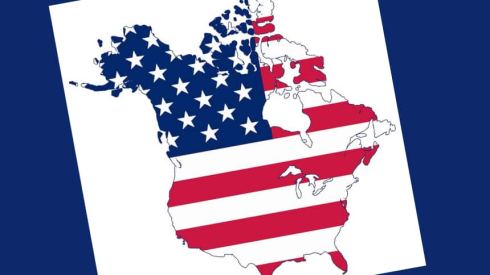
In late 2024 and early 2025, U.S. President Donald Trump repeatedly referred—sometimes jokingly, sometimes provocatively—to the idea of Canada becoming the “51st state.” These remarks reportedly began during conversations with then–Prime Minister Justin Trudeau and later appeared in public comments tied to trade disputes, tariffs, and economic leverage. Early reporting in both U.S. and Canadian outlets frequently described the remarks as characteristic of Trump’s hyperbolic negotiation style rather than as indicators of formal U.S. policy.
Canadian media coverage, however, quickly amplified the comments. Headlines and commentary increasingly framed the remarks as symbolic of American overreach or a potential threat to Canadian sovereignty. This framing coincided with heightened public attention to U.S.–Canada trade tensions and broader anxieties about economic dependence.
Following Trudeau’s resignation and Mark Carney’s rise to Liberal leadership, a snap federal election was called for April 28, 2025. At the outset of the campaign, the Liberals were trailing significantly in public polling. During the campaign, Liberal messaging increasingly emphasized the need to “stand up” to Trump-era pressure, warning that a Conservative government led by Pierre Poilievre could leave Canada exposed to U.S. demands or coercion. References to Trump’s “51st state” comments featured prominently in this broader narrative.
The election concluded with an unexpected Liberal minority victory, widely interpreted by commentators as influenced by a surge in nationalist sentiment and voter backlash against perceived American bullying. After the election, no U.S. policy moves or official statements suggested any genuine intent to pursue annexation, and Trump’s remarks continued to be linked primarily to trade pressure rather than territorial ambition.
Analytical Interpretation.
From an analytical standpoint, this sequence of events raises questions about how ambiguous external rhetoric can be transformed into domestic political leverage. Trump’s comments were provocative but informal; their political impact in Canada appears to have depended less on their substance than on how they were framed, repeated, and contextualized within a domestic campaign.
One interpretation is that Canadian media dynamics and electoral incentives interacted to elevate a symbolic remark into a perceived existential issue. In this reading, uncertainty itself became politically useful: the lack of a clear U.S. position allowed competing narratives to flourish, some of which emphasized worst-case scenarios rather than probable outcomes.
Another, more charitable interpretation is that heightened sensitivity to sovereignty concerns was a rational response to Trump’s unpredictability. Even without formal policy intent, critics argue, repeated rhetorical pressure from a powerful neighbor can legitimately influence voter behavior and campaign strategy.
A third interpretation lies between these poles: that while no annexation threat existed, the rhetoric nonetheless provided a mobilizing frame that shifted attention away from domestic issues such as housing affordability, inflation, and economic stagnation. Whether this constituted deliberate fear-manufacturing or opportunistic narrative adaptation is ultimately a matter of judgment rather than documentation.
Inviting the Reader’s Conclusion
What is clear is that the “51st state” rhetoric had political consequences in Canada despite the absence of any corresponding policy action. Whether those consequences reflect justified caution, media amplification, strategic political framing, or some combination of all three remains open to interpretation.
Readers may reasonably conclude that the episode demonstrates how modern democratic politics often operate less on concrete policy threats than on perceived risk shaped by narrative repetition. Others may see it as a case study in responsible vigilance toward an erratic ally. The available evidence supports multiple readings—and the distinction between them depends less on disputed facts than on how one interprets political incentives and media behavior in high-stakes elections.
Selected Sources
BBC News – Canadian PM reveals Trump brought up ‘51st state’ on March call (April 2025)
The Guardian – Trump’s chaotic threats won Mark Carney the Canadian election (April 2025)
The New York Times – On Canada’s Election Day, Trump Repeats ‘51st State’ Threat (April 2025)
CBC News – Carney says Trump raised ‘51st state’ during their call (April 2025)
CBS News – Canada’s Liberal Party wins election in turnaround seen as reaction to Trump threats (April 2025)
Wikipedia – 2025 Canadian federal election (accessed January 2026)
Other than reducing me to mush when I hear/sing it, what is also great about this song is that it fits in the Tenor register juuuuust right.
“A Thousand Years” is a heartfelt pop ballad in the key of B♭ major, with a moderate tempo around 139 BPM (often felt in a flowing 6/8 or 3/4 time). It opens intimately with delicate piano arpeggios and Christina Perri’s soft, emotive vocals, building gradually through verses and choruses with lush string arrangements and subtle percussion for a swelling, cinematic emotional arc. Her vocal range spans F3 to C5, delivering vulnerable yet soaring melodies that emphasize tenderness and longing.
Unrest in Iran has persisted into 2026, with recent protests triggered by economic challenges such as currency devaluation and inflation, building on longer-term grievances related to human rights and governance. Human rights organizations argue that the Islamic Republic’s policies since the 1979 revolution have contributed to discontent by prioritizing state security and ideological conformity, leading to restrictions on dissent and freedoms. The 2022–2023 “Woman, Life, Freedom” protests, sparked by the death of Mahsa Amini in custody, highlighted these tensions but were suppressed, though underlying issues have continued to fuel sporadic demonstrations and broader dissatisfaction.
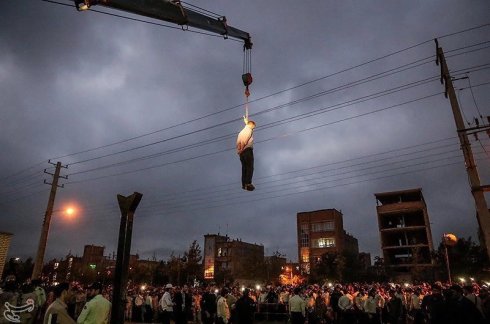
A significant point of criticism is Iran’s high rate of executions. According to monitoring groups such as Iran Human Rights (IHRNGO) and Amnesty International, at least 1,500 executions occurred in 2025, with over 1,000 recorded by September—the highest levels in decades. A substantial portion involved drug-related offenses, which Iranian authorities justify as necessary to combat trafficking given the country’s position on major transit routes. International observers, however, criticize the use of capital punishment for non-violent crimes and raise concerns about trial fairness. Public executions and the disproportionate impact on ethnic minorities, including Baluchis and Kurds, have drawn particular scrutiny.
Women’s rights remain a focal point of contention. Laws mandating compulsory veiling are enforced through measures such as the Noor Plan, involving surveillance and penalties ranging from fines to imprisonment. Human rights reports document cases of violence during enforcement, alongside broader legal discrimination in areas such as marriage and inheritance. Iranian officials frame these policies as protecting cultural and religious values, while critics and protesters describe them as systemic sex-based restrictions contributing to ongoing resistance.
Minorities also face documented challenges. LGBTQ+ individuals are subject to criminal penalties under laws prohibiting same-sex relations, with reports of harsh punishments. The Baha’i community experiences restrictions on education, employment, and worship, described by organizations such as Human Rights Watch as persecution. Journalists, artists, and activists—including minors—have been detained for expression deemed critical of the state. Authorities maintain that such measures address security threats or moral standards.
The lack of avenues for systemic change is frequently cited as prolonging tensions. Human rights monitors note limited accountability for past events, such as the 1988 prison executions or the suppression of the 2019 fuel protests, alongside tightly controlled political processes. While international criticism and sanctions aim to pressure reforms, their effectiveness remains debated, with the government rejecting external interference. Recent economic-driven protests in late 2025 and early 2026 highlight the interaction between socioeconomic pressures and long-standing rights concerns.
Analytical Assessment (Non-Advocacy)
From an analytical perspective, Iran’s persistent unrest can be understood as the outcome of a closed political system absorbing repeated shocks without adaptive mechanisms. Economic stressors act as immediate triggers, but the durability of unrest reflects deeper structural conditions: punitive enforcement practices, limited legal accountability, and the absence of credible pathways for reform. High execution rates and visible enforcement of social controls may temporarily deter dissent, but they also raise the perceived cost of compliance for affected populations, particularly women and minorities. When governance frameworks prioritize ideological enforcement over responsiveness, public pressure tends to reappear cyclically rather than dissipate. In this sense, Iran’s unrest is less a series of isolated crises than a recurring response to unresolved institutional constraints.
Key References & Sources
- Human Rights Watch. World Report 2025: Iran
https://www.hrw.org/world-report/2025/country-chapters/iran - Amnesty International. Iran: Over 1,000 people executed as authorities step up horrifying assault on the right to life (2025)
https://www.amnesty.org/en/latest/news/2025/09/iran-over-1000-people-executed-as-authorities-step-up-horrifying-assault-on-right-to-life/ - Iran Human Rights (IHRNGO). Annual Reports on the Death Penalty in Iran (2025)
https://iranhr.net/en/
In a revealing glimpse behind the curtain, commentator Andrew Doyle recently highlighted how certain narratives are tightly controlled within major media organizations. According to Doyle, the BBC has an “LGBT desk” that effectively acts as a gatekeeper, making sure all stories related to sexuality or gender must align with a particular viewpoint before they get the green light.
This revelation sheds light on how media outlets can become ideologically captured, turning into echo chambers rather than platforms for open dialogue. While there are undoubtedly excellent journalists at the BBC, Doyle’s insight reveals a systemic issue: when certain desks have the power of veto over stories, it raises questions about whose voices are being heard and whose are being filtered out.
In a time when free speech and diverse perspectives are more important than ever, understanding how these behind-the-scenes dynamics work is crucial. After all, a truly free press should aim to present a range of viewpoints rather than enforcing a single narrative.
In recent years, Venezuela was often held up as a shining example by some Western socialists as the ultimate proof that their economic model could create a fairer society. Big names on the left, from Jeremy Corbyn to Bernie Sanders, once praised Venezuela as a socialist success story.
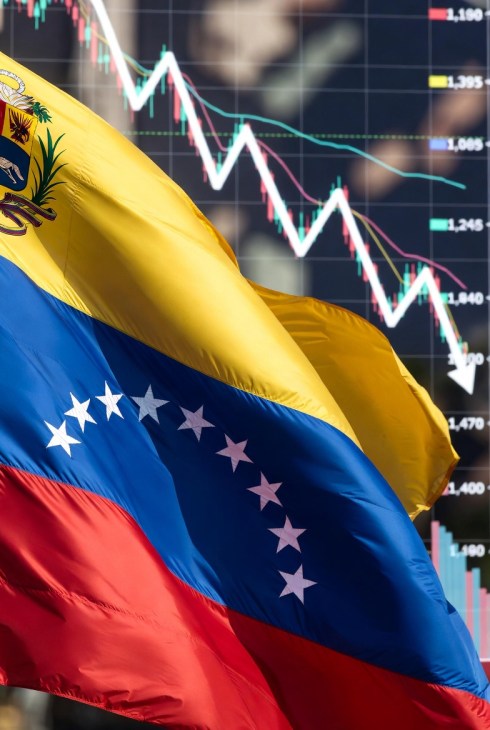
But when the country’s economy collapsed, when its people faced hunger, and when millions fled, those same voices grew notably quiet. Today, the narrative has shifted. Supporters who once looked to Venezuela now point to Nordic countries, distancing themselves from what they once endorsed.
The reality is that Venezuela’s tragic decline serves as a cautionary tale. It shows that simply promising “free stuff” and wealth redistribution doesn’t automatically lead to prosperity. Instead, it can lead to economic dysfunction and suffering.
In this post, we’ve unpacked how the once-celebrated Venezuelan model has become an uncomfortable silence among its former admirers. We’ve seen how the economic realities and human suffering in Venezuela stand in stark contrast to the optimistic promises of socialism. And as we look at these lessons, it’s clear that Western societies need to reevaluate the ideologies we champion. Ultimately, if we want to build fairer and more prosperous societies, we need to be honest about what works and what doesn’t, and not shy away from these tough conversations.
First, from the Manhattan Institute, there’s an analysis by Daniel Di Martino arguing that Venezuela’s crisis was primarily caused by socialist policies like nationalizations and price controls.
Second, the Fraser Institute provides a historical perspective from Fred McMahon, who notes that Venezuela’s decline started with economic mismanagement even before the full rise of socialist policies.
If you missed what I’m talking about please look at the post from this Sunday’s The DWR Sunday Religious Disservice – Why Classical Islam and Western Liberalism Face Deep Tensions.
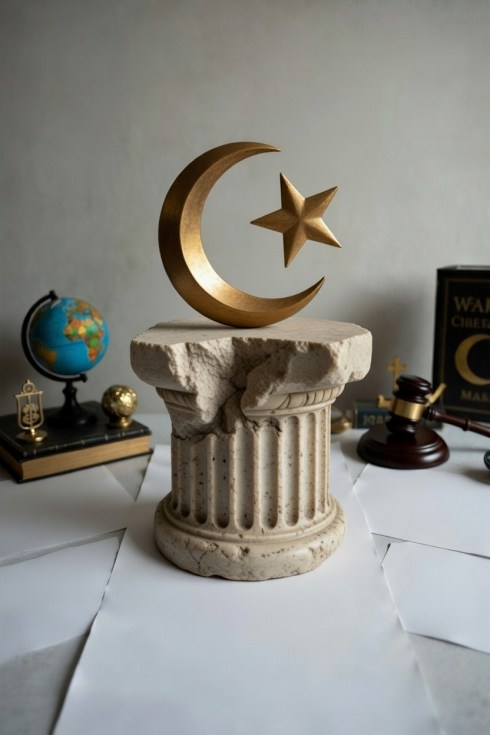
1) “You’re Confusing Islam with Islamism. The Problem Is Politics, Not the Religion.”
Steelman: Islamism is a modern political project. The ugly stuff is authoritarianism in religious costume. Islam as faith is diverse and reformable. Reformers exist. So don’t blame the religion for the politics.
My answer: The distinction is real. It just doesn’t rescue the claim.
Modern Islamism didn’t invent the collision with liberalism. It accelerated it. The collision is older, because it sits inside a legal tradition that treats divine law as public law, not private devotion.
Start with the liberal baseline: your right to change your beliefs without state punishment. The ICCPR treats freedom of thought, conscience, and religion as including the freedom “to have or to adopt” a religion of one’s choice, and bars coercion that impairs that freedom.[1] Yet apostasy laws still exist as state law in a chunk of the world. Pew counted apostasy laws in 22 countries in 2019.[2] That’s not “Islamism only.” That’s a standing fact about legal systems and what they’re willing to criminalize.
Then there are the asymmetries that aren’t modern inventions at all. The Qur’an’s inheritance rule that the male share is “twice that of the female” is explicit.[3] So is the debt-contract witness standard that requires one man and two women in that context.[4] You can contextualize these. You can argue for limited scope. You can try to reinterpret. But you can’t pretend the hard edges arrived in the 20th century.
So yes: reform is possible. But the obstacle is not merely “bad regimes.” It’s the weight of inherited jurisprudence plus institutions that treat that inheritance as binding.
If you want a clean test, use this: Is conscience sovereign? Including the right to leave the faith without legal penalty. Where the answer is no, liberalism exists on permission, not principle.
2) “Western Civilization Has Its Own History of Religious Violence and Oppression.”
Steelman: Christianity did crusades, inquisitions, heresy executions, and legal oppression. Liberalism took centuries. So singling out Islam is selective and hypocritical. Islam may simply be earlier in the same process.
My answer: Fair comparison. Now use it properly.
The West didn’t become liberal because Christians became nicer. It became liberal because religious authority was structurally pushed out of sovereignty over law and conscience. That’s the real lesson.
If “Islam can modernize” is your claim, then define modernization. It means a public order in which equal citizenship is non-negotiable and the right to belief and exit is protected in law.[1] You don’t get there by vibes. You get there by institutions.
Tunisia’s 2014 constitution is a useful example precisely because it shows the tension in plain language. It says the state is “guardian of religion,” while also guaranteeing “freedom of conscience and belief.”[5] That’s the struggle in one paragraph: which sovereignty rules when the two conflict?
Morocco’s family-law reforms are another example of the same dynamic. Over time, reforms have expanded women’s rights in areas like guardianship and divorce.[6] But even current reform proposals acknowledge a hard limit: inheritance rules grounded in Islamic law remain, with workarounds proposed through gifts and wills rather than direct replacement.[7] Again, that’s not a moral condemnation. It’s the mechanism. Reform runs into inherited authority.
So yes: the Western analogy shows change is possible. It also shows change is not automatic. It is conflict, choices, and enforcement.
3) “You’re Ignoring Diversity in the Muslim World and Overgeneralizing.”
Steelman: Nearly two billion adherents across many cultures and legal systems. Outcomes vary widely. Some Muslim-majority societies are relatively pluralistic. Sweeping statements are unfair.
My answer: Diversity is real. It just doesn’t settle the core question.
Different outcomes prove the future isn’t predetermined. They don’t prove the underlying tension disappears. In practice, “moderation” usually correlates with one thing: how far the state limits religious jurisdiction over public law.
Indonesia is the standard example. Its founding philosophy, Pancasila, is explicitly framed as a unifying civic ideology with principles including belief in one God, deliberative democracy, and social justice.[8] That civic framing matters. It can restrain sectarian rule. But it doesn’t end the conflict.
Indonesia’s newer criminal code debates show how quickly “public morality” and “religious insult” can become tools against liberty. Reuters’ explainer on the code flagged concerns over provisions related to blasphemy and other speech constraints.[9] Human Rights Watch argued the updated code expanded blasphemy provisions and warned about harms to rights, including religious freedom.[10] Reuters has also reported concrete blasphemy prosecutions, including a comedian jailed for jokes about the name Muhammad.[11]
So yes: diversity exists. Outcomes differ. But the recurring fault line remains: whether the state treats conscience and equal citizenship as the top rule, or treats religious law as a superior jurisdiction that liberalism must negotiate with.
Closing
The best objections don’t erase the problem. They refine it.
The conflict is not “Muslims are bad.” That’s a cheap and stupid sentence. The conflict is structural: a comprehensive religious-legal tradition claiming public authority collides with a political order grounded in sovereignty of individual conscience.[1]
You don’t solve that conflict by saying “it’s just politics.” You don’t solve it by reciting Western sins as a deflection. You don’t solve it by pointing to diversity and declaring victory.
A liberal society survives by enforcing liberal public order: one civil law for all, equal rights as the baseline, and no religious veto over belief, speech, or exit.[1] If you refuse to name that clearly, you don’t get “coexistence.” You get drift. And drift always has a direction.
References (URLs)
[1] OHCHR — International Covenant on Civil and Political Rights (ICCPR), Article 18
https://www.ohchr.org/en/instruments-mechanisms/instruments/international-covenant-civil-and-political-rights
[2] Pew Research Center — Four in ten countries… had blasphemy laws in 2019 (includes apostasy law count) (Jan 25, 2022)
https://www.pewresearch.org/short-reads/2022/01/25/four-in-ten-countries-and-territories-worldwide-had-blasphemy-laws-in-2019-2/
[3] Qur’an 4:11 (inheritance shares) — Quran.com
https://quran.com/en/an-nisa/11-14
[4] Qur’an 2:282 (witness standard in debt contracts) — Quran.com
https://quran.com/en/al-baqarah/282
[5] Tunisia 2014 Constitution, Article 6 — Constitute Project
https://www.constituteproject.org/constitution/Tunisia_2014
[6] Carnegie Endowment — Morocco Family Law (Moudawana) Reform: Governance in the Kingdom (Jul 28, 2025)
https://carnegieendowment.org/posts/2025/07/morocco-family-law-moudawana-reform-governance?lang=en
[7] Reuters — Morocco proposes family law reforms to improve women’s rights (Dec 24, 2024)
https://www.reuters.com/world/africa/morocco-proposes-family-law-reforms-improve-womens-rights-2024-12-24/
[8] Encyclopaedia Britannica — Pancasila
https://www.britannica.com/topic/Pancasila
[9] Reuters — Explainer: Why is Indonesia’s new criminal code so controversial? (Dec 6, 2022)
https://www.reuters.com/world/asia-pacific/why-is-indonesias-new-criminal-code-so-controversial-2022-12-06/
[10] Human Rights Watch — Indonesia: New Criminal Code Disastrous for Rights (Dec 8, 2022)
https://www.hrw.org/news/2022/12/08/indonesia-new-criminal-code-disastrous-rights
[11] Reuters — Indonesian court jails comedian for joking about the name Muhammad (Jun 11, 2024)
https://www.reuters.com/world/asia-pacific/indonesian-court-jails-comedian-joking-about-name-muhammad-2024-06-11/











 bleatmop
 Mystro


 Dead Wild Roses
Your opinions…