
You are currently browsing the tag archive for the ‘Pronouns!’ tag.
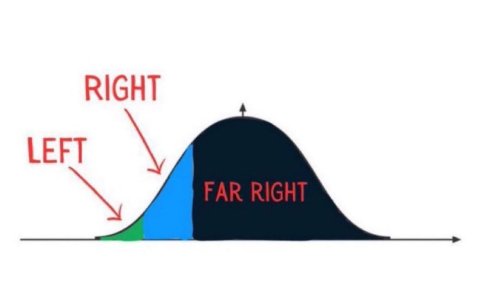
One of the most corrosive habits in current political discourse is the way plain factual claims get assigned a partisan label. Not arguments. Not policies. Facts. Or, more precisely, statements that point back to material reality, institutional limits, or ordinary human constraints. In theory, facts are supposed to discipline ideology. In practice, they are often treated as ideological aggression when they obstruct a preferred moral script.
That is what people are reaching for when they say facts are now treated as right-wing. The phrase is blunt, but it points to something real. In a growing number of disputes, especially around sex, gender, speech, and institutional policy, a person can say something materially true and be treated not as a participant in debate but as a moral suspect. The point is not answered on its merits. It is recoded as a signal of contamination. The speaker is no longer heard as describing reality. He is heard as choosing a tribe.
That shift matters because it changes the structure of argument. Once a factual claim is socially coded as “right-wing,” the burden quietly moves. The question is no longer whether the claim is true. The question becomes why you said it, what kind of person says such things, and who might feel endangered by hearing it. Motive replaces mechanism. Stigma replaces rebuttal. The claim is not refuted so much as quarantined.
You can see this clearly in disputes over sex and pronouns. For many people, saying that sex is real, binary in the ordinary human sense, and not altered by self-declaration is not an act of hostility. It is a claim about reality and a claim about language. “He” and “she” historically track male and female persons. Refusing to detach those words from sex is not, on its face, a partisan performance. It is an attempt to keep public language tethered to the material world rather than to inward identity claims.
“The disagreement is not mainly about politeness. It is about which reality gets public authority.”
That is exactly why the issue generates so much heat. The disagreement is not mainly about politeness. It is about which reality gets public authority. Does language track bodies, or does it track self-declared identity? Does a school treat sex as a stable feature of the world, or does it treat identity assertion as the governing fact? Those are not small etiquette disputes inflated by the internet. They are conflicts about ontology, law, and institutional power.
Canada now offers several live examples. Alberta’s Education Amendment Act requires parental notification when a student requests a gender identity-related preferred name or pronouns, and parental consent for students under 16 before staff may use them. The province says these changes are part of supporting families and setting clear school rules, with the remaining education amendments anticipated to take effect on September 1, 2025. Then, in late 2025, Alberta escalated further. Bill 9 invoked the notwithstanding clause to shield not only this school policy but other contested sex-and-gender measures from being struck down by the courts. That bundling matters. It shows this is no longer being treated as a narrow administrative disagreement, but as a foundational conflict over parental authority, child development, and the public meaning of sex.
Quebec presents the same fracture from the opposite direction, and it is ongoing now. Current reporting says a Montreal teacher is challenging the provincial policy that allows students 14 and older to change the name and pronouns used at school without parental consent. The teacher alleges she was required to use male pronouns at school while using female pronouns with the student’s parents. A preliminary hearing on anonymity and confidentiality was held on March 6, 2026, with the broader merits challenge still to come. Strip away the activist packaging and the conflict becomes plain: can institutional professionals be required to maintain two vocabularies of reality depending on the audience, and if they object, are they making an ethical argument or committing a moral offense?
The Barry Neufeld case in British Columbia shows the institutional end point of this logic. On February 18, 2026, the B.C. Human Rights Tribunal issued its decision and ordered substantial damages after finding that multiple publications were discriminatory, while some crossed the threshold into hate speech. That does not prove that every factual objection to gender ideology is punishable. It does show how readily dissent can be processed through systems that move from moral condemnation to formal classification. Once that line is crossed, everyone watching understands the lesson. The risk is no longer simply that you will be called wrong. The risk is that you will be treated as a public contaminant.
This is why the familiar “both sides are just choosing different facts” formula goes soft in exactly the wrong place. The conflict is not symmetrical. One side is generally making claims about bodies, language, legal authority, and institutional procedure. The other is often demanding that those things yield to identity-based recognition norms. Dignity is real and relevant. But dignity does not erase biological category, dissolve observable sex, or transmute factual disagreement into literal violence.
So when people say facts are treated as right-wing, the point is not that truth literally belongs to one side of the spectrum. The point is that in a culture saturated with moral performance, inconvenient facts are often recoded as partisan because it is easier to stigmatize them than to answer them. A factual claim that disrupts the script is no longer processed as description. It is processed as dissent. And dissent, under current conditions, is increasingly treated as a character defect.
Facts do not have a party. But when facts obstruct an ideological narrative, that narrative will often brand them right-wing and move straight to motive-policing. That is not a sign that the facts have changed. It is a sign that too much of public discourse has become allergic to reality when reality refuses to flatter the creed.
References
Government of Alberta. “Supporting Alberta students and families.”
https://www.alberta.ca/supporting-alberta-students-and-families
Government of Alberta. “Protecting youth, supporting parents, and safeguarding female sport.”
https://www.alberta.ca/protecting-youth-supporting-parents-and-safeguarding-female-sport
Global News. “Montreal teacher challenges policy for trans students to hide identity from parents.” March 6, 2026.
https://globalnews.ca/news/11719392/montreal-teacher-trans-students-challenge/
British Columbia Human Rights Tribunal. Chilliwack Teachers’ Association v. Neufeld (No. 10), 2026 BCHRT 49. February 18, 2026.
https://www.bctf.ca/docs/default-source/for-news-and-stories/49_chilliwack_teachers-_association_v_neufeld_no_10_2026_bchrt_49.pdf?sfvrsn=2d847803_1
Having recently gotten into a discussion about the misnamed “Gender Affirming Care” with some of my acquaintances we broached many contentious topics but one point that stuck out was when we got into pronoun territory.
My interlocutor was brought up the idea that the shortening of names – like Stan for Stanley – was a preference and that people were just being polite by referring to the individual as they would like to be referred to.
I stumbled a bit on proposing a counter argument for this point – in hindsight it is fairly straightforward to construct a response.
If a person insists on calling a self proclaimed “Stan”, “Stanley” it might indeed be considered a bit offensive. So how is this different that using she/her pronouns for a male who is under the false notion that he is female?
Well, Stan and Stanly are both terms that are technically correct for the person in question. Is it inconsiderate to ignore their wishes, yes certainly, but here in this free society we don’t have to associate with people who we judge are inconsiderate toward us.
The male expecting people to use “she/her” when to referring to him is a completely different case. Pronouns and preferred names are not in the same category of linguistic use. In English pronouns are sexed, thus males are attributed he/him and females are attributed she/her.
If you hold a set of beliefs that do not comport with reality – that is a male believing that he is somehow a woman (adult human female) – that is perfectly fine. Your personal belief about your reality are of no concern to anyone else in society.
The expectation though of people outside your gender delusion to play along with and be party to your departure from the material reality we all share is not acceptable, especially if you are a person that sees the harm Gender Ideology does to women and society.
Thus, the argument of using a preferred name vs. a pronoun is distinctly a false equivalence as in the first case two real descriptors that accurately represent reality are being offered. In the second case using the “wrong” pronouns is a decision to comport with reality or the decision to ignore the evidence your senses are reporting and submit to someone else’s interpretation of reality – no one is obliged to do so.
Both cases associated with someone is who you perceive to be offensive is not usually not a mandatory experience. Occasionally being offended in society is a part of life and one must learn to deal with it.
Compelling the speech of others is a distinctly authoritarian notion and should not be encouraged in a society that values freedom of thought and expression.
This is a guest post written by former teacher Chanel Pfahl.
I recently came across a collection of lesson plans for K-8 teachers. I didn’t intend to spend hours rummaging through them, but one thing led to another.
Created in July 2022, the lesson plans are featured in a “Back-To-School Kit” on a website called “Welcoming Schools”. The site is produced by the HRC Foundation — the largest LGBTQ advocacy group in the United States — and it is recommended as a resource for educators by the Ontario elementary teachers’ union (ETFO).
As a former teacher who is currently being subjected to a formal investigation by my licensing body (the Ontario College of Teachers) for voicing what I believe are reasonable concerns about indoctrination in schools in a private Facebook group, I am drawn to these kinds of resources because however depressing their existence, they also carry hope. Hope that thousands more fellow Canadians might awaken and help put an end to this nonsense.
I’d like to believe most of us have a breaking point when it comes this illiberal ideology that calls itself inclusive and compassionate. My wake up call came from seeing a respected professor denounced by the university community and ultimately canceled for an innocent comment made online.
Others might start to think about this “gender” and “race” fanaticism in a different way when they come across a 19 year old who has had her breasts removed, her voice permanently altered, and her fertility stolen from her because as a teenager, she was led to believe that she was born “in the wrong body”, and later realized it was all a giant, irreversible error.
For some, evidence that the teachers’ union considers these lessons appropriate for kindergarteners might just be the drop that makes the glass overflow.
This particular lesson is based on the book “They, She, He, easy as ABC”, by queer activist Maya Gonzalez. The story introduces 26 characters — one for each letter of the alphabet — each one referred to by special “pronouns”.

The first page of the lesson plan shows it is in line with some legitimate “academic standards” (see below). This 40 minute lesson, which also requires “1-2 periods for the art project”, corresponds to the curriculum expectations, in other words.

Nowhere does it mention any connection to the Health/Phys Ed curriculum, where these concepts might be explored with some degree of transparency in later years, however. Instead, the lesson seemingly aligns with the “Common Core State Standards” for English language arts (CCSS.ELA) — standards that are used throughout K-12 education in the US.
In fairness, the students are indeed interpreting a story and participating in conversations about it.
Then again, concepts such as gender identity are completely developmentally inappropriate for elementary students, not to mention pseudoscientific. These ideas downplay or downright ignore biological reality — a child’s physical body — in favour of stereotypes and feelings, leading some to believe their body might truly be a monumental mistake. What exactly could be good about that?
And yet it appears this politicized story time is getting the green light.
If you don’t like it, you’d better have a strong capacity to withstand cognitive dissonance or a very thick skin.

The next page of the lesson plan (above) says the students—aged four to seven—are asked to “list pronouns and write them on a piece of chart paper” before the book is read. They are told to pay attention to pronouns in the story, and reminded that we can’t tell “if someone is a girl, boy, both or neither by how they look”. (Again, we are promoting an idea that is untrue, namely that more than two sexes exist. Human beings are a sexually dimorphic species: this is a well-established fact.)
The teacher starts reading. The first character introduced uses the pronoun “they”.
The second one has no pronoun. The teacher asks for a pronoun anyway. Oups, tricked ya — Brody only goes by Brody, kids.
Then we learn about Diego: “Diego drums and dances. Tree has all the sounds”.
“What pronoun does Diego use?”, asks the teacher.
Tree? Good job!

So it continues… One character uses “ze” pronoun, another uses “more than one” pronoun, and one uses “all” pronouns.
Then students are asked to write their name and pronoun on a sheet, and draw a self-portrait.
As if this wasn’t enough lunacy for one day, the teacher is also instructed to “let students know that if they have always wanted to wear a bow tie with rainbow suspenders, that they can draw themselves this way”, or that they can “change their hair to a style that represents their true selves”.
Their true selves. Hmmm.

What can I say?
This all ends when enough of us choose to speak the truth.
“The refusal to take sides on great moral issues is itself a decision. It is a silent acquiescence to evil.” — Fulton J Sheen.
Dear teacher, principal, music director, barista, checkout clerk, and bookseller:
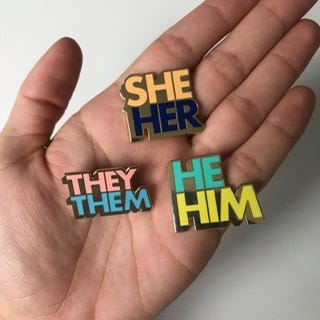
I think I know how this happened: you probably had a DEI workshop or a colleague or a woke friend or a passionate niece tell you this was a nice thing to do. I even had one of you tell me directly that “this is a small way to create an inclusive and nourishing community by affirming and supporting students of all genders.” So you put on your pronoun badge and added she/her at the end of your email signature. There, you thought, I’m a kind person.
And I sincerely believe that your intentions are good. Somewhere along the line you heard that trans kids commit suicide at high rates. You saw a TV show where a trans character or actor was tragically heroic, misunderstood, and noble. You saw a soft-focus ad campaign about a little trans girl who just wants to play sports with the girls. Aw. You’ve probably got a student, family member, or neighbor kid who declared they are trans and is screaming things like “trans rights are human rights” and clearly distressed. Seriously, if adding a pronoun statement to your email signature somehow helps those unhappy kids, what kind of cruel brute wouldn’t do it?
So I get it; you think your pronoun introduction, email signature, video conference name, and badge signal that you’re nice and inclusive. But actually, they show that you’re okay with sterilizing autistic kids.
What? Huh? How?
I’ll take this slowly, so pay attention. When you add a pronoun declaration, you are saying that:
1) Despite any scientific evidence, I believe in the idea of gender identities. There is no science that shows that people have an innate sense or feeling of “gender.” No brain scan. No blood test. Of course not: “Gender identity” is a feeling, an idea about whether and how much you feel like a female or a male. [Do you feel like a person with AB blood? Or a person who is 5’ 9”? No – you just are.] But yes, I think people feel female or male or neither. Or both.
2) Some people have gender feelings that are different from their physical bodies, and that those gender feelings trump their bodies’ physical sex. How they feel matters more than their body – and society should label/categorize them as that feeling desires. No longer do pronouns refer to someone’s actual sexed body (an observable and incontrovertible fact in 99.999% of cases and testable in the other ones), but to how they feel (an unobserved and unmeasurable idea). I’m okay with changing the meanings of pronouns – because feelings are more important than reality.
[Note: realistically, calling someone by the opposite gender pronoun (or they/them) doesn’t actually move them into the social category of the opposite sex or some third sex—not for any useful purposes like friendships, dating, athletics, or sexual partners. It just puts them into the category of “too sensitive to face reality / treat with kid gloves / they are mentally unstable and possibly suicidal / they might have a weird kink fetish / they’re probably super-obsessed about one aspect of their life and kinda boring and weird.” Believe me, outside of high school and the anthropology and gender studies departments, no one sees an opposite sex/they/them pronoun signature line and thinks “Oooh—now that person is magical and extra interesting. I can’t wait to get to know/hire/date that person.” We think “next.”]
3) If feelings matter more than facts, then transforming the sexed body to better match the gender feelings makes the best sense. Taking puberty-blockers and/or cross-sex hormones or undergoing surgery to stimulate the appearance of sex characteristics like breasts or facial hair or penises makes sense. Trying to question, alter, or evolve feelings or promote self-acceptance of the physical body isn’t worth trying or exploring.
4) Even though transitioning the body from one sex to the other isn’t actually possible, I’m okay with people doing that. No amount of cross-sex hormones will transform a penis into a vagina, nor vice versa. Surgery can remove breasts, labia, clitorises, vaginas, ovaries, fallopian tubes, uteruses, penises, scrotums, and testes. Plastic surgery can try to fashion pseudo penises from chunks of thigh or arm tissue, or pseudo vaginas from inverted penises or lengths of colon, but these are not functional organs. Even the most sophisticated surgeries and drugs cannot transform the DNA coded into every cell of your body. Sex can never change, but I’m okay with acting on fantasies and feelings.
5) Even though attempting to transition the body from one sex to the other isn’t healthy and increases suicide, I’m okay with people doing that. Puberty blockers and cross-sex hormones and surgeries are bad for bodies. Really bad. Brain polyps, anorgasmia, infertility, osteoporosis, Alzheimer’s, cardiac damage, diabetes, infections, death. Scientists and doctors know these approaches are bad. Sometimes, a patient reports the results were worth it, but we know that transitioning actually increases rates of suicide. I’m okay with those negative consequences, because feelings are more important than reality.
6) Despite the fact that historically, most of children (typically boys) with gender dysphoria outgrew it and became gay or bisexual men, I think we should re-enforce these young boys’ false belief they are actually girls by using preferred pronouns. Remember, feelings are more important than reality. Reinforcing this idea that a boy is a girl can lead them to social and medical transition, but that’s not my problem. I’m okay with sterilizing gay boys.
7) Despite the fact that the present wave of teenagers with gender dysphoria has disproportionately high rates of social isolation, anxiety, depression, ADHD, and autism, I’m okay with permanently damaging and sterilizing them, too. Even though typical teenagers can’t be trusted to vote, smoke cigarettes, or drive a rental car, I believe these socially isolated, anxious, depressed, ADHD and autistic teenagers are somehow extra-ordinarily mature, and I’m okay with them making these sorts of life-altering decisions based on their feelings. Because feelings trump the body.
8) So yes, I’m totally okay with the sterilization of autistic children—really, any kind of people at all. Giving people time to mature and grow just isn’t wise, right? Since we all know feelings trump reality. Go ahead. No skin off my nose.
Well, thanks for clarifying where you stand. You’re so kind.
Apparently electrons on a screen have caused emotional damage of the Interim Green Party Leader.
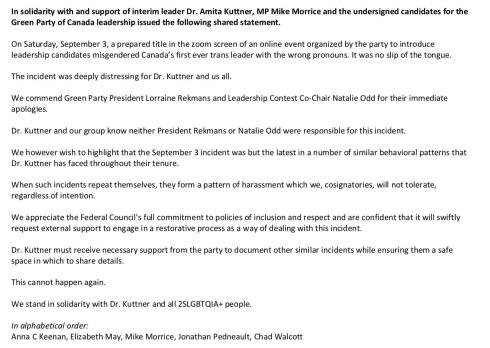
You can’t make this up folks. A serious restorative process is being undertaken to make sure that the Green Party’s safe spaces and inclusive environment remain intact.
It is a clownshow over at Green Party HQ as they publically demonstrate they are unfit holding any office in Canada.
There is nothing kind about affirming the magical pronouns of others. Reinforcing the detachment from reality in others is quite the opposite of being kind.
There is nothing kind about endorsing the idea that if a man calls himself, by ‘she/her’ pronouns then suddenly he becomes an adult human female. This is not possible as human beings, in the vast majority, grow down one of two developmental pathways. Either you produce (or have the potential to) large immobile gametes, or you produce small mobile gametes and the related bio-mechanical infrastructure necessary to potentially pass your genetic material on to the next generation – also known as being female or male.
Sex is immutable in the human species and does not change regardless of how strongly you happen to believe in gender identity magic.
So, by not using the wrong pronouns for males and females you make the statement that you have a commitment to comporting with the reality we all share and maintaining said reality’s grounded attachment to the world of fact.
It is okay to say, “No, I don’t believe in the pronoun rules associated with gender identity” (and the larger notion of trans gender ideology). It is okay to reject the delusional notion that men – because they feel like women – actually are women. You are rejecting the gender-orthodoxy that is profoundly damaging to female safety, rights, and spaces within society. In time, your stance will be applauded as it comports with reality we share.
Being able to name reality is so darned important.











 bleatmop
 Mystro
 The Arbourist


 Dead Wild Roses
Your opinions…