
You are currently browsing the category archive for the ‘Canada’ category.
The Alberta Medical Association and the Canadian Pediatric Society want Canadians to believe the debate over pediatric gender medicine is settled. It is not.
When Premier Danielle Smith announced restrictions on transgender medical interventions for minors, major medical bodies responded with the language of emergency. The Canadian Pediatric Society warned that Alberta’s policy would undermine the rights of transgender children and youth. The Alberta Medical Association’s pediatrics section argued that the government was targeting an already vulnerable population. The public message was clear enough: responsible doctors affirm; politicians interfere; children suffer.
 But that framing hides the central problem. There is no stable international medical consensus on pediatric transition. In fact, several European jurisdictions have moved in the opposite direction from Canada’s professional bodies, not because they have stopped caring about distressed children, but because they have begun applying more ordinary standards of evidence to extraordinary interventions.
That distinction matters. Puberty blockers and cross-sex hormones are not counselling, kindness, or protection from bullying. They are medical interventions into the development of physiologically healthy children and adolescents, often at an age when identity, sexuality, mental health, peer influence, family conflict, and neurodevelopmental conditions are still in motion. A serious medical institution should be able to say that without sounding frightened of its own profession.
Instead, Canadian medical institutions often speak as if caution itself is the danger.
The most revealing example is the suicide argument. Parents and voters have been told, sometimes openly and sometimes by implication, that restricting pediatric transition will kill children. The activist version is familiar: would you rather have a dead daughter or a trans son? The political version is not much better. Former Calgary mayor Naheed Nenshi told Premier Smith that “votes aren’t worth a few dead kids.”
That is not clinical reasoning. It is emotional coercion applied to frightened parents.
The evidence does not support the crude version of the claim. A 2024 Finnish register study in BMJ Mental Health examined more than 2,000 adolescents referred to gender identity services and compared them with more than 16,000 matched controls. The authors found that suicide deaths were rare, and that once psychiatric treatment history was accounted for, gender-referred youth did not show higher all-cause or suicide mortality than controls. The study does not say these young people are not distressed. It says the simple story — affirm or they die — is not evidence-based medicine.
That should change the conversation. Many adolescents presenting to gender clinics also carry depression, anxiety, autism, trauma histories, eating disorders, family instability, social isolation, or other serious mental-health burdens. If those burdens are treated as secondary to gender identity, medicine risks narrowing the diagnostic lens at exactly the moment it should be widening it.
This is one of the main lessons of the Cass Review in the United Kingdom. Cass did not recommend abandoning children with gender distress. It called for a more holistic model of care, better assessment, stronger evidence, and far more caution around medical pathways. NHS England subsequently stopped the routine prescription of puberty blockers for gender dysphoria in minors, moving them into a research setting rather than ordinary clinical use.
That is not a small update. It is a major warning to every country that imported the affirmative model and then treated dissent as bigotry.
The “pause button” metaphor has also aged badly. Puberty is not a decorative inconvenience. It is a central developmental process involving bones, brain maturation, sexual function, fertility, and identity formation. Cass specifically warned against assuming that drugs used for precocious puberty will have the same outcomes when used for children and adolescents with gender dysphoria. The medical context is different. The child is different. The purpose of the intervention is different. Pretending otherwise is not compassion; it is bad reasoning in therapeutic language.
The pathway concern is equally serious. If blockers were merely neutral time-buying devices, we would expect many children to pause, mature, and then step away from medicalization. But the available evidence shows high rates of progression from puberty blockers to cross-sex hormones. That does not prove every case is mishandled, and it does not prove no patient benefits. It does mean the intervention may help create the very path it claims merely to delay.
Other countries have noticed. France’s National Academy of Medicine urged “great medical caution” in treating gender-related distress in children and adolescents, citing vulnerability and the possibility of serious complications. The UK has moved puberty blockers away from routine use. Scotland paused new prescriptions for minors after the Cass Review. These are not fringe developments. They are evidence institutions pulling back after years of clinical momentum.
Canada’s professional bodies should be wrestling publicly with that reversal. Instead, they often sound as though the old consensus still exists.
“Institutional capture does not mean every doctor is corrupt. It means the institution has absorbed a political frame so deeply that it struggles to distinguish care from affirmation, caution from cruelty, and disagreement from harm.”
This is where the word “capture” becomes fair, but only if we are precise. Institutional capture does not mean every doctor is corrupt. It does not mean every pediatrician agrees with activists. It does not mean every child with gender distress is confused, lying, or socially influenced. It means the institution has absorbed a political frame so deeply that it struggles to distinguish care from affirmation, caution from cruelty, and disagreement from harm.
That is dangerous in any field. It is worse in pediatrics.
Children with gender distress deserve serious care. They deserve protection from bullying, family cruelty, humiliation, and ideological exploitation from every direction. They deserve psychological assessment, treatment for co-occurring mental-health problems, family involvement where safe, and adults who can tolerate uncertainty. The modern clinic population is also not the same as the older, smaller cohort of mostly childhood-onset cases; many services have seen a sharp rise in adolescent presentations, often with complex psychiatric and developmental profiles. A small number may continue to experience severe, persistent dysphoria into adulthood and may eventually choose medical transition. But that possibility does not justify allowing pediatric care to default into an affirmation-first pathway.
The honest position is not “do nothing.” The honest position is slow down, assess carefully, treat comorbidities, use exploratory psychological care rather than ideological confirmation, stop using suicide as a rhetorical weapon, and stop pretending that uncertain evidence becomes settled science because a professional association says so.
Medicine earns public trust when it disciplines itself. It loses that trust when it borrows the moral posture of activism and then demands deference as science.
The AMA and CPS still have a choice. They can defend vulnerable children by telling the whole truth: that distress is real, that cruelty is wrong, that some cases are complex, and that the evidence for routine medical transition in minors is weaker than Canadians have been led to believe. Or they can continue treating democratic oversight and parental caution as the real threat, while countries that reviewed the evidence more seriously move toward restraint.
“Medicine earns public trust when it disciplines itself. It loses that trust when it borrows the moral posture of activism and then demands deference as science.”
The issue is not whether vulnerable youth should be helped. They should.
The issue is whether Canadian medical institutions can still tell the difference between helping children and protecting an ideology from scrutiny.
Right now, the answer is not reassuring.
Canada’s ruling class has become very good at sounding compassionate while making the country less livable.
That is not the same as saying compassion is the problem. It is not. A decent country should care about fairness, dignity, historical wrongs, clean air, decent schools, housing, wages, and whether ordinary people can build a stable life. The problem begins when the language of care becomes a substitute for competence.
The road does not get built, the house does not get approved and mysteriously the paycheque does not stretch.
But the statement was inclusive, the framework was equitable, and the branding was excellent.
This is the Canadian disease in its current form. We have become fluent in the language of public virtue while becoming strangely incompetent at the material tasks that make public virtue affordable. Productivity is weak. Housing is absurdly expensive. Infrastructure is strained. Governments borrow more to deliver less. Businesses hesitate to invest. Young people look at the cost of living and quietly revise their expectations downward.
None of this is caused by slogans alone. Canada’s problems are real and structural: regulatory drag, housing bottlenecks, capital trapped in real estate, public-sector risk aversion, interprovincial barriers, immigration levels that outran housing and infrastructure capacity, and a political class allergic to trade-offs. A land acknowledgement did not create all that. A diversity statement did not single-handedly break productivity.
But symbolic politics gave our institutions a prettier way to avoid the problem.
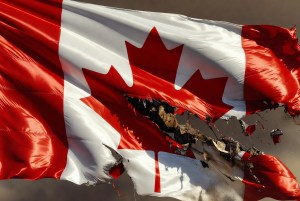 Once a government, university, corporation, or bureaucracy learns to measure moral posture more eagerly than delivery, failure becomes easier to disguise. The meeting had the right language. The report had the right vocabulary. The procurement process had the right values. The strategy document had the right tone. Meanwhile, the project slipped, the costs climbed, the housing never arrived, and the public was asked to admire the intentions.
Serious societies argue about trade-offs. They ask what a policy costs, who pays, what it produces, and whether the promised benefits are worth the burden. Unserious societies turn every hard question into a morality play. If you ask whether immigration levels are matched to housing, schools, health care, and infrastructure, you are accused of cruelty. If you ask whether a project approval process has become impossible to navigate, you are accused of hating the environment. If you ask whether equity metrics are displacing competence, you are told the question itself is suspicious.
That trick works for a while. It flatters the people using it. It turns arithmetic into moral failure and makes practical objections look ugly. But reality is not impressed by compassionate branding.
A country cannot announce its way out of weak productivity. It cannot consult its way into affordable housing. It cannot regulate its way into abundance while making useful work slow, expensive, and politically hazardous. It cannot keep treating prosperity as an inheritance while sneering at the habits that created it.
Canada does not need to abandon moral language. It needs to demote moral theatre. Justice matters, but so does delivery. Compassion matters, but so does arithmetic. Environmental stewardship matters, but so does affordable energy. Inclusion matters, but so does the basic ability to build homes, roads, businesses, and lives.
The country does not need another sermon about who we are, but rather Canadians need evidence that we can still do useful things.
Prosperity is built, measured, maintained, and defended. A country that forgets this can still sound compassionate while becoming poorer, slower, more indebted, and harder to live in.
I do not especially care whether someone voted Liberal, Conservative, NDP, or something stranger from the pamphlet table. A democratic country still needs citizens who can look at reality without first asking whether the facts are useful to their team.
Canada is not in a healthy place. The economy has posted two straight quarters of contraction on an annualized basis, which is why the phrase “technical recession” has entered the conversation, even if analysts can argue over how much weight to give that label. Statistics Canada reported unemployment at 6.9% in April 2026, with youth unemployment at 14.3%. Food insecurity is harder to soften: PROOF reported that in 2024, 25.5% of people in the ten provinces lived in food-insecure households, about 10 million people, including 2.5 million children. These are not fringe complaints or partisan vibes. They are indicators of stress in the lives of ordinary people.
The point is not that every bad number belongs neatly to one party. Serious people should avoid that reflex. Some problems are inherited. Some are global. Some are structural. Some are provincial. Some are made worse by federal policy, and some are made worse by years of institutional delay, denial, or misplaced priorities. Canada’s productivity weakness, housing shortage, debt burden, immigration pressures, and affordability crisis did not arrive in one tidy partisan package. That is precisely why citizens need better habits of attention, not better excuses.
This is where media hygiene matters.

A lot of political coverage trains people to process public life through narrative before evidence. The right leader appears calm, credentialed, and respectable, so economic stress becomes “headwinds.” Stagnation becomes “uncertainty.” Failure becomes “transition.” Aggregate growth gets reported without enough attention to per-person decline. A press conference sounds adult and measured, while the household math keeps getting worse.
This problem is not confined to one side. Liberal-friendly media can soften failure when the right institutional language is being used. Conservative-friendly media can turn every bad number into proof that the apocalypse has already been scheduled. Social media rewards panic, resentment, and team loyalty. Legacy media rewards access, tone, and respectable framing. The result is a public conversation where facts often arrive already dressed for the argument someone wanted to make.
Voters participate in this too. Partisans learn to defend their side before checking the claim. Comfortable people mistake their own insulation for national health. Professionals who live inside institutional language can forget that ordinary Canadians live inside rent, groceries, wages, taxes, debt, and renewal notices, none of which become easier because the country’s managerial class found a more reassuring adjective.
A country needs some measure of optimism to function, so the answer is not theatrical despair. But optimism that cannot survive contact with the facts is closer to mood management than civic seriousness. Canadians should be able to say two things at once: yes, a leader may seem more competent than the alternative, and yes, the material indicators are still ugly. One does not cancel the other.
Political maturity begins when people stop treating bad news as betrayal. Reality does not care which party benefits from noticing it, which is precisely why noticing it remains one of the basic duties of citizenship.
The CBC’s problem is not that it experimented with satire, hidden cameras, or uncomfortable encounters. Those tools have existed for decades. Political comedy often works by creating discomfort. The issue exposed by the CBC/APTN controversy is narrower and more revealing: the apparent belief that some Canadians are legitimate targets for deception and public humiliation, while others must be protected from the same treatment.
Reports surrounding the proposed CBC/APTN production describe critics of prevailing narratives being approached under false pretences for staged ideological confrontations. The defence offered afterward was familiar: this was entertainment, satire, social experimentation, democratic conversation. Not journalism. Not activism. Just provocative television.
So apply the format evenly.
Imagine CBC producers creating fake donor dinners for Egale Canada representatives, only to surprise them with hidden-camera confrontations involving worried parents asking difficult questions about youth medical transitions.
Imagine prominent Indigenous advocates invited to reconciliation forums before being confronted with unscripted questions about land acknowledgements, pipeline development, corruption scandals, or reserve governance.
Imagine supervised-consumption advocates calmly informed during a fake consultation that a new injection site will open beside an elementary school and a seniors’ residence, while cameras capture their reactions for national entertainment.
Everyone knows what would happen next. The country would not describe these productions as brave satire. They would be denounced as targeted harassment. Editorials would appear within hours condemning the emotional manipulation. Activists would speak about institutional retraumatization. Media panels would debate whether public funding had enabled abuse against marginalized communities. Sensitivity consultants would materialize at lightspeed.
“Nobody seriously believes CBC would approve the same hidden-camera tactics against officially protected activist groups.”
That predictable reversal is the whole problem.
The CBC controversy matters because it exposes two moral rulebooks operating inside many modern institutions. Protected groups receive the full vocabulary of care: context, power dynamics, emotional safety, harm, trauma, dignity. Dissidents, skeptics, unfashionable critics, and anyone outside the approved coalition structure receive a different treatment. Their discomfort becomes democracy in action. Deception becomes “conversation.” Public ridicule becomes “holding people accountable.”
Public broadcasters occupy a different category from private partisan outlets because they are funded by citizens across ideological lines. The expectation is not perfect neutrality. Nobody serious believes that producers have no assumptions, sympathies, or editorial instincts. The expectation is procedural fairness and basic consistency. What corrodes legitimacy is the growing perception that public institutions now distinguish between citizens whose dignity must be protected and citizens whose dignity can be safely spent for entertainment, activism, or moral theatre.
That perception does not emerge from nowhere. It emerges from asymmetry repeated often enough that people begin noticing the pattern.
The most revealing part of the whole affair is how easy the hypothetical reversal is to predict. Nobody seriously believes CBC would approve a hidden-camera “social experiment” targeting officially protected activist constituencies in the same way it appears willing to target dissident academics or politically inconvenient critics. The cancellation would arrive before lunch. Internal investigations would begin by dinner.
The issue is not whether satire is allowed. Satire should be allowed. Democratic societies need irreverence, criticism, and uncomfortable mockery. But institutions do not get to claim moral consistency while operating two different ethical systems depending on who happens to be in the chair.
“Protected groups receive the language of care. Dissidents receive the language of accountability.”
Once people notice the asymmetry, the lecture circuit stops sounding principled and starts sounding managerial. The language of compassion begins to feel less universal and more tribal. Trust decays accordingly.
Institutions that spend years preaching equity should be careful about teaching the public that equal treatment ends the moment the targets change.

June is coming, which means the machinery will start again.
The flags. The emails. The school bulletin boards. The corporate logos. The municipal proclamations. The HR language. The social media badges. The rainbow email signatures. The familiar little suggestion that anyone who declines the ritual must be hiding some moral defect.
That is exactly why Pride needs civic proportion.
Not abolition. Not cruelty. Not some bitter campaign to drive gay and lesbian citizens back into silence. That would be wrong, and it would also miss the point. The question is not whether gay people should be treated with dignity. Of course they should. The question is whether equal citizenship requires a month of institutional performance, followed in Canada by what the federal government now openly calls Pride Season, running from June to September.
At some point, recognition became saturation.
That distinction matters. Visibility can have value. There are still young people who feel isolated, families that struggle to accept them, and countries where homosexuality remains criminalized. None of that is trivial. But a liberal society still has to distinguish between civic recognition and compulsory enthusiasm. It can protect minorities without turning public institutions into ideological billboards. It can permit parades, private celebration, voluntary corporate sponsorship, and public respect without making every workplace, school, and government office participate in a rolling moral pageant.
Veterans have Remembrance Day, with Veterans’ Week as a focused period of solemn national memory. Fallen firefighters are honoured through Firefighters’ National Memorial Day. Canadian peacekeepers are recognized on National Peacekeepers’ Day. These are not minor observances. They include people who served in wars, ran toward fire, responded to disaster, watched friends die, and carried burdens most citizens will never see.
Yet their recognition is bounded and it is not disrespect, but rather it is a demonstration of civic restraint.
Pride has not been restrained. It has expanded from a protest, to a celebration, to a month, to a season, to a branding cycle, to a school-calendar fixture, to a test of institutional obedience. The expansion is now so familiar that many people barely notice it. They only notice the consequences of objecting.
Decline the flag, and suspicion arrives. Question the school display, and someone starts measuring your moral temperature. Object to compelled language, and the labels come quickly: hateful, unsafe, bigoted, backward, not fit for polite company. This is how a movement that once asked for tolerance drifts into reputational discipline. Not by sending police to your door, but by making ordinary dissent socially expensive enough that most people decide silence is easier.
Surprisingly(?)this isn’t healthy pluralism or even good advocacy on a societal scale.
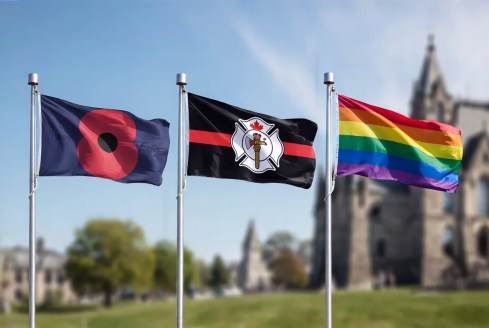
Every cause eventually faces a choice. It can keep expanding its demands forever, or it can settle into the ordinary dignity of citizenship. The first option keeps activists, consultants, committees, and bureaucracies busy. The second allows citizens to live together without every institution becoming a stage for moral performance.
And this critique does not apply only to one letter in the ever-expanding acronym. The problem is the machinery itself: the institutional expectation that citizens must affirm not only dignity and legal equality, but the whole ideological package attached to the celebration. That is where reasonable accommodation gives way to soft coercion.
The smarter move would be if the Pride organizations themselves stepped up and acknowledged their overreach.
“The better settlement is simple enough: one day of recognition, freely observed, and then the ordinary dignity of living together without a seasonal loyalty test.”
They could say: we have made our point. Gay and lesbian Canadians are not going anywhere. We are neighbours, friends, co-workers, artists, teachers, soldiers, parents, and citizens. We do not need four months of official reinforcement to prove we belong. Let Pride return to civic scale: a bounded public recognition, private celebration for those who want it, and no expectation that every institution must join the ritual.
That would be a sign of confidence, not retreat. A movement secure in its place does not need every bank logo recoloured, every school hallway decorated, or every employee nudged into public agreement. If the goal is equal citizenship, then the endgame cannot be permanent mobilization. It has to be ordinary civic life, with room for celebration, indifference, criticism, and refusal.
Let communities hold parades. Let businesses support Pride if they choose. Let citizens attend, ignore, criticize, or enjoy the day as free people. But public institutions should stop behaving as though full civic membership requires annual submission to a political liturgy.
The better settlement is simple enough: one day of recognition, freely observed, and then the ordinary dignity of living together without a seasonal loyalty test.
Too many land acknowledgements are not acknowledgements anymore. They are rituals of submission with nicer stationery.
Everyone knows the form. Before the meeting, concert, lecture, school assembly, or conference begins, someone reads a solemn paragraph about the land. The tone is reverent. The words are familiar. The effect is usually deadening. Nobody is supposed to argue with it. Nobody is supposed to ask what it means in practice. The ritual is complete once the room has been morally sorted.
That is the trick.
A land acknowledgement does not merely “acknowledge land.” It often imports a political frame. It suggests that some people belong here more deeply than others, that ordinary Canadians are guests in their own country, and that citizenship itself sits under a cloud of inherited guilt.
This is why Jamil Jivani’s version is useful:
“We acknowledge that we gather here today as free men and women on land governed by private property laws. We are enthusiastic to keep this as a proud tradition in our country, and we stand firmly as people who do not believe in two-tiered citizenship.”
That works because it does what the usual version refuses to do. It acknowledges the legal and political order under which people are actually gathered.
We are not meeting in a metaphysical guilt zone. We are meeting in Canada. That means Canadian law, constitutional government, treaty obligations, private property, Crown land, Aboriginal title, reserves, statutes, courts, and civic rights that apply to citizens as citizens.
The details matter. Canada’s land regime is not one simple thing, and anyone pretending otherwise is selling you a pamphlet, not an argument. But the public square still depends on a shared legal order. It cannot survive if every gathering begins by quietly ranking people according to ancestry.
That is why the phrase “land governed by private property laws” matters. It cuts through the incense.
Private property is not just about who owns a fence line or a parcel on a title map. It is one of the civilizational tools that lets strangers live beside each other without every dispute becoming a tribal contest. It turns land into a governed reality rather than a permanent symbolic battlefield. It lets people build homes, churches, schools, businesses, farms, and community halls without having to justify their existence every time someone invokes ancestry.
The usual acknowledgement often leaves people with a vague sense that Canada is illegitimate, but without saying clearly what should follow.
Are property titles invalid? Are municipal governments illegitimate? Are homeowners merely tenants of history? Are citizens equal, or are some citizens permanently morally prior because of bloodline?
These questions are usually dodged because answering them would reveal the radicalism hiding inside the ritual.
Jivani’s version answers plainly: no two-tiered citizenship.

That is the heart of it.
A serious country can honour Indigenous history. It can recognize treaties. It can correct specific injustices where evidence and law require correction. It can admit that governments have done cruel, stupid, and destructive things. None of that requires teaching Canadians that equal citizenship is somehow morally suspect.
But that is where many modern land acknowledgements drift. They sort the room into moral categories before the event even starts. Some people are original. Some are settlers. Some have ancestral legitimacy. Others inherit suspicion. The language remains soft, but the structure underneath it is hard.
That is not reconciliation. That is caste thinking with a grant application attached.
And no, refusing that frame does not mean pretending history began yesterday. This lazy accusation needs to be retired. Canadians can know the history without accepting a ritual designed to weaken their confidence in the country they inhabit. Memory does not require self-erasure. Justice does not require permanent civic grovelling. Respect does not require pretending that liberal citizenship is some colonial inconvenience we should all feel embarrassed about.
If people want reconciliation, then do the real work. Clarify treaty obligations. Improve reserve governance. Support economic development. Fix broken service delivery. Protect individual rights. Litigate actual claims. Negotiate actual settlements.
But stop pretending that reciting inherited guilt before a PowerPoint presentation is moral courage.
The better acknowledgement is provocative because it reverses the moral pressure. Instead of forcing citizens to rehearse guilt before they proceed, it affirms the conditions that let free people gather in the first place: law, property, citizenship, and equality before the state.
That is exactly why it will irritate the professional class that treats land acknowledgements as sacred theatre. It refuses the expected posture. It does not bow. It does not mumble through a half-confession. It says, openly, that Canada is a real country, that its legal order matters, and that citizenship must not be divided into ancestral ranks.
A land acknowledgement should acknowledge reality.
That is worth saying out loud.
Oh, for heaven’s sake.
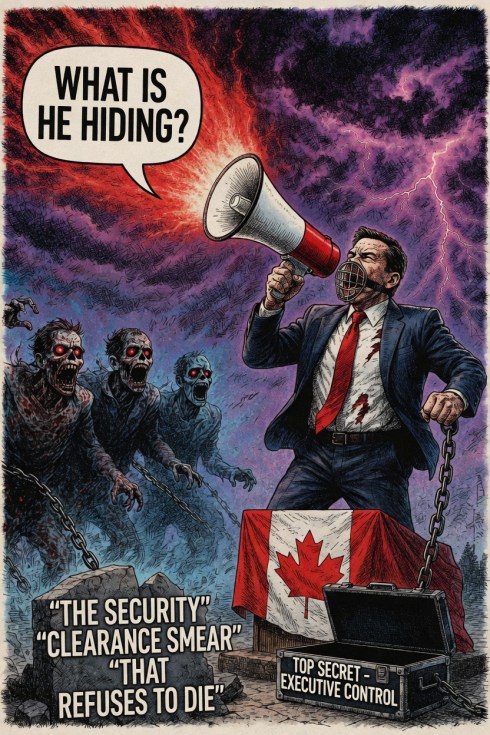
The Pierre Poilievre “security clearance” line has become one of those zombie claims in Canadian politics: killed repeatedly, buried repeatedly, and somehow still shambling around the media ecosystem looking for brains.
The lazy version goes like this: Poilievre does not have security clearance.
The line sounds grave because it is designed to sound grave. The average reader is supposed to hear it and supply the missing accusation: What is he hiding? Why can’t he pass the test? Is he compromised? The framing does not need to prove those suspicions. It only needs to keep them hovering.
But the real issue is not whether Poilievre is some random man off the street who cannot be trusted near a file folder. He served as a federal cabinet minister under Stephen Harper, including as minister of democratic reform and employment and social development. Cabinet ministers routinely handle sensitive government information. The current fight is over whether, as Leader of the Opposition, he should accept a particular classified briefing process under conditions that may limit what he can say afterward.
That is where the trick happens: critics collapse separate categories into one insinuating claim. Past cabinet access, present clearance status, and refusal of a specific classified-briefing regime are treated as though they are the same thing.
The accurate answer is not “his clearance never expires.” That claim is too broad and too easy to attack. Government of Canada security guidance says Secret clearance is valid for 10 years and Top Secret for 5 years. The stronger point is that the public is being offered a flattened version of a more complicated dispute.
The government, opposing parties, and many media voices say Poilievre “refuses to get security clearance.” Often, what they mean is that he has refused the additional clearance or classified briefing access needed to review certain foreign-interference material, including unredacted intelligence. Poilievre’s stated reason is that accepting those terms would restrict his ability to comment publicly.
You can view that choice as wise or reckless. But refusal under those terms is not the same as being unable to obtain clearance. It is not evidence that he failed a background check. It does not prove intelligence officials found him unfit. It means he has refused to enter a briefing regime with legal and political consequences.
Those consequences are not rhetorical decoration. The National Security and Intelligence Committee of Parliamentarians Act requires members to obtain and maintain the necessary Government of Canada security clearance, take an oath, and follow confidentiality rules. It also prohibits members and former members from knowingly disclosing protected information obtained through their work. The Supreme Court of Canada has upheld limits on parliamentary privilege in this context. In plain English: once you accept certain classified information under those rules, you may know more, but you may also be able to say less.
That architecture matters for an opposition leader. A government backbencher can absorb confidential information and stay quiet. A minister can be bound by cabinet confidence. But the Leader of the Opposition has a different role: to scrutinize the executive, press for disclosure, expose contradictions, and speak publicly when the government would rather manage the file behind closed doors.
There is still a serious criticism here. A potential prime minister should not be casually indifferent to classified intelligence. Foreign interference is not a branding exercise. It is real, ongoing, and aimed at Canadian institutions. Critics argue that Poilievre’s refusal leaves him unnecessarily blind on files he may one day have to manage from the Prime Minister’s Office.
That case should be made plainly: Poilievre should accept the clearance because national security requires informed leadership, even if that limits what he can say publicly afterward.
Fair enough. Argue that.
But do not imply he failed a clearance process. Do not suggest he is too compromised to receive sensitive information. Do not turn a strategic refusal into a character indictment.
Poilievre’s position may be risky. It may even be wrong in some circumstances. But the risk he identifies is also real. If the government possesses information embarrassing to itself, damaging to another party, or relevant to public accountability, a briefed opposition leader may become strategically constrained. In ordinary life, “knowing more” is usually an advantage. In opposition politics, knowing something you cannot use can become a leash.
This is why the “just get the clearance” demand is not neutral. It asks the Leader of the Opposition to step inside a confidentiality framework shaped by the executive he is supposed to scrutinize.
None of this automatically makes Poilievre right. There may be briefings he should accept. There may be moments when national security requires trust between government and opposition. But pretending the only possible explanation for refusal is guilt, cowardice, or hidden compromise is political theatre masquerading as procedural concern.
The machinery is more complicated than the slogan. Opposition leaders can receive classified briefings through different routes, with different levels of access and different obligations attached. Some briefings may require formal clearance. Some may involve confidentiality agreements. Some may leave a political leader better informed but publicly constrained.
So argue the real question.
Should the Leader of the Opposition accept classified briefings if doing so may limit his ability to criticize the government? Or should he remain outside that framework so he can keep pressing for public disclosure, especially when the issue is foreign interference in Canadian democracy?
Canadians can land on either side of that question. What they should not accept is the cheap version: Poilievre won’t get clearance — what is he hiding?
That is not analysis. It is insinuation with a lanyard.
The proper answer is to force precision.
Say what actually happened: Poilievre refused a particular classified briefing path because he believes it would constrain his ability to speak publicly and perform the adversarial role of opposition. His critics may call that irresponsible. His defenders may call it prudent. But anyone still selling the crude version is not informing the public.
They are laundering a smear through procedure, and Canadians should be tired of that trick by now.
References
- Government of Canada — Security clearance request process
Explains clearance levels and validity periods: Secret clearance is valid for 10 years; Top Secret clearance is valid for 5 years.
https://www.canada.ca/en/public-services-procurement/services/industrial-security/security-requirements-contracting/personnel-security-screening/processes/security-clearance-request.html - National Security and Intelligence Committee of Parliamentarians Act
Sets out clearance, oath, confidentiality, and disclosure obligations for NSICOP members.
https://laws-lois.justice.gc.ca/eng/acts/n-16.6/page-1.html - Supreme Court of Canada — Alford v. Canada (Attorney General), 2026 SCC 11
Confirms limits on parliamentary privilege for NSICOP-related secrecy obligations.
https://www.scc-csc.ca/judgments-jugements/cb/2026/41336/ - Reuters — Trudeau says some opposition MPs could be involved in foreign interference
Includes the context around Poilievre declining clearance to access intelligence from the foreign-interference probe.
https://www.reuters.com/world/americas/trudeau-says-some-opposition-canada-mps-could-be-involved-foreign-interference-2024-10-16/ - Foreign Interference Commission — PCO memo on classified briefings for opposition leaders
Discusses possible classified briefing routes for opposition leaders, including Secret-level briefings, Privy Councillor options, confidentiality agreements, and Top Secret requirements.
https://foreigninterferencecommission.ca/fileadmin/foreign_interference_commission/Documents/Exhibits_and_Presentations/Exhibits/CAN023012.pdf











 bleatmop
 Mystro


 Dead Wild Roses
Your opinions…