
You are currently browsing The Arbourist’s articles.


In 2020, the Smithsonian’s National Museum of African American History and Culture published the two graphics above as part of its “Talking About Race” portal.
A necessary disclaimer: the museum removed the chart after criticism and acknowledged, “We erred in including it.” It is not current Smithsonian policy. That correction deserves recognition.
The point of revisiting it is not to pretend otherwise, but to examine the ideas circulating within an institution when someone created this material, others approved it, and the museum decided it was fit for public education.
Look at what the chart assigns to “whiteness”: objective and rational thinking, the scientific method, cause-and-effect reasoning, hard work, delayed gratification, planning for the future, self-reliance, decision-making, written communication, politeness and the protection of property.
If a white supremacist had claimed these were distinctively white characteristics, everyone would recognize the racism immediately. Placed inside an anti-racist framework, however, the same racial essentialism was briefly presented as enlightenment.
What does the chart imply about people who are not white? That rationality, foresight, scientific thinking and self-discipline are foreign norms imposed upon them? The creators may not have intended that conclusion, but they constructed the racial division that produces it.
There are a few legitimate observations buried inside the mess. American holidays have been shaped by Christianity, its legal system descends substantially from English common law, and its history was often taught through European settlement and male political leaders. “Win at all costs,” female subordination and treating wealth as personal worth are also reasonable targets for criticism.
The chart destroys those distinctions by dumping historical inheritance, social conventions, genuine vices and universal human capacities into one container marked whiteness. English common law, Barbie, scientific reasoning, bland food and delayed gratification are all made expressions of the same racialized system.
Objectivity is not white. It is a method for correcting the biases found in every human population. Written traditions developed across civilizations. Parents of every race sacrifice for their children, workers labour toward future goals, and societies everywhere use observation and causal reasoning to survive.
To produce something this ridiculous requires more than an editorial mistake. It requires an institutional culture that has spent so long treating Western inheritance as presumptively oppressive that civilizational self-criticism has curdled into self-repudiation. Once “whiteness” became the organizing category, apparently nobody stopped to ask what assigning rationality and hard work to white people implied about everyone else.
The museum eventually did stop, listen and withdraw the chart. Good.
But the artifact remains instructive. When anti-racism teaches that reason, discipline and foresight are white characteristics, it has not defeated racism. It has reproduced racism, reversed the approved moral direction and called the result education.
The smartphone is a remarkable invention. It provides maps, music, news, books, banking, photography and instant communication with nearly everyone we have ever met—including several people we had successfully avoided since high school.
Unfortunately, it has also annexed every unoccupied second of human life. Stand at a bus stop, enter an elevator or wait thirty seconds for a coffee and everyone begins studying their palms like Victorian mediums receiving messages from the dead.
Should you ever find yourself in public without an urgent notification to inspect, here are ten alternative activities.

10. Look Where You Are Walking
This ancient practice predates Google Maps and requires no subscription.
Looking forward allows you to detect lampposts, curbs, open manholes and other pedestrians. More advanced practitioners may eventually learn to walk in a straight line without drifting unpredictably across the sidewalk like a Roomba trapped in a kitchen.
9. Read Something Made of Paper
A book, newspaper or magazine will do. Paper does not vibrate, demand an update or interrupt a paragraph to tell you that someone you barely remember has reacted to a photograph of someone else’s lunch.
As an added benefit, strangers may assume you possess an attention span.
8. Observe Your Surroundings
Public spaces contain architecture, trees, weather, animals and people wearing baffling combinations of clothing. All are available without creating an account.
You may discover that a building you pass every day has gargoyles, that pigeons conduct elaborate territorial disputes or that Edmonton possesses roughly six pleasant outdoor weeks per year.
7. Talk to the Person You Came With
This option is particularly suitable for restaurants, where couples can often be seen sitting opposite one another while communicating with entirely different people.
Possible subjects include the food, the day, future plans or the increasingly radical question, “How are you?”
If conversation fails, you may both return to your phones with the comforting knowledge that an attempt was made.
6. People-Watch
People-watching is not staring. The distinction is important and may eventually become legally relevant.
Simply observe the small theatre of public life: the parent negotiating with a toddler, the dog dragging its owner toward forbidden shrubbery, the teenager attempting to look indifferent while being intensely aware of everyone nearby.
Human beings are interesting when not reduced to profile pictures.
5. Perform a Tiny Act of Public Usefulness
Hold a door. Return an abandoned shopping cart. Give directions. Let someone merge. Pick up the glove that a child dropped while its parent was managing three bags and the gradual collapse of civilization.
No video is required. The act still counts if nobody posts it.
4. Make Brief Eye Contact
This manoeuvre should be performed carefully. The objective is not to peer into another person’s soul but to acknowledge that one human being has encountered another.
A nod or small smile is sufficient. Canadians may add “Morning,” “How’s it going?” or the nationally sanctioned observation, “Bit cold out.”
3. Allow Yourself to Be Bored
Boredom was once an ordinary interval between activities. Now it is treated as a medical emergency requiring immediate digital intervention.
Try waiting without consuming anything. Your mind may wander, remember something important or produce an original thought. It may also replay an embarrassing conversation from 1997. Results vary.
2. Help Someone Who Looks Lost
Airports, hospitals and transit stations regularly contain people studying signs with the expression of medieval cartographers confronting an unknown continent.
If you know the way, offer assistance. If you do not know the way, resist the temptation to gesture confidently toward a random corridor. This is the difference between helping and founding a religion.
1. Be Where You Are
Your body has already arrived. See whether your attention might join it.
Listen to the room. Notice the light. Watch the city move. Let a moment pass without photographing, rating, posting or forwarding it.
The world will continue producing notifications while you are away. It is very committed to the work.
I have been a teacher for nearly twenty years, and one of the things we are purportedly supposed to teach is critical thinking. Yet I have rarely seen its meat and potatoes taught directly: how to examine a claim, distinguish evidence from inference, recognize our own incentives and ask what might prove us wrong. Epistemic hygiene seldom makes it to the table.
Knowing the difference between a transitive and intransitive verb is useful, but it does not teach someone how to interrogate their own cognition. Basic knowledge must come first because nobody can think critically about material they do not understand. After that, however, education often supplies more intricate content without spending much time on how beliefs are constructed, defended and corrected. Mastery means being able to teach the material reliably; thinking begins when you can examine its assumptions and identify what evidence would change your mind.
Genuine critical thinking—something different from applying the predetermined categories of critical theory—is harder still. On consequential subjects, truth must be extracted from incomplete evidence, interested testimony, competing interpretations and our capacity for self-deception. We are confirmation-seeking machines with an extraordinary ability to turn motivated reasoning into moral certainty.
My own intellectual progress—and I use the word progress lightly—began with enormous amounts of reading in my twenties and thirties: Noam Chomsky, Nick Turse, Chris Hedges, Naomi Klein, Arundhati Roy, Michael Moore and other writers overwhelmingly critical of the West, capitalism and American power.
Had I studied critical theory, dependency theory or post-colonialism, or grappled seriously with Derrida and Foucault? No. Nor had I read Milton Friedman or Friedrich Hayek; even now, I know much of their work through summaries rather than sustained engagement with the originals.
That was the trap. It was not that left-wing writers had gathered in a secret room and conspired to conceal their philosophical machinery. It was that the popular polemical writing I consumed rarely required me to inspect that machinery at all. Its conclusions arrived with their moral valence already installed. Capitalism was not merely an economic arrangement with strengths, failures and trade-offs; it was exploitation. Western power was not something to be judged according to particular actions and outcomes; it was presumptively imperial. Conservatives were not people advancing arguments I had considered and rejected. They were regressive people who wanted others to suffer.
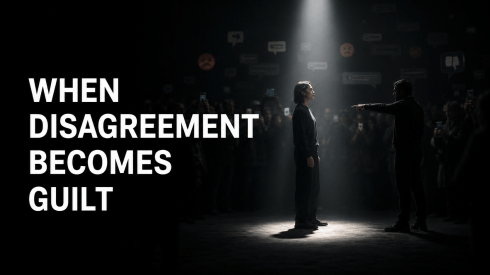
I had learned the conclusion—and the moral posture that protected it—before I understood the underlying dispute. Once that posture is established, disagreement no longer arrives as information. It arrives as evidence of guilt.
Consider a question that has become common in political conversation: “Surely you oppose the genocide Israel is committing in Gaza?”
It is grammatically a question but structurally a package of conclusions. Genocide is among the worst crimes human beings can commit; therefore, any decent person must oppose it. That part is easy. The difficulty is that the sentence quietly joins this uncontested moral premise to a disputed factual and legal conclusion: that Israel’s conduct in Gaza constitutes genocide.
To pause before accepting the second proposition is not to endorse dead civilians, starvation, collective punishment or war crimes. It is to ask whether the term has been established. Genocide requires specified acts accompanied by the intent to destroy, in whole or substantial part, a protected national, ethnic, racial or religious group. At the time of writing, the International Court of Justice has not issued a final judgment on South Africa’s case against Israel.
A responsible answer might begin: “I oppose genocide without qualification. I am not yet persuaded that genocide is the legally accurate description of Israel’s conduct in Gaza.”
Yet this distinction is often where the moral mechanism activates. Why are you reluctant to condemn genocide? How can you defend what Israel is doing? What kind of person needs more evidence while children are dying? The demand for factual discrimination is recoded as moral indifference, and uncertainty becomes complicity. If the exchange deteriorates far enough, racism, fascism and comparisons to Hitler soon follow.
Notice what has disappeared. We are no longer examining conduct, casualties, official statements or evidence of intent, nor distinguishing genocide from war crimes, crimes against humanity or the legally different consequences of urban warfare. The person who questioned the premise has been placed on trial instead.
Once you have been called a racist and had your ethical character placed under suspicion, what are you supposed to do? Real conversations occur within a social fabric of friendships, workplaces, institutions and reputations. People who know little about the original dispute still understand that proximity to an alleged racist can carry costs.
The rational response is often retreat: qualify what you said, apologize for how it was received or remain silent. None of this determines whether the original claim was true.
Being told to “do the work” can operate in much the same way. There are circumstances in which nobody is obligated to provide an introductory seminar to a belligerent stranger. But when someone advances a disputed public claim, the burden of supporting it does not transfer automatically to anyone who asks for evidence. “Educate yourself” is not an argument, and a reading list assembled entirely within one intellectual tradition is not a substitute for demonstrating the claim.
The accusation creates an enormous asymmetry. It takes seconds to call someone racist, transphobic, fascist or complicit in genocide. Answering may require reconstructing what was said, the evidence behind it and the distinctions being made. By then, the accusation has travelled farther than the rebuttal ever will. Whether intended or not, the effect disciplines everyone watching: this is what happens when the approved conclusion is questioned. What has been established is the price of examining it.
Social media does not create this mechanism, but it forms an unusually effective positive feedback loop around it. Ordinary conversation contains corrective signals: tone of voice, facial expression, hesitation, familiarity and the opportunity to clarify a sentence before it hardens into a verdict. Social media amputates those cues and places the exchange before an audience.
In its place, the platforms provide numbers. Likes, reposts, replies and impressions become crude heuristics for approval and importance, neither of which should be confused with truth. A careful argument that introduces uncertainty may appear weak beside a morally certain accusation that can be understood and shared in seconds. “That claim lacks evidence” requires examination. “You are a racist” requires only allegiance.
The economic structure reinforces the tendency. X allows eligible creators to earn money from content that generates impressions and interaction. Engagement measures activity, not truth value. A correction and a furious denunciation both count; the denunciation may travel farther because anger recruits participants more efficiently than qualification. Moral certainty produces engagement, engagement produces visibility, and visibility is mistaken for consensus.
None of this means moral judgment should be banished from argument. Some propositions are morally repugnant. An argument for racial supremacy, the deliberate murder of civilians or the legal subordination of women should be examined and condemned in moral terms. Refusing to make moral distinctions would not produce intellectual neutrality. It would produce moral cowardice.
The challenge is determining whether the judgment follows from honest examination or merely records our reaction to the person making it. The tribal animal in us is never far beneath the surface. When something important to our identity is questioned, we can experience disagreement as hostility, identify an enemy and begin assembling reasons why a bad person would say such a thing. Evidence is recruited for prosecution rather than examined for understanding.
This tendency is not confined to the activist left. Conservatives, religious communities, nationalists and every other group capable of forming a moral identity can protect their conclusions in the same way. The subject here is the moral vocabulary prevalent in contemporary progressive activism, not because progressives invented tribal cognition, but because terms such as racist, transphobic, fascist and complicit in genocide have become powerful instruments for enforcing its boundaries.
Some people earn those descriptions. The obligation is to demonstrate how. What exactly did the person claim? Was the disagreement factual, definitional or moral? What evidence supports the accusation? Are we applying the same standard to our allies? What would convince us that we had judged the person unfairly?
Charity does not mean weakening the conclusion until nobody can object to it, nor does it require endless patience with someone acting dishonestly. It means identifying the strongest fair version of an argument before criticizing it, locating the actual source of disagreement and leaving open the possibility that either participant may be wrong.
That final possibility is what the prefabricated moral accusation removes. Once disagreement proves guilt, the accuser no longer needs an error-correcting mechanism. The righteous cannot learn from the wicked; they can only expose, discipline or silence them.
The alternative is less emotionally satisfying and considerably more difficult. Return to the proposition. Separate the moral premise from the factual claim. Demand evidence without pretending that evidence eliminates moral responsibility. Judge conduct when the judgment has been earned, and remain willing to correct the judgment when it has not.
A society capable of disagreement must make room for people to be mistaken without making them monsters. Otherwise, moral language ceases to guide inquiry and becomes the means by which inquiry is brought to an end.
References
- International Court of Justice. “Application of the Convention on the Prevention and Punishment of the Crime of Genocide in the Gaza Strip (South Africa v. Israel).” https://www.icj-cij.org/case/192
- United Nations Office on Genocide Prevention and the Responsibility to Protect. “Definitions of Genocide and Related Crimes.” https://www.un.org/en/node/218413
- X Help Center. “Creator Revenue Sharing.” https://help.x.com/en/using-x/creator-revenue-sharing
When the Berlin Wall fell in 1989 and the Soviet Union dissolved two years later, the West succumbed to an understandable triumphalism. Soviet communism had collapsed beneath the weight of economic stagnation, political coercion and reforms that the system could neither contain nor survive. The centrally planned utopia had not merely underperformed; Soviet-style regimes had produced scarcity, repression and ruin across much of the world.
For a time, the revolutionary lie appeared to have been buried with it. Francis Fukuyama’s famous phrase, “the end of history,” was flattened into a civilizational victory lap: liberal democracy had won, communism had lost, and the ideological contest was over. What we mistook for intellectual extinction, however, was merely the collapse of one political form. The deeper moral machinery—the division of humanity into oppressors and oppressed, with guilt and legitimacy assigned accordingly—remained very much alive.
We celebrated the corpse before checking whether it was still moving.
This essay takes its starting point from Zineb Riboua’s “Naming the Threat: Third-Worldism.” Drawing upon the French historian François Furet’s The Passing of an Illusion, Riboua describes revolutionary politics as a mentalité: not merely a set of claims, but a way of inhabiting political reality that can survive even when those claims are repeatedly disproved. That insight helps explain why an ideology apparently buried in 1991 continues to return in new forms.
To understand what survived, however, we must distinguish the historical Third World from the ideology that appropriated its name.
The French demographer Alfred Sauvy coined the term Third World in his 1952 essay “Three Worlds, One Planet,” invoking the Third Estate of the French Revolution: ignored, exploited and scorned, yet demanding recognition. During the Cold War, the term came to describe countries belonging to neither the Western nor Soviet bloc. It was never a coherent civilization or political programme. The category contained democracies and dictatorships, capitalist and socialist economies, emerging powers and desperately poor states whose interests frequently conflicted.
Third-Worldism is something different. It transforms that complicated collection of countries into a symbolic moral category and interprets global politics through a recurring hierarchy: the Global North dominates, the Global South is dominated, Western power carries presumptive guilt, and resistance to that power acquires presumptive legitimacy.
Criticism of colonialism, Western intervention or unequal power is not inherently Third-Worldist. The label should not apply when critics revise their conclusions as outcomes change, acknowledge the agency and culpability of non-Western actors, distinguish unequal power from automatic guilt and apply the same moral standards to allies and enemies. It becomes ideological when the verdict is assigned in advance and no conduct or evidence can alter it.
The record of revolutionary socialism should nevertheless impose an extraordinary burden of proof. Stalin’s Soviet Union, Maoist China and Pol Pot’s Cambodia produced different forms and degrees of catastrophe; the Khmer Rouge alone killed nearly two million people while pursuing a classless agrarian utopia, according to the United States Holocaust Memorial Museum. None of this proves that contemporary arguments about extraction, debt or colonial inheritance are false. It demonstrates the danger of concentrating power in the name of an imagined future and explains why revolutionary promises must be judged against outcomes rather than intentions.
Yet the underlying idea survives because a mentalité determines what outcomes mean before they have been examined. If a revolutionary regime succeeds, success vindicates resistance. If it fails, sanctions, colonialism or interference explain the failure. If citizens flee or dissidents describe repression, the framework can absorb their testimony as the product of outside pressure, Western influence or false consciousness. Those external forces can cause real damage; the ideological move is to treat them as automatic and sufficient while refusing to examine domestic tyranny, corruption or ruinous policy. Once the verdict precedes the evidence, reality can only become further proof.
This is not an opponent assembled from scraps. Consider the recent writing of Marxist historian Vijay Prashad, executive director of the Tricontinental Institute for Social Research. A June 2026 newsletter identifies the central contradiction of our era as a declining imperialist system confronting peoples seeking sovereignty and justice. Its May newsletter, “Socialism Is Slow to Mature,” offers six reasons revolutionary states have struggled. Colonial impoverishment, sanctions and war are real entries in that account, but the conclusion is revealing: under those conditions, “inefficiencies emerge not from ideology or planning errors but from the permanent emergency conditions imposed by hostile powers.” Even elections become suspect because their short cycles can interrupt—or, in the newsletter’s language, sabotage—projects that require decades to mature.
The problem is not that Prashad considers sanctions, inherited poverty or foreign intervention. A truthful history must. It is that ideological and planning errors are explicitly removed from his explanation of inefficiency under hostile conditions, while democratic rejection is recast as an obstacle to transformation. Failure calls for more historical patience; opposition demonstrates the power of the hostile order; interruption prevents the promised future from arriving. The theory survives by placing its vindication beyond the reach of ordinary political time.
Credit where credit is due: revolutionary socialism has proved remarkably adaptable. When class revolution failed to sweep advanced capitalist societies, the conflict narrative widened. The proletariat and bourgeoisie were joined by colonized and colonizer; conflict over the ownership of production expanded into conflict over culture, language and knowledge. This was not merely new paint, nor were the problems imaginary. Colonial empires committed real crimes, and Western scholarship sometimes rationalized them. The continuity lies neither in conspiracy nor an unbroken intellectual lineage, but in a moral structure that remained useful after its economic doctrine became politically toxic.
The supporting intellectual infrastructure had been developing long before the Soviet collapse. Edward Said’s 1978 Orientalism argued that Western scholarship about the East was implicated in imperial domination—an important corrective to the conceit that experts are immune to prejudice or self-interest. The difficulty arose when that insight hardened within influential postcolonial currents into a presumption that Western knowledge was compromised by its origin and Western power suspect by definition. Soviet economics could be discarded while the deeper division between oppressor and oppressed remained.
What makes this structure so durable is its resistance to correction. Liberal institutions are not inherently self-correcting, nor do markets guarantee wise or just outcomes. Both can be captured, distorted or defended with excuses as circular as anything on the revolutionary left. Western governments have invoked civilization, development and the rules-based order to excuse allied dictatorships, failed interventions and policies that violated their professed principles. Third-Worldism has no monopoly on moral narratives that protect themselves from evidence.
The liberal advantage is narrower but still important: when elections remain competitive, speech remains free, evidence remains contestable and power remains divided, correction can occur without revolutionary rupture. Market prices communicate information, elections can remove governments, and competing institutions can expose mistakes. When those mechanisms are blocked, liberalism is failing according to its own standards.
The revolutionary mentalité treats corrective signals as evidence of corruption. Economic failure becomes sabotage, electoral defeat false consciousness, critical scholarship an instrument of Western power and internal dissent betrayal. Third-Worldism reproduces this defect globally: instead of asking which institutions produce freedom, prosperity and human flourishing, it first asks which actor possesses power. The categories decide the moral meaning of the evidence before the evidence can challenge the categories.
Third-Worldism never disappears completely because the impulses it organizes are older than any particular political system. Resentment, moral certainty and the dream of cleansing society through revolutionary rupture do not die when a regime collapses; they wait for a new vocabulary and a new division of humanity to inhabit.
This makes Third-Worldism especially corrosive to the Western synthesis of classical liberal institutions and Judeo-Christian moral inheritance. That tradition is imperfectly honoured, but it places moral agency in the individual, aspires to equality before the law, permits criticism and allows for repentance, reform and renewal. Third-Worldism substitutes collective guilt, inherited innocence and permanent historical indictment. It does not ask Western societies to correct their failures according to their professed principles. It teaches them that those principles are merely disguises for domination.
That Western inheritance is not innocent. Liberal societies tolerated slavery, constructed empires, denied women equal citizenship and repeatedly betrayed their universal claims. Postcolonial scholarship corrected narratives that had been self-serving or false, and a society incapable of hearing that criticism would deserve intellectual contempt. The distinction is whether criticism can lead to correction. Liberal principles supplied much of the moral language used against slavery, segregation and unequal citizenship. Where liberal self-criticism asks a society to live up to those principles, Third-Worldism treats the founding order as permanently contaminated and recasts the principles themselves as instruments of domination.
The zombie ideology survives because it offers each generation the same intoxicating promise in contemporary language: history has already identified the guilty, moral virtue belongs to those who oppose them, and destruction can be mistaken for justice so long as it is called liberation.

Works Cited
- Fukuyama, Francis. “The End of History?” The National Interest, no. 16, Summer 1989, pp. 3–18.
- Furet, François. The Passing of an Illusion: The Idea of Communism in the Twentieth Century. Translated by Deborah Furet, University of Chicago Press, 2000.
- Prashad, Vijay. “Socialism Is Slow to Mature: The Twenty-First Newsletter (2026).” Tricontinental: Institute for Social Research, 21 May 2026.
- Prashad, Vijay. “The World Needs a Living Left: The Twenty-Fourth Newsletter (2026).” Tricontinental: Institute for Social Research, 11 June 2026.
- Riboua, Zineb. “Naming the Threat: Third-Worldism.” Beyond the Ideological, 20 July 2026.
- Said, Edward W. Orientalism. Routledge & Kegan Paul, 1978.
- Sauvy, Alfred. “Trois mondes, une planète.” L’Observateur, 14 August 1952; reprinted in Vingtième Siècle. Revue d’histoire, no. 12, 1986, pp. 81–83.
- Tricontinental: Institute for Social Research. “The Team.” Accessed 25 July 2026.
- United States Holocaust Memorial Museum. “Cambodia 1975–1979.” Accessed 25 July 2026.
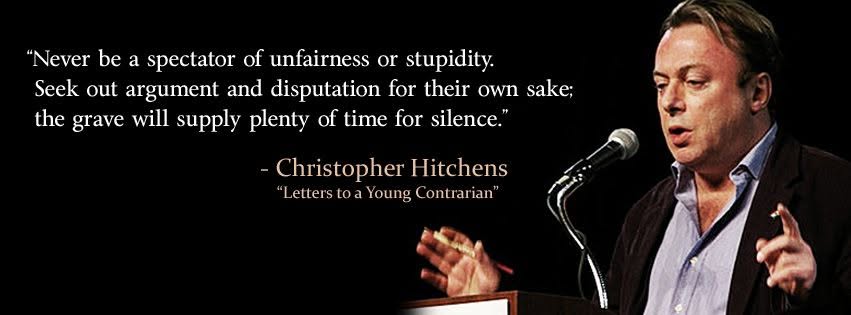
This Hitchens quotation captures the animating spirit of the DWR Sunday Religious Disservice. It is not a weekly sneer at believers, but a refusal to remain silent when religious authority shelters cruelty, stupidity, hypocrisy or injustice. Faith may explain a belief; it does not place that belief—or the institutions acting upon it—beyond scrutiny. There will be plenty of time for silence later.
Brahms’s First Symphony — The Long Road Into the Light
Johannes Brahms spent more than twenty years bringing his First Symphony to completion, conscious that any German symphonist following Beethoven would be measured against him. That burden can be heard throughout the work, but nowhere more clearly than in its final movement.
The music begins in C minor, uneasy and searching, before a radiant horn call breaks through the darkness. A solemn brass chorale follows, opening the way for the movement’s great central melody—broad, noble and deliberately reminiscent of Beethoven’s Ode to Joy. From there, Brahms gradually gathers the entire orchestra into a triumphant C-major conclusion.
This is not cheerful music pasted over despair. Brahms allows uncertainty its full weight before leading us beyond it, making the final victory feel discovered rather than declared. The darkness remains part of the journey; it simply does not receive the final word.











 bleatmop
 Mystro


 Dead Wild Roses
Your opinions…