
You are currently browsing The Arbourist’s articles.
Fauré’s Tanto Ergo offers devotion without theatrical excess. The music is warm, poised, and gently luminous, unfolding with the quiet confidence so characteristic of Fauré’s sacred writing. Rather than overwhelming the listener, it invites stillness: solo voice, chorus, and organ moving together in an atmosphere of reverence, restraint, and serene beauty. This is faith expressed not as spectacle, but as inward radiance.
**Latin**
Tantum ergo Sacramentum
Veneremur cernui;
Et antiquum documentum
Novo cedat ritui;
Praestet fides supplementum
Sensuum defectui.
Genitori Genitoque
Laus et jubilatio,
Salus, honor, virtus quoque
Sit et benedictio;
Procedenti ab utroque
Compar sit laudatio.
Amen.
**English Translation**
Therefore, so great a Sacrament
Let us venerate, bowed low;
And let the old covenant
Give way to the new rite;
Let faith provide what is lacking
Where the senses fail.
To the Father and the Son
Be praise and jubilation,
Salvation, honour, power also,
And blessing;
To the One proceeding from them both
May equal praise be given.
Amen.
Zahra is fictional.
The system that would erase her is not.
I wrote The Girl Behind the Wall as a fictional composite because facts, while necessary, can become strangely weightless when they arrive only as numbers, reports, and policy summaries. “Girls banned from school” is true. “Women restricted from public life” is true. “Child marriage enabled by law and custom” is true. But those phrases rarely let us feel what they mean inside a house: the school shoes hidden behind a water jar, the notebook slipped under quilts, or the mother waiting for a boy’s permission before she can seek medicine.
That is what the three vignettes try to make visible.
This is not the diary of one real Afghan girl, and it should not be read as testimony. Zahra is a composite figure, built from documented restrictions and from the ordinary logic of life under Taliban rule: school taken away, movement made conditional, female voices lowered, male authority made necessary, and a girl’s consent treated as less important than the arrangements made around her.
The facts behind the fiction are not obscure. UNESCO reported in 2025 that Afghanistan is the only country in the world where secondary and higher education are strictly forbidden to girls and women, with nearly 2.2 million girls and women barred from schooling beyond the primary level. Human Rights Watch’s 2026 Afghanistan reporting describes Taliban authorities maintaining bans on secondary and higher education, restricting women’s freedom of expression, imposing severe restrictions on movement and public spaces, and enforcing strict rules on dress and behaviour. Amnesty International reported in 2026 that Taliban Decree No. 18 enables child marriage, restricts women’s and girls’ ability to challenge or leave such unions, and reinforces male guardianship over women’s personal lives.
That is the factual spine. The story is an attempt to put flesh back on it.
There is also a larger moral question here, and it cannot be avoided. Whatever else the West has failed at, its best inheritance insists that girls are persons, not property; citizens, not dependents; moral agents with rights, not family assets. That claim — that every human being possesses inherent dignity and equal standing before the law — is not decorative. It is the difference between a girl as a citizen and a girl as a possession.
Human dignity matters. Equality before the law matters. Freedom of conscience matters. Education matters. The right to speak, move, refuse, learn, worship, dissent, and be treated as a legal person matters.
Those values are not abstractions when a girl is standing in a room while men decide what to call her future.
There is a bitter irony in parts of the modern West, where enormous political energy is still spent debating whether biological sex is a philosophical riddle, even as girls in Afghanistan are being erased precisely because they are female. No school. No public voice. No ordinary freedom of movement. No equal standing before men. No meaningful right to refuse the future chosen for them. If the West cannot speak plainly about what a woman is, it will struggle to defend women when sex-based oppression appears in its most brutal and unmistakable form.
That does not mean every Muslim is the Taliban. It does not mean ordinary Muslim citizens living ordinary lives are the target of this critique. They are not.
The target is theocratic Islamism: a religious-political order that subordinates civil law, individual liberty, equality before the law, and freedom of conscience to religious authority. It is the ideology that treats girls as subordinate by design, men as guardians by right, and sacred law as an authority above ordinary human consent.
That order is not compatible with Western liberal values.
A society cannot defend girls like Zahra while apologizing for the system that makes them disappear. It cannot protect religious freedom by pretending religious domination is just another cultural difference. It cannot preserve equality before the law while excusing legal orders that place women and girls beneath men.
The point of The Girl Behind the Wall is not to sensationalize suffering. It is to make visible what polite language often conceals.
Theocracy does not only arrive as slogans, courts, decrees, or men with guns. It arrives as a gate a girl no longer approaches, a road she cannot walk without permission, a question she is not allowed to answer, and a name written on paper by someone else.
Zahra is fictional.
But the wall is real.
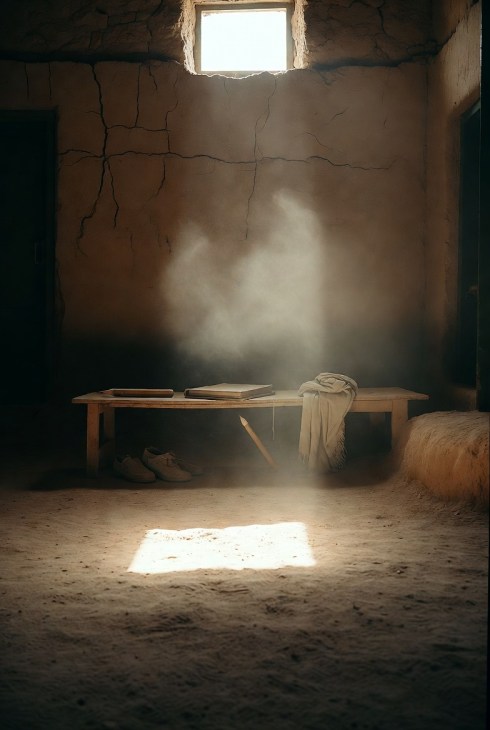
What remains when a girl’s future is taken from her is not silence alone, but the room that taught her to disappear.
References
UNESCO — education ban
UNESCO reported in August 2025 that Afghanistan is the only country in the world where secondary and higher education is strictly forbidden to girls and women, with nearly 2.2 million barred from schooling beyond the primary level.
Human Rights Watch — broader restrictions
Human Rights Watch’s World Report 2026: Afghanistan documents severe Taliban restrictions on women and girls’ movement, access to public spaces, dress, behaviour, education, and public life.
Amnesty International — child marriage decree
Amnesty International reported in June 2026 that Taliban Decree No. 18 enables child marriage and further restricts women’s and girls’ ability to challenge or leave such unions.
Final installment of a fictional composite in three vignettes about a girl coming of age under Taliban rule.
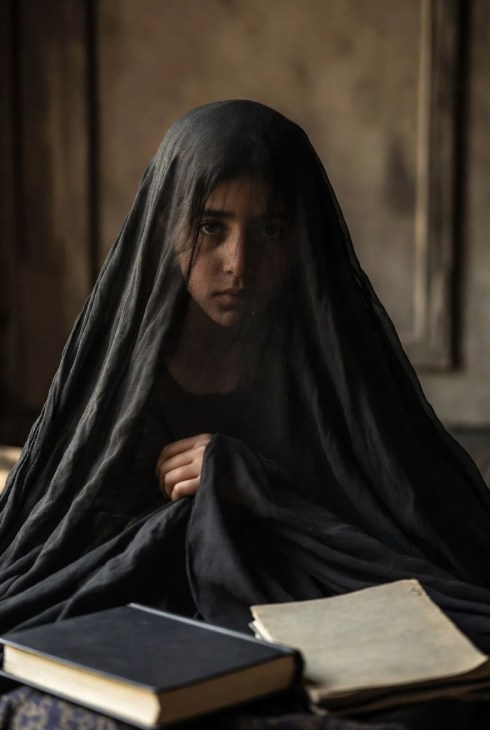
III. The Room Where They Discussed Me
The men came after evening prayer, when the bread cloth had already been shaken clean and folded.
My mother knew before they knocked. I could tell by the way she moved through the room, touching things that did not need touching: the cups, the kettle, the edge of the mat near the wall. She wiped the same place on the tray twice, then held it toward the lamp as if dust might have hidden there deliberately.
“Put on the blue dress,” she said.
I was rinsing lentils, and the water ran brown over my fingers.
“The blue one?”
She did not look at me. “Yes.”
The blue dress was folded beneath my winter shawl. I had worn it for Eid two years ago, when it still hung loose and my aunt said I would grow into it. I had grown. Now the sleeves stopped too high and the seam pulled under one shoulder, as if the dress itself knew I was no longer the girl it had been made for.
I changed behind the hanging cloth near the sleeping mats. When I came out, I saw my school shoes behind the water jar and nearly moved them, not because they were in the way, but because they looked like they belonged to someone who had expected morning to keep its promises.
Then the knock came.
My father opened the gate himself.
There were three men: my uncle, a man with a square beard and soft hands, and an older man I had seen twice near the mosque gate. They entered with the careful heaviness of men who expect a room to make space for them before they sit.
My mother sent me for tea.
The cups rattled once on the tray. I stopped walking until they stilled, then carried them in with both hands.
My father sat nearest the lamp, my uncle beside him. The man with soft hands sat opposite them, his knees wide beneath his coat, while the older man leaned on a stick and watched everything without appearing to watch.
At first they did not say my name.
They spoke about families, wheat, work, reputation, a cousin in another district, a man who had gone to Pakistan and returned with money, the price of flour, the danger of waiting too long. My uncle laughed once and said girls were like fruit; a father should not leave them where the weather could reach them.
The men smiled at that. My mother kept her hands around the teapot.
I placed the tea in front of them, starting with the oldest man because my mother had taught me the order years before. My hand passed through the lamp light, and the blue sleeve pulled tight at my shoulder.
The man with soft hands looked at the cuff, then at my face; not long, but long enough for the room to notice.
“She is modest,” my uncle said.
My father nodded.
The man asked how old I was, and my father answered before I could breathe. The number sounded smaller in his mouth, flattened and carried away from me as if it belonged to a household account, not to a person.
The man stirred his tea though there was no sugar in it. “Young girls learn a house more easily.”
My uncle said something agreeable, and the older man with the stick tapped the floor once, not loudly, only enough to remind everyone that he remained part of the judgment.
I stood with the empty tray against my stomach until my father looked at me and said, “Go help your mother.”
In the kitchen, my mother had both hands flat on the table. The lentils sat in the bowl, half-rinsed, while water dripped from the edge one slow drop at a time. I put the tray down, and she reached for a cloth, missed it, then found it with her other hand.
“Am I to be married?” I asked.
She wrung the cloth once. Brown water ran into the bowl.
“Your father is speaking.”
That was not an answer, which was how I knew it was one.
I wanted her to turn around and say no, or not yet, or I will speak to him, or I will stand in the door and not move. I wanted her to become larger than the room, larger than the men, larger than whatever law had made her small before I was even born.
Instead she wiped the table.
“They say he has work,” she said.
“Who?”
She folded the cloth, unfolded it, then folded it again.
“The son.”
“How old?”
Her fingers stopped.
“Older.”
From the front room came laughter. My father’s laugh arrived last, careful and low.
“Does he know about me?” I asked.
My mother finally turned. For a moment anger crossed her face, but it did not know where to go and found no door.
“Do not speak foolishly.”
I lowered my eyes.
She reached for my wrist. Her fingers closed, then loosened. When I was small and feverish, she used to hold my wrist while counting my pulse; I remembered waking in the night with her beside me, lips moving in prayer, thumb soft against the inside of my arm. Now her hand rested in the same place as if she were checking whether I was still there.
The older man called for more tea.
My mother let go.
The second time I entered, the room had grown quieter.
A paper had appeared on the mat. Not an official paper, not yet, but folded and smoothed, with names spoken over it as if speaking could make them settle. My father had taken the good pen from the shelf, the one he used only for serious things: debts, letters, forms, names that needed to remain after the voice was gone.
My uncle was saying that a girl is safest under the authority of a husband. The man with soft hands said his son was firm but fair. The older man said a wife learns.
I set down the cups.
My father’s pen rolled toward the edge of the paper, and I caught it before it fell.
For one second I held it.
The pen was heavier than my pencil had been: black lacquer, silver clip, my father’s name scratched faintly near the cap. Every man in the room saw it in my hand, and the seeing itself became another instruction.
I placed it beside the paper. My father picked it up without touching my fingers.
“She reads well,” my uncle said, as if apologizing for me.
The man with soft hands gave a small smile. “Reading is useful for children. A wife needs other skills.”
The older man tapped his stick again, and my father did not look at me when he told me to go.
I went back to the kitchen and stood beside the wall where the plaster had cracked. My mother was pouring hot water into the teapot. Steam rose between us, softening her face and disappearing before it reached the ceiling.
“I do not want this,” I said.
The steam moved.
My mother closed the teapot lid.
“You do not know what this is.”
“I know enough.”
Her voice sharpened, then fell at once as she looked toward the front room. “You know books. You know school. You know words. That is not the same as knowing what happens when men decide you are disobedient.”
A sound came from the front room: paper lifted, folded, unfolded.
I thought of my notebook beneath the books in the chest, the broken pencil wrapped in cloth, the shoes behind the water jar. All my little hidden things, gathered like crumbs.
The older man called my father’s name.
My mother took my face in both hands, startling me because she had not done that in years. Her palms were warm from the teapot, thumbs resting just below my cheekbones as if she could hold my whole future there if she pressed carefully enough.
“Listen to me,” she whispered. “If they ask you anything, lower your eyes.”
“No.”
The word came out before I could catch it.
My mother’s fingers tightened against my face. Her eyes filled so quickly it frightened me.
“Do not make them hear you,” she said.
The front room went quiet.
We both heard it.
She let go and turned toward the stove. I picked up the tray because my hands needed to be doing something, and because if hands are busy, sometimes the mouth remains closed.
When I entered, the men were watching.
The older man gestured toward the space near the door. “Come here.”
I obeyed, not because I wanted to, but because my feet had learned obedience long before my mouth began objecting to it.
The man with soft hands looked at me with the mild patience people use for animals they expect to behave.
“Your father has spoken well of you,” he said.
I looked at the edge of the mat.
“You are obedient?”
My father answered.
“She is.”
The man waited. Perhaps he wanted to hear my voice; perhaps he wanted only to see whether I understood where to place it. Behind me, in the doorway, I could hear my mother breathing.
The room held still around my silence until the older man nodded.
“Good.”
Something moved from my father’s side of the mat to the other man’s: not money exactly, or not only money. A folded cloth. A small packet. Words about timing, honour, God, safety, duty. Words that passed above my head and landed on the paper.
The pen scratched. My father’s hand moved.
My name appeared where I had not written it.
Zahra.
Upside down, it looked like someone else’s name.
The men drank their tea. The man with soft hands asked if I could cook rice properly; my uncle said my mother had trained me well, and the older man said too much education made girls restless. Everyone agreed in different ways, some with words and some by letting the words stand.
I remained near the door until my mother touched my elbow.
In the kitchen she took the tray from me before I dropped it. Only then did I realize my hands were shaking.
“Sit,” she said.
I sat on the floor beside the lentils. The bowl was still there, the water settled now, with a few pale skins floating on the surface.
My mother crouched in front of me, her knees cracking softly.
“There may still be time,” she whispered.
She did not say for what.
Time to persuade him. Time to delay. Time to fold another dress. Time to teach me which silences keep bones unbroken.
From the front room came my father’s voice, lower now, serious in the way men sound when they believe they are protecting what they own.
The men stayed a long time.
When they finally left, my father walked them to the gate. I heard the scrape of sandals, the murmur of farewells, the older man’s stick striking the ground three times before the latch closed again.
My father returned with the good pen in his hand and placed it on the shelf.
No one spoke.
My brother had slept through most of it. He woke when the room quieted, rolled over, and asked if there was bread left. My mother gave him some. He ate with his eyes half closed, and a crumb fell onto his schoolbook, where it sat on the open page until the lamp smoked and the room darkened around it.
Later, after the lamp was lowered and my father lay down with his back to the room, my mother came to my mat. She knelt beside me and tucked the blanket near my shoulder, though I was too old for that and the night was not cold.
“I will speak to him tomorrow,” she whispered.
Her voice sounded as if it had travelled a long way to reach me.
I nodded.
She touched my hair once through the blanket, then went back to her place.
I waited until the house settled.
The chest opened with its small complaint. I paused, listening, then reached inside and found the notebook beneath the books. My broken pencil was still wrapped in the scarf. I had sharpened it badly with the kitchen knife two days before, and the wood was uneven under my fingers.
I sat by the wall while the room held the evening’s remains: lamp smoke, lentils, men’s tea, and the dust their shoes had brought in.
For a long time I did not write.
At last, I put the pencil to the page.
Today they discussed me.
The words looked too small for what had happened, so I tried again beneath them.
They asked whether I was obedient.
The pencil left a dark point on the page where my hand rested too long.
I wanted to write that I had said no, but I had not said it where it mattered. I had said it in the kitchen, into steam, into my mother’s hands, into the narrow space before fear entered the room.
I turned the page.
Outside, beyond the courtyard wall, something moved in the lane: a man’s voice, a cough, a door closing. Farther away, boys would be sleeping before school, their books thrown wherever their hands had dropped them.
I wrote one more line.
I was in the room.
Then, after a while, I added:
No one asked me to sign.
The pencil point held.
I closed the notebook and wrapped it in the scarf, but did not put it back at once. I held it against my chest until the hard edge of the cover pressed into my ribs.
Behind the water jar, my school shoes waited in the dark. I looked at them for a long time and understood, finally, that they were not waiting for morning anymore.
I placed the notebook beside the shoes.
Not hidden. Not exactly. Just with the other things that had belonged to the girl I was before men sat in a room and decided what to call my future.
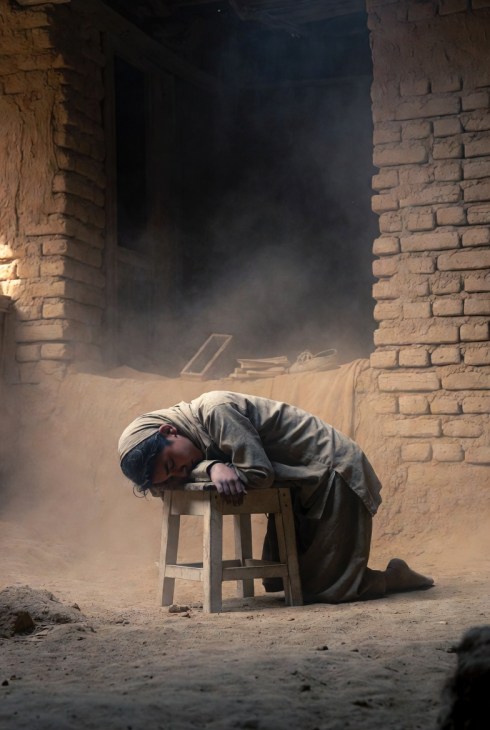
Zahra is fictional. But the wall is real.
A fictional composite in three vignettes about a girl coming of age under Taliban rule.
II. The Road That Needed A Boy
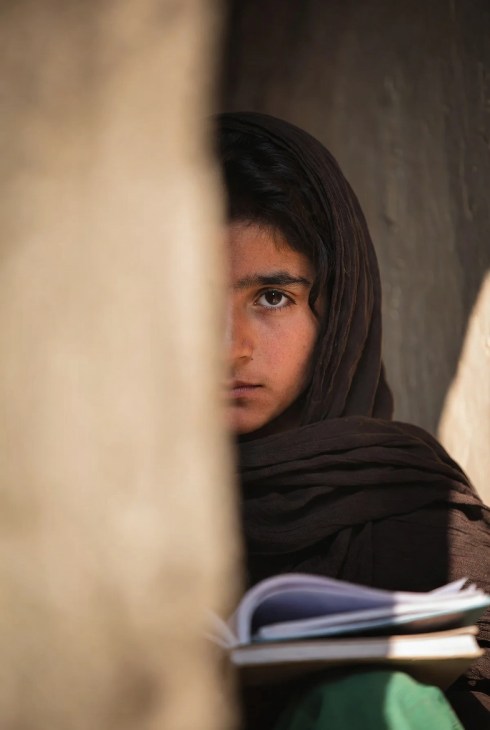
My mother woke with one hand pressed beneath her ribs.
She did not make a sound. I watched from my mat as the room brightened by slow degrees and my brother scratched himself awake for school. When he kicked off his blanket, his foot struck my ankle.
“Move,” he said.
I moved.
My mother closed her eyes.
At breakfast she broke the bread but did not eat it. My father had already gone to see a man about flour, and my brother was late and angry because his book was missing. It was under his own blanket. I saw the corner before he did, but waited while he lifted the cushion, cursed softly, and accused me of moving it.
“It is there,” I said, pointing.
He snatched it up.
“You should have said.”
My mother’s hand tightened under the table, only a little, only enough for me to see.
I lowered my eyes to the bread.
My brother left with crumbs on his sleeve and his bag half open. The gate knocked against the wall when he kicked it wide. A moment later his voice joined the other boys in the lane, careless and rising, already beyond the house.
My mother stood when he was gone, took two steps toward the stove, and stopped.
I reached her before she touched the wall. She leaned against me with only part of her weight, the way women lean when they are trying not to admit they have leaned at all.
“Sit,” I whispered.
She shook her head.
“Water first.”
I brought it. She drank and pressed the cup back into my hands without looking at me. The skin around her mouth had gone grey.
“We should go to the clinic,” I said.
She looked toward the gate.
My father was gone. My brother was gone. My uncle lived across the old road but might already be at the market. My cousin Farid sometimes came in the mornings, though he came when he wished and left when he wished, being fifteen and male and therefore important in ways no one had asked him to earn.
The clinic was not far. I could walk there with my mother before the sun cleared the neighbour’s roof. I knew the route better than Farid did: past the broken drain, left at the green door, around the corner where boys played football with a cloth ball, then straight until the road widened near the pharmacy.
I could have gone.
I did not move toward the gate.
My mother saw that too.
“Maybe it will pass,” she said.
She tried to stand straighter and failed.
I helped her to the cushion near the wall, then went to the shelf where she kept the old medicine paper folded inside a tin. I knew which one it was because she had taken the same tablets before, when the pain came after carrying water in winter. The writing had faded, but I could still read enough of it.
I had always been good at reading.
Outside, a cart rolled past. Men spoke near the corner. One laughed, and the laugh came through the gate as if the wood were thinner than before.
I folded the paper smaller and placed it beside the cup.
“We need someone to take us,” my mother said.
Us.
The word sat between us with its little insult folded inside it. She needed medicine; what we needed first was a boy.
By midmorning the room had grown warm. My mother sat with her back to the wall, eyes half closed, lips moving without sound. I swept the courtyard because I could not sit, then swept it again though the dust only moved from one side to another. When I bent near the gate, I heard girls laughing somewhere beyond the lane.
Not girls my age.
Small ones.
They passed like a handful of birds thrown into the morning, schoolbags bumping against their sides, shoes striking the road in quick uneven taps. One of them sang the first line of a lesson and forgot the rest. Another corrected her. They argued and kept walking.
I held the broom still until their voices were gone.
Then I swept the same clean place a third time.
Farid came near midday.
He did not knock properly, only called from outside as if our door owed him an answer. My mother straightened before I opened it. She wiped her face with the edge of her scarf and told me to bring the outer covering.
The cloth hung on a peg near the door.
I had worn it many times by then, but each time there was a moment — small, almost nothing — when my body remembered air on my face. The pause was brief. No one would have noticed it unless they were watching for rebellion.
I noticed it.
I put the covering on.
The room changed at once. The edges of things dulled; the door became a shape, the floor a dim path, my own hands something I had to lift close to see clearly. I adjusted the cloth where it fell near my eyes, then lowered it because Farid’s shadow had crossed the threshold.
He did not look sick. He looked bored.
“What is wrong with her?” he asked.
“With my mother?”
He shrugged, already glancing back toward the lane.
I handed him the folded medicine paper.
He looked at it, turned it once, then handed it back.
“You tell them.”
I kept my hand closed around the paper.
At the gate my mother paused, not from modesty but pain. Farid sighed, wanting us to know he had somewhere else to be.
I wanted to tell him she had waited half the morning for his permission to be ill.
Instead I stepped behind my mother and made sure the cloth did not catch in the latch.
The lane was brighter than I expected.
It always is, after days inside. The first glare made me blink, and for a moment the world disappeared; there was only cloth, footsteps, and the knowledge of where the road should be. My feet found the dip near the drain, the flat stone by the neighbour’s door, the place where rain had eaten a channel along the edge of the lane.
Farid walked ahead.
He took the wrong turn.
My mother did not notice. Her breath had shortened, and she was watching the ground in front of her feet. I stopped at the corner, then caught myself and stepped after him.
“Farid,” I said.
He kept walking.
“Farid.”
He turned, annoyed.
“That way,” I said, pointing with two fingers low at my side.
He looked at the road, then at me, then back at the road.
“I know.”
He came past us without hurrying.
We followed.
Near the football corner, three boys had drawn lines in the dust with a stick. They stopped playing when we passed. One of them was younger than me and stared because boys learn early that looking costs them nothing. Farid told them to move, and they did, slowly, dragging their feet through the lines they had made.
My mother’s sleeve brushed mine. I matched her pace.
At the wider road, a truck passed carrying men in the back. One held a rifle across his knees. Another tapped a stick against the metal side in a steady, bored rhythm. They were not looking at us, and still my mother shifted closer to the wall until her shoulder nearly touched the mud brick.
I shifted with her.
The wall was warm from the sun, though none of its warmth reached inside the cloth.
A woman ahead of us did the same thing, turning half-sideways with a child tucked behind her. When the truck moved on, no one spoke. The woman waited three breaths before stepping away from the wall, as if the road had to become safe again by itself.
At the pharmacy, the man behind the counter knew Farid’s name but not ours.
“What do you need?” he asked him.
Farid looked at me.
I held out the paper.
The pharmacist took it, squinting at the old writing. “Who is this for?”
“My aunt,” Farid said.
The man looked past him, toward my mother, then away. “Pain here?” He touched his own side.
My mother nodded.
“Fever?”
She opened her mouth.
Nothing came out.
Her eyes flicked to Farid, who was looking at a box of sweets near the counter.
“Yes,” I said softly.
The pharmacist’s eyes moved to me. Not sharply, not kindly either, only enough that I remembered where a girl’s voice was meant to stay.
My mother answered then, barely louder than the rustle of cloth. “No fever.”
The pharmacist took down a small packet and began explaining the tablets to Farid, who listened with the solemn face of someone trusted with knowledge he did not intend to carry far.
“After food,” the man said.
Farid nodded.
“Not too many.”
Farid nodded again.
“Morning and night.”
Farid looked toward the door.
I counted each instruction on my fingers inside the cloth where no one could see.
Morning.
Night.
Food.
Not too many.
When the pharmacist wrapped the packet, Farid reached for it before I could. My mother paid. The coins shook once in her hand, and I moved closer so my sleeve hid it.
Outside, Farid gave me the medicine only after we had turned away from the shop.
“You heard?” he asked.
I nodded.
“Good. I forgot.”
He laughed a little, as if this were charming.
On the way home, we passed the old beauty shop.
The sign was still there, though someone had scraped the painted face until only the mouth remained. Dust clouded the windows. A notice had been pasted to the door months ago and was peeling at one corner.
My cousin had gone there before her wedding.
I remembered her holding out her hands for us to admire, palms painted red, fingers curled as if she were carrying water she did not want to spill. Everyone had laughed because she would not touch anything until the colour dried. For one afternoon she had moved through the rooms slowly and grandly, pleased with herself, letting the younger girls look.
Now the shop stood with its mouth scratched away.
Farid saw me looking.
“Places like that made women foolish,” he said.
My mother kept walking.
I lowered my eyes, but not before I caught my reflection in the dusty window: cloth, shadow, the suggestion of a face that no longer belonged fully to the street.
At home, Farid did not come inside. He had done his duty and was already late for whatever boys do when no one is measuring their steps. My mother thanked him. He shrugged and went down the lane, kicking a stone ahead of him until it bounced into the drain.
I closed the gate.
The latch stuck, so I lifted it and tried again.
Inside, the house received us without interest: stove, wall, water jar, folded quilts, the chest beneath them. My mother sat slowly, one hand under her ribs, and I gave her the tablets after tearing the packet carefully along the edge.
“Morning and night,” I said. “After food. Not too many.”
She looked at me for a moment.
Then she nodded.
I poured water. She swallowed the first tablet and leaned back with her eyes closed. The covering had left a red line across her forehead. I wanted to touch it, but she looked too tired to be comforted.
In the courtyard, I shook dust from my covering.
Before I lifted it from my shoulders, I checked the gate.
Closed.
Then the windows.
Empty.
Then the roofline.
No one.
Only then did I pull the cloth back from my face.
Air touched my skin.
I stood with the covering gathered in both hands, breathing as quietly as I could. The courtyard wall rose above me, sun on the top half, shadow on the lower. A crack ran through one corner where last winter’s rain had softened the mud brick. I had watched that crack widen for months.
A small brown bird landed on the wall.
It hopped once, turned its head, and looked down into the courtyard with one bright eye. Nothing about it was beautiful. It was dusty and ordinary, the colour of road and seed husks. It opened its beak and gave a quick, careless sound.
I did not move.
The bird hopped again, closer to the edge. Its feet gripped the wall without asking whether the wall permitted it. Then it lifted itself into the air and crossed into the neighbour’s courtyard, where I could not see it anymore.
I stood there until my mother called my name.
The sound came through the house, tired and small.
I folded the covering carefully: outside from inside, dusty from clean, seen from unseen. By the door, my school shoes waited behind the water jar, still angled toward the gate.
I almost moved them back.
Then footsteps passed outside, and I carried the covering inside.
This is a fictional composite, told through three brief vignettes, about a girl coming of age under Taliban rule in Afghanistan.
Her name is Zahra. She is not one real girl, but she stands in for many: girls whose schools were closed, whose movements were restricted, whose voices were lowered, whose futures were discussed by others before they were old enough to understand what was being taken.
The purpose is not to sensationalize suffering. It is to show, quietly and plainly, what theocratic power does when it reaches into the daily life of a girl: the books hidden away, the gate closed, the words swallowed, the future made smaller one obedience at a time.
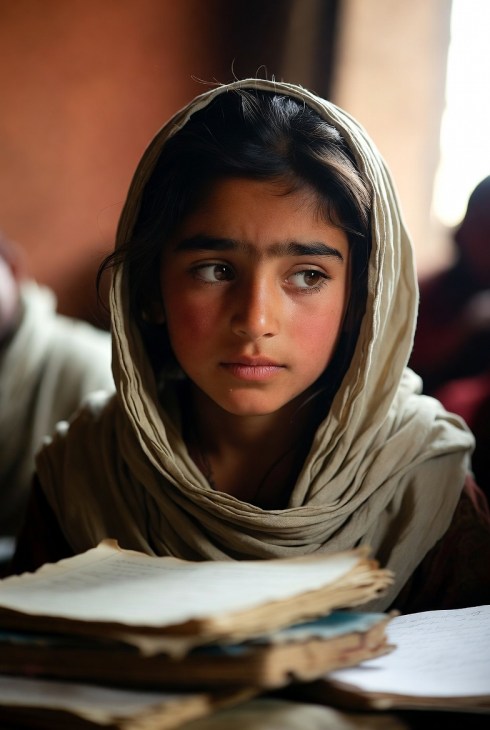
I. The Day School Ended
My name is Zahra, and last year I still ran to school.
Mariam and I used to race from the corner where the road dipped, skirts catching dust, scarves slipping. She would say the teacher was going to scold us; I would tell her she would be scolded first because her scarf made her look like a goat tangled in laundry. By the time we reached the green gate, we were holding our sides, trying to breathe quietly and failing, already guilty and already happy.
This morning, before prayer, my brother kicked the wall in his sleep and knocked dust from the mud brick.
He slept with one arm flung out from the blanket, mouth open, hair flattened on one side, as if sleep itself gave boys more room than it gave girls. When my mother bent over him and shook his shoulder, he dragged the quilt over his head and made a low miserable sound, the kind boys make when the world asks them to rise and they believe the request itself is an injury.
“Get up,” she whispered.
He did not move until she said, “Your father will hear.” Then he sat up slowly, face swollen with sleep, scratching at his stomach while the house gathered itself around morning: the kettle lid clicking on the stove, my father coughing once from the other room, someone outside sweeping a courtyard in long dry pulls.
“I don’t want to go,” my brother said.
My mother picked up his shirt from the floor and shook it once. “Then go unwilling.”
He looked at me as if I might laugh, so I lowered my eyes to the blanket before he could see anything cross my face.
His slate lay near my foot, its corner chipped, one side clouded with old sums half-wiped away. He had left it there the night before, careless as always, and I moved my toes back so I would not touch it by accident.
My own shoes waited beside the door, dusty at the toes, the right lace still shorter than the left because I had tied it too quickly on the last morning I went to school. Mariam had been calling for me from the lane, impatient and bright, and I had bent over the knot with one hand on the doorframe, laughing because she was always early when she claimed to be late.
They still fit.
I knew because two nights ago, after everyone slept, I had put them on and stood beside the door long enough to feel the shape of the old morning rise through my feet.
My brother complained that his shoes were tight, and my mother told him to bring them closer. She pressed the leather with her thumb, frowned, and said he was growing again. When he suggested he might stay home, my father coughed from the other room, and my brother reached for the shoes without another word.
The chest was beneath the folded quilts, not hidden exactly, but not offered to the room either. I waited until my mother turned back toward the stove before lifting the lid. It gave a small wooden complaint, and I paused with one hand still on the edge, listening to see whether the sound had reached anyone.
No one looked at me, so I opened it the rest of the way.
The books were wrapped in my aunt’s old scarf: mathematics, Dari, science with the corner chewed by a mouse, and my English reader, thin and soft from use. When I rested my hand on it, the classroom came back so suddenly that I had to press my fingers flat against the cover: chalk dust, damp wool in winter, the cheap orange soap our teacher used, the warmth near the stove where all of us pretended not to shiver.
Then my brother knocked over a cup.
The sound closed the chest for me before I had decided to close it.
Tea spread across the floor. My mother said his name sharply, and he grabbed a cloth only to push the spill wider. I went to help, stopped because he had hands and could wipe his own mess, then saw my mother look at me.
I took the cloth from him.
By the time he was ready, the sun had reached the top of the courtyard wall. He shoved bread into his mouth, tucked his slate under one arm, forgot his book, cursed softly when my mother sent him back for it, and then kicked the gate open with his heel because both hands were full.
“Do not kick the gate,” my mother called, but he was already outside, where the other boys waited in the lane.
Their voices came through the open gate in pieces: a joke, a shove, someone laughing too loudly, someone calling for my brother to hurry. He ran to meet them with his bag slapping against his back, his own voice rising to join theirs before he reached the corner.
The gate swung half shut behind him, and I moved toward it before I knew I had moved, only one step, small enough to deny if anyone asked.
My mother’s hand touched my sleeve.
She did not pull, because she did not need to. I stepped back, and she went to the gate and closed it with her hip. The latch fell into place while I stood there holding the wet cloth in both hands.
After breakfast I rinsed the cups, swept the courtyard, shook crumbs from the bread cloth, and folded my brother’s shirt from yesterday. There was ink on one sleeve, and I rubbed at it with water until the fabric darkened under my fingers, though the stain only spread and made a larger shadow. Near the back wall, my father’s coat hung from a peg with burrs clinging to the hem, so I picked them out one by one and set them in a little pile on the floor.
My mother kneaded dough beside me, pressing, folding, turning, and I matched her rhythm without meaning to: pick and drop, pick and drop, pick and—
From somewhere beyond the houses came the sound of boys reciting.
I knew the shape of it at once, even before I could hear the words. The teacher asked; the class answered, not together exactly, because boys never answered together properly. One voice rushed ahead, two lagged behind, and one shouted because he liked the sound of himself.
My hand closed around a burr, and the point went into my thumb.
I put it in my mouth before the blood could show where my mother might see.
The recitation came again, louder this time, lifted by the wind and broken against the courtyard wall, and I picked up the coat and shook it hard, though there was nothing left to shake out.
In the afternoon, my aunt came with Mariam, who is seven and still small enough for school.
She entered with dust on her hem and a notebook clutched against her chest. Her cheeks were red from the cold, and she smelled of outside air. Before she had even greeted my mother properly, she climbed beside me and pushed the notebook into my lap.
“Zahra, look.”
Her letters leaned across the page, some too fat, some too thin, some collapsing into the next as if they were tired. She had pressed too hard with the pencil, denting the paper beneath each line, and I reached for her hand before remembering myself. I folded my hands together instead.
“Very good,” I said.
She smiled as if I had given her something precious.
The pencil was still behind her ear, the yellow paint bitten at the end. I could see exactly what she was doing wrong, how she held it too high and forced the letters from the shoulder instead of letting the wrist guide them. The correction rose into my mouth so naturally that I nearly spoke it, but my aunt was sitting across from us, and my mother had gone still near the stove.
I swallowed the words.
Mariam turned the page and showed me more. The second page was worse, one letter even facing the wrong direction, and I smoothed the curled corner with my thumb while looking long enough for the urge to fix it to pass.
“Will you come back to school when they let big girls come?” she asked.
My aunt adjusted the edge of her scarf. My mother wiped flour from her wrist though her hands were already clean. Outside, a cart rolled past and one wheel struck a stone.
The silence answered for us.
Mariam looked from face to face, still expecting one of the grown women to make the world make sense again. When no one did, I smiled because she was little, and because little girls should be allowed to keep foolish hopes a little longer.
“Show me the next page,” I said.
After they left, I found an old pencil under the chest. It was short, bitten at one end, split near the point, the kind of pencil no one would think important enough to take. I held it in my palm while my mother and aunt spoke near the door in voices that were not secret, only low, which is different.
When my aunt finally went home, I rolled the pencil once between my fingers and slipped it into my sleeve before I had decided what I was hiding it from.
At evening, my brother lay on his stomach near the lamp, schoolbook open, feet moving lazily in the air. He had ink on his sleeve again. The stain I had rubbed earlier was still there, only wider now.
He frowned at a word and said my name.
I looked up from the onions.
“How do you spell this?”
He pushed the book toward me without moving from his stomach. I wiped my hands on my dress and leaned close enough to see, though the answer came before my eyes had finished reaching the page. My finger rose automatically, the way it had for years in class.
I pulled it back as if the page had burned me.
He waited.
I told him the letters slowly, and he wrote them badly, with the second one crooked and wrong. For a moment I watched the mistake settle on the page, black and permanent, while the lamp flame bent sideways and recovered.
“Is that right?” he asked.
“Yes,” I said.
He shrugged and turned the page, and I went back to the onions. The knife slipped once against my finger, barely touching skin, not enough to bleed.
After everyone slept, I opened the chest again.
This time I moved slowly, because the hinge complained near the top, and I knew how far I could lift the lid before the sound carried. I reached inside by feel: cloth, book edge, notebook. The pencil in my sleeve had left a grey mark against my wrist.
I sat with my back to the wall while the house breathed around me: my brother’s uneven sleep, my father’s heavier one, my mother turning once on her mat. Somewhere outside, a dog barked and stopped.
The notebook opened to a blank page. The lines were faint but still there, and I wrote the date carefully because my teacher had once said careless dates made careless minds. Then I held the pencil above the next line and tried to picture my classroom: the green gate, the cracked step near the door, the teacher’s blue scarf, my place beside the window.
I could see all of it.
When I tried to remember what grade I would be in now, my hand began to shake, so I placed it flat against the page until it stopped.
On the first line beneath the date, I wrote:
Future
The pencil point broke on the last letter, making a sound so small I looked toward my mother to see whether she had heard it.
She had not.
I sat for a long time with the broken pencil in my hand, feeling the rough edge of the wood with my thumb. Then I wrapped the notebook again and slid it beneath the books, not on top where it had been before. When I closed the chest, the latch did not catch, so I opened it again, lifted the cloth, tucked one corner of the scarf out of sight, and closed it properly.
In the dark, I took my school shoes from beside the door and placed them behind the water jar.
Not hidden.
Not exactly.
Just somewhere no one would ask why they were still waiting.
Most of us were never really taught how political debate is supposed to work. We absorbed it from bad examples.
 Say the words “political debate” and many people picture television panels where two partisan performers interrupt each other until a producer cuts to commercial, or the online version: a thread full of dunks, slogans, insults, and people congratulating themselves for having exposed the other side as stupid, corrupt, dangerous, or insane. That may be what political debate often looks like now, but it is not what political conversation in a liberal democracy is for.
I am not interested in rules-lawyering everyone’s tone. People are free to be blunt, angry, sarcastic, partisan, impatient, and rude. Politics is not a finishing school, and some public arguments deserve a sharp answer. The problem is not that Canadians are sometimes impolite with one another. The deeper problem is that a more corrosive habit has been creeping into our political life: we have started evaluating the speaker before we evaluate the argument.
A claim appears, and before anyone asks whether it is true, reasonable, exaggerated, foolish, or worth answering, the person making it is sorted. Loyal or suspect. One of us or one of them. Serious citizen or coded enemy. Once that sorting happens, the argument itself begins to vanish from view, because the real work has already been done by the classification.
That is the temptation captured by the friend/enemy distinction, a phrase most famously associated with Carl Schmitt, the early twentieth-century German political theorist whose wider politics should not be sanitized or treated as a model. I am not invoking Schmitt as a guide. I am using the distinction as a warning label, because it names something liberal societies need to recognize early: the moment politics stops being a contest of judgment and becomes a test of allegiance.
In ordinary life, we all distinguish between allies, opponents, rivals, strangers, and genuine threats. Prudence is not the problem. A country should know when it is being pressured. Citizens should be able to recognize bad faith, fanaticism, corruption, and hostile interests. Liberal democracy does not require political innocence; it requires enough discipline to keep prudence from hardening into total suspicion.
The danger comes when disagreement no longer remains disagreement but becomes evidence of allegiance. The question shifts from “Is this true?” or “What evidence supports it?” to “Whose side are you on?” The person matters more than the claim, the label matters more than the reasoning, and the side-taking becomes the argument. When politics moves there, liberal democracy begins to lose the oxygen it needs to survive.
A free society depends on the possibility that fellow citizens can disagree sharply without becoming enemies of the country. It asks us to answer arguments rather than merely classify the people making them. It leaves room for someone to be wrong, irritating, partisan, badly informed, or even deeply mistaken without being treated as a contaminant in the public square.
I saw this play out recently in a small online exchange around the phrase “Maple MAGA.” There is a real criticism buried in that label. Some Canadians have been far too indulgent toward Donald Trump’s rhetoric about this country, and some have seemed more animated by American partisan identity than by Canadian sovereignty. When a Canadian cheers pressure from Washington against Canada, or treats our independence as a bargaining chip in someone else’s political theatre, that deserves a firm answer because Canada is not an accessory to American politics, not a province-in-waiting, and not for sale.
 But “Maple MAGA” often does more work than that. Instead of describing a specific position, it expands into a moral category. It gathers people in. It becomes a way of marking domestic opponents as suspect before their arguments are considered. The issue is no longer what a person actually argued about Canadian policy, economic weakness, sovereignty, or Ottawa’s failures. The issue becomes whether he has denounced the correct villain, in the correct language, with the correct visible enthusiasm.
That is where debate begins turning into a loyalty test, because there is a real difference between saying Trump’s rhetoric toward Canada was hostile and saying Canadian citizens must use a demanded label before their arguments can be taken seriously. The first is a judgment about foreign conduct. The second smuggles a test of domestic belonging into political conversation.
Once that happens, the original issue starts to disappear. Was Canada’s economic weakness caused mainly by domestic policy, American pressure, or some combination of both? Is “Maple MAGA” an accurate description of a real political tendency, or a lazy smear used to dismiss people who dislike Ottawa’s direction? Is the argument being made true, false, half-true, exaggerated, or badly framed? Those questions take patience, which is exactly why the loyalty test is so tempting.
The loyalty test asks for something much simpler. Are you one of us, or one of them? Have you said the required phrase? Have you distanced yourself enough? Have you performed the right moral posture before being allowed into the conversation? At that point, politics has slipped away from argument and into status testing.
This is not unique to one party, one movement, or one ideological tribe. Conservatives have their own shortcuts: “woke,” “globalist,” “Laurentian elite,” “anti-Canadian,” and plenty of other labels used when answering a person would take more work than sorting him. Progressives have their versions. Populists have theirs. Centrists have theirs too, though they often dress the habit up as responsible seriousness. Every faction has a vocabulary for making opponents morally inadmissible before the argument begins.
The “Maple MAGA” example is useful because it is current, Canadian, and revealing. It shows how quickly a legitimate concern can become a domestic sorting tool. Trump’s obnoxious rhetoric about Canada, along with threats of economic pressure, gave Canadians good reason to be alert. A patriotic response was necessary, because no serious country should shrug when a powerful neighbour treats its sovereignty casually. But a necessary patriotic response can still curdle into something unhealthy when an external threat becomes a way of disciplining internal dissent.
Criticism of Ottawa, Liberal policy, or the direction of the country can be made to look foreign-aligned, morally suspect, or insufficiently Canadian. A foreign politician becomes the shadow cast over every local disagreement. The moment someone criticizes domestic policy, the insinuation arrives: whose side are you really on? That is a dangerous move even when it begins from a real grievance.
A foreign leader can behave badly. A neighbouring country can apply pressure. A government can be right to resist that pressure. None of this means Canadian citizens lose the right to criticize their own government without first proving that they belong to the acceptable moral category.
Canada is not the United States, and our political culture is not yet as intensely polarized. We should be careful not to exaggerate the crisis, but that is exactly why the habit matters now. Civic decay is easier to resist while it is still forming; once it hardens into the ordinary way politics is done, people stop noticing the damage.
Liberal democracy does not require us to pretend every argument is good. Some arguments are foolish, dishonest, thin, or soaked in partisan fog. Some are recycled grievance dressed up as principle. Some deserve a brief answer and a quick dismissal. But even then, the way to answer a bad argument is to answer it: expose the error, challenge the premise, show the missing evidence, point out the contradiction, or say plainly that the argument fails.
What should not become our first move is declaring the person contaminated and treating that as a substitute for thought. Social media makes the shortcut feel righteous because contempt performs well. Sneering is easy to understand. Labels travel faster than arguments. A caricature can be shared in seconds, while a fair summary takes effort and usually wins less applause.
Anyone can dunk, sneer, caricature, and perform disgust for an approving crowd. The harder civic discipline is being able to state an opponent’s position in terms he would recognize, not because every view deserves endless patience, not because politics should become a parlour game for people with too much time and too few convictions, and not because all sides are equally right, honest, or harmless. The point is simpler than that: you cannot seriously defeat an argument you have not first understood.
If you can only answer the worst caricature of your opponent, you are not debating so much as shadowboxing. You may win applause from people who already agree with you, but you have not clarified the issue, persuaded the undecided, or improved the public conversation by one inch.
 That is one of the civic habits we are losing. We are becoming quick at identifying villains and slow at understanding claims. We know how to attach labels, detect contamination, and turn disagreement into a question of moral hygiene, while forgetting how to stay with an argument long enough to know what it actually says.
A liberal democratic citizen should be able to say: I think you are wrong, and I will answer you. I think your politics are mistaken, but I will not treat you as an enemy of the country. I think your judgment is poor, but I will not demand a ritual of denunciation before you are allowed to speak. That is not softness, weakness, or both-sides evasion; it is democratic discipline.
When Canadian debate becomes a loyalty test, we do not become more patriotic. We become easier to manipulate. Once every issue is reduced to friend or enemy, loyal or traitor, acceptable or suspect, we stop asking whether arguments are true and start asking whether people belong.
That is not how a free country reasons with itself, and a country that can no longer reason with itself will eventually be governed by fear, resentment, and whoever is most skilled at naming enemies.
A former Muslim recently wrote something on X that deserves to be taken seriously:
“I was never a practising, observant Muslim. Yet, even I wanted Islam to take over Europe and the West until I was a teenager.”
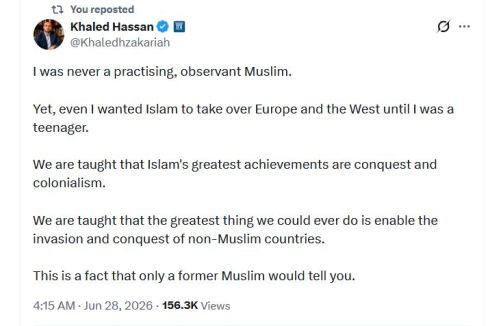
That is not a small admission. It is a glimpse into a religious-political imagination many Westerners have been trained not to notice, or at least not to describe plainly.
The issue is not ordinary Muslim citizens living ordinary lives. The issue is the version of Islam that understands itself not merely as private faith, but as a total system of law, society, politics, and conquest. That distinction matters because Muslim Brotherhood-style Islamism does not present itself as a hobby, an identity, or a private devotional life. It presents itself as a movement, with a theory of history, a theory of law, a theory of society, and a theory of liberation.
At its centre is the belief that human beings are not truly free until they submit to divine law. That may sound pious in abstraction, but it immediately raises the question liberal societies cannot avoid: what happens to people who do not want to live under that law?
Sayyid Qutb’s Milestones gives one answer. Qutb was not merely writing about personal religious improvement. He was writing a revolutionary text for Islamism, one that treated Islam as both religion and movement. In that framework, Sharia is not one moral tradition among others; it is the only legitimate law. Other systems of law are not merely different, mistaken, or incomplete. They are jahili: ignorant, illegitimate, and awaiting correction.
This is the part Western liberal societies keep trying to soften into something less threatening. The problem is not that Muslims pray, fast, worship, build families, open businesses, or form communities. The problem is a doctrine that treats civil law as false law, liberal democracy as ignorance, and non-Islamic societies as places that must eventually be transformed.
There are Muslims who reject this. There are reformist Muslims, secular Muslims, quietist Muslims, and ordinary Muslims who want nothing to do with Qutbist revolutionary politics. They are not the target of this critique. The target is the Islamist doctrine that treats their moderation as compromise, their citizenship as suspect, and their acceptance of civil law as evidence that they have submitted to something other than God.
From there, the conflict with liberal democracy becomes unavoidable. Qutb’s framework does not simply say that Muslims should be faithful within their own private lives. It says society itself must be reordered around submission to God’s law. It rejects the idea that human beings may legislate for themselves outside divine command; worse, it treats such legislation as a form of servitude, because human authority has supposedly usurped the authority of God.
Every civilization has conquest in its past. The issue is not that Islamic empires, like other empires, expanded through force. The issue is what later ideologies teach people to feel about that expansion. Was it ordinary human empire, subject to the same moral scrutiny as any other empire? Or was it sacred victory, proof of divine favour, and a model for the future?
That is the trick at the centre of the ideology. The Islamist does not necessarily think he is enslaving others. He may think he is freeing them from man-made law, rescuing them from ignorance, and liberating them from the false gods of democracy, secularism, nationalism, pluralism, or individual liberty. But domination does not become freedom because the dominator calls it liberation.
A liberal society can tolerate deep religious difference. It can protect mosques, churches, synagogues, temples, and atheists alike. It can defend the right of people to pray, preach, publish, criticize, convert, leave, and dissent. That is what religious freedom means, and it is one of liberal civilization’s great achievements.
But religious freedom is not a suicide pact. A society built on equal citizenship and civil law has no obligation to pretend that a movement seeking to replace civil law with religious law is merely asking for inclusion. It is asking for room to build a rival sovereignty; it wants the freedoms of liberal society while denying the legitimacy of the liberal order that makes those freedoms possible.
Former Muslims often understand this in a way polite Western elites do not. They know the internal language, the heroic stories, the childhood assumptions, the selective memory, and the pressure to treat Islamic expansion as something nobler than ordinary imperial ambition. When a former Muslim says he was taught that Islam’s greatest achievements were conquest and colonialism, we should not rush to explain the statement away. We should ask what kind of moral education produces that desire in a teenager who was not even especially observant.
Conquest does not always begin with armies. It begins with a story: one law is holy and all others are illegitimate; one community has submitted while the rest of the world lives in ignorance; ordinary civic loyalty is lesser than religious loyalty; the surrounding society is not a common home but a problem to be transformed.
Once that story takes hold, liberal tolerance can be turned against liberal civilization itself.
Western societies have become very good at speaking about “extremism” in the abstract, as though radicalization were a mysterious weather system that occasionally rolls through alienated communities. We condemn “hate” without asking what the hated object actually is. We speak endlessly about inclusion, but hesitate when inclusion is demanded by movements that do not intend to return the favour.
The hesitation is not harmless. The target of Muslim Brotherhood-style Islamism is not merely Western foreign policy, social prejudice, or insufficient accommodation. Its target is the liberal settlement itself: equal citizenship, freedom of conscience, freedom of speech, secular civil law, and the right to live without submitting to a religious legal order.
A society cannot remain liberal if it treats every challenge to liberalism as just another form of diversity. There is a difference between welcoming Muslim citizens and making excuses for Islamic supremacism; between protecting private faith and accommodating political theology; between religious freedom and religious domination.
Those distinctions matter because liberal democracy depends on reciprocity. Citizens may believe different things, worship differently, argue fiercely, and disagree about ultimate truth; what they may not do is claim that their sacred law has a superior right to govern everyone else.
That is the line that must be defended, at all costs to preserve any society that does not wish to follow Sharia law.
When a movement teaches that non-believers live in ignorance until brought under divine law, it is not offering pluralism. When it treats civil law as illegitimate because only Sharia is legitimate, it is not asking for equal citizenship. When it remembers conquest as sacred achievement rather than domination, the West should stop pretending that the problem is misunderstanding.
The issue is Islamic supremacism: a religious-political project that seeks power over others while calling that power liberation.
No liberal society should be embarrassed to say so.
Conquest is not made holy by scripture. Colonialism is not redeemed by prayer. And religious domination is still domination, even when it arrives speaking the language of faith.
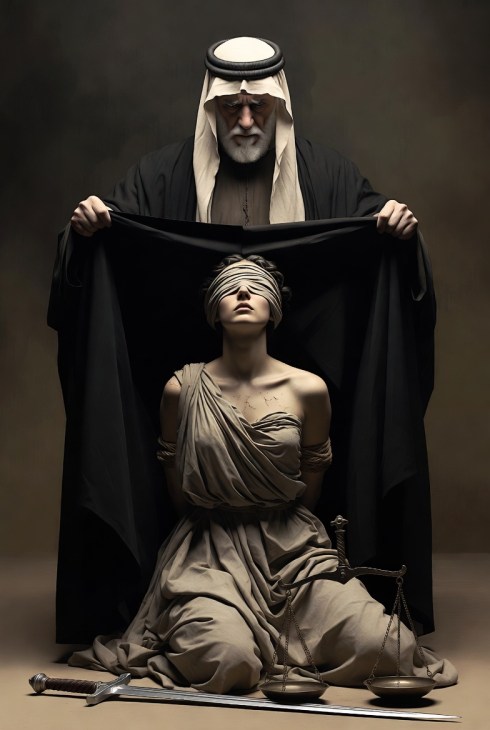
When religious law claims supremacy over civil law, justice is no longer blind; it is bound.
References and Source Material
This essay was prompted by a former Muslim’s post on X describing being taught to admire Islamic conquest and colonialism.
It also draws on discussion of Sayyid Qutb’s Milestones and Muslim Brotherhood-style Islamism in the New Discourses podcast episode provided in transcript form.











 bleatmop
 Mystro
 The Arbourist


 Dead Wild Roses
Your opinions…